FILE VER LAST ISSUE LANG. PAGE
GCM02-MT-ING4 NEW.doc c/02 04/03/2003 ENG Page 47 of 57
2.17. OPTIONAL EXPANSIONS
2.17.1. REMOTE SIGNALS – INTERNET – INTRANET - ETHERNET
The serial output has an interface board attached to it, which has an independent microprocessor that allows special functions to be
installed to suit the client’s specifications. The following is provided for:
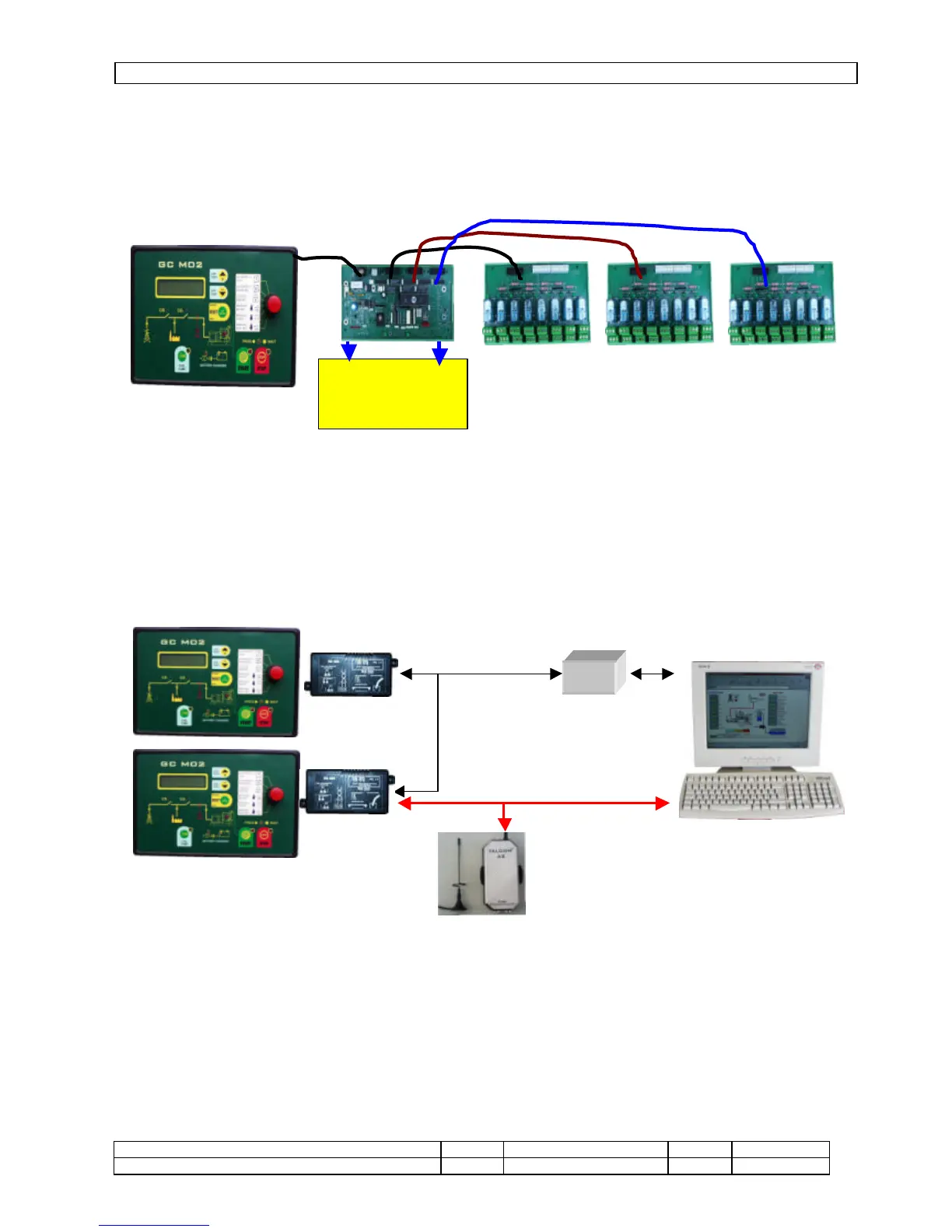
1. The control of three eight-relay modules, providing a total of 24 remote signals with free contacts. This also allows a single
module to be connected, for the remote signals required.
2. The same interface board has outlets that can configured for connecting to the internet, local intranet or Ethernet networks, as
well as other connections upon request.
2.17.2. REMOTE CONTROL
Upon request an IS 03 serial board can be provided. This is to be fitted to the module and has two serial RS232C and RS485 ports. The
RS485 port communicates using a standard MODBUS RTU protocol that can communicate via networks and with PLCs.
The RS232C serial port is used to interface with PCs, GSMs and Modems for remote control. It allows the switching status to be monitored,
as well as all the parameters (voltage, frequency, current, etc.) and all the alarms. It is also possible to control the following functions –
Automatic, Automatic Test, Stop, Start, Forced start with generator supply, and Reset. Each message is recorded in a history document, and
up to 60,000 units can be handled, each unit having an individual board. Each unit can address the alarm status to a PC Server and another
two numbers for local service centres. The server is able to transmit SMS or fax messages to local service technicians.
The control software is only supplied with boards fitted with serial ports.


 To Next Page