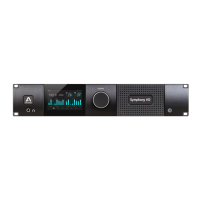
Symphony I/O to be connected to Pro Tools HD cards installed in Apple Mac G5 or
Windows computers while running Maestro on an Apple Intel Mac.
Standalone Interface Mode
When Audio Interface Mode is set to Standalone, a USB connection between
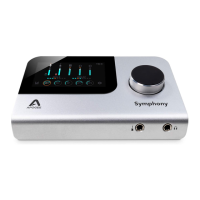
Symphony
I/O and an Intel Mac provides the link between Apogee Maestro software and
Symphony
I/O, in order to make calibration, meter configuration, digital format and other settings.
Symphony I/O's clock source and sample rate may be set using the front panel
encoders, and don't require the USB connection. The USB connection is only required
to make Maestro settings, and may be removed once settings are complete.
Note that the audio and USB connections don't have to be made to the same
computer, allowing Symphony I/O's Optical or AES I/O to be connected to an Windows
computers while USB is connected to an Apple Intel Mac.
!


 To Next Page