18
POLAR ALIGNMENT – WHICH METHOD TO CHOOSE?
Important Note: We highly recommend the use of the Right-Angle Polar Alignment Scope (RAPAS) as the best
and quickest way to align your mount. If you use the RAPAS for polar alignment, DO NOT follow up with either the
N. Polar Calibrate or the 2–Star Calibrate alignments described below.
Use the following alignment methods if the polar scope is not available. Please note that although we include the
“N Polar Calibrate” and the “2 Star Calibrate” below, they are the least accurate. The Daytime technique will get
you aligned and able to look at planets and stars while the sun is still up. The GTO Quick Star Drift technique will
be your most accurate method after the RAPAS.
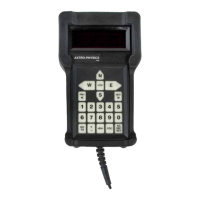
The Keypad startup routine provides two methods: The North Polar Calibrate and the Two Star Calibrate. These two
polar alignment methods, though no longer recommended, were designed for quick and coarse alignment in the eld with
portable setups. They are for visual observers only, not imagers. The Two Star Method is the better of the two as it is less
affected by the extremely low resolution in RA near the pole and by orthogonality issues.
You need to be roughly polar-aligned before beginning the procedures. The closer you are to polar alignment when you
start, the faster the procedures will be. Use a compass with magnetic offset and a level to rough align.
How accurately you need to be polar aligned is governed by your needs. If you wish to do some quick visual observing
with low-power, wide-eld eyepieces, you don’t need to spend a lot of time aligning (see “How to Find Objects if You Have
Less than Perfect Polar Alignment”). If you need accurate alignment for CCD imaging or high-power observing, you will
want to use our Right-Angle Polar Alignment Scope (RAPAS) and follow-up with a comprehensive drift alignment (either
traditional or Pole Align Wizard with CCD camera). Refer to the Alternate Polar Calibration Routine and Tips section.
ORTHOGONALITY - If you have difculty achieving accurate polar alignment with the procedures below, refer to the
section entitled “Orthogonality.”
N Polar Calibrate - Calibrating with Polaris
Note: We do not recommend this choice of polar alignment method due to its potential inaccuracy!
This routine uses a known star in the eastern or western sky and Polaris to align the
mount. Since you are essentially using your telescope as a polar alignment scope in
this routine, it is very important that the telescope be orthogonal to the mount. If it is
not orthogonal, the stars will not converge no matter how many you use.
Try to pick a star that has a sufciently different (± four hours) right ascension from
Polaris, otherwise this method may not converge on the pole in a reasonable number
of iterations. For instance, the star Arcturus is close in right ascension to Polaris and so would not be a good candidate.
Arcturus is roughly 12 hrs different in R.A. from Polaris or 180 degrees opposite and close to the meridian in the south. So
when the mount slews between Polaris and Arcturus, it only has to move a small amount in R.A. – about 45 minutes. Not
a good choice. Your best stars for this routine will have right ascensions between 6:32 and 10:32 or between 18:32 and
22:32. Here are a few suggested stars. More possibilities can be found in Appendix I
WINTER SUMMER
Alphard Alf Hya RA 09:27:35 Altair Alf Aql RA 19:50:47
Pollux Bet Gem RA 07:45:19 Enif Eps Peg RA 21:44:11
Procyon Alf CMi RA 07:39:18 Kaus Borealis Lam Sgr RA 18:27:58
Regulus Alf Leo RA 10:08:22 Nunki Sig Sgr RA 18:55:16
Sirius Alf CMa RA 06:45:09 Vega Alf Lyr RA 18:36:56
1. Check position of mount. Be sure that the polar axis is pointed as close as possible toward Polaris (the North Star).
If not, make these adjustments now. Follow the procedures to select your location in the previous section.
2. At the Calibrate Menu, choose “1=N Polar Calibrate”. The Choose Star display
will appear. In the upper right of the screen, you will nd the zenith hour displayed
(e.g. Z=17:17). Zenith hour is synonymous with LST (local sidereal time). This
allows you to open your star atlas to the page corresponding to the sky overhead to
aid in your calibration star selection.
3. Move telescope manually (grasp the telescope by hand and move it) to a known bright star, which will be your
calibration star (Vega in this example) and center it in the eyepiece eld with the N-S-E-W directional buttons.
Calibrate Menu
1=N Polar Calibrate
2=2 Star Calibrate
Calibrate Menu
Choose Star Z=13:52
1=Polaris <
2=Acamar
3=Achernar >
Star Selection Menu - Polaris


 To Next Page