51
SLEWING DURING THE DAY
You must take extra precautions when observing during the daytime. If not done correctly, you may suffer permanent
damage to your eyesight. Be sure to supervise all children and other observers who may not be aware of the dangers.
Observing in the daytime offers many rewards – nding the planets and stars, and observing sunspots and solar
prominences of the sun itself.
Potential Dangers
● As the telescope is slewing from one part of the sky to another, it may pass across the face of the sun or near enough
so that looking through the telescope would be dangerous unless you have a proper solar lter. DO NOT LOOK
DIRECTLY INTO THE TELESCOPE OR VIEWFINDER WHILE THE TELESCOPE IS SLEWING.
● The position of the planet or star that you wish to see may be too close to the sun to observe safely. CHECK THE
POSITION OF THE TELESCOPE BEFORE YOU LOOK INTO THE EYEPIECE OR VIEWFINDER. BE SURE THAT
IT IS NOT POINTING AT OR ANYWHERE NEAR THE SUN. Remember that the nder has a wide eld of view so
you can see a large portion of the sky.
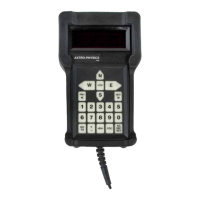
● PLEASE DO NOT OVERRIDE THE SUN SAFE ZONE DURING THE DAY. This feature is in the Keypad for your
safety.
● Observing the sun. Be sure that you have installed a good quality SAFE solar lter that covers the optics in front of
the telescope. Never use eyepiece lters since they may break due to the intense heat of the sun. Do not use solar
lters that are cracked (glass), torn (Mylar) or have many pinholes (either glass or Mylar). If you use a photographic
solar lter, be sure to use an additional neutral-density lter when viewing through and eyepiece or the viewnder of
your camera.
How to Observe Safely
1. Place dust cover or proper solar lters on the main objective of the telescope and the nder scope before you slew the
telescope, use the N-S-E-W directional buttons or move it manually. Be sure to inspect your solar lter beforehand to
be sure that it is not damaged in any way that will allow light through. Use a black marker to cover the pinholes that
may appear in the coating.
2. Slew or move the telescope.
3. Visually check the position of the telescope to be sure that it is not pointing at or anywhere near the sun.
4. If you are observing planets, the moon or stars – remove the dust cover or lter only when you are sure that it is safe.
5. To observe the sun – ALWAYS leave your solar lter in place over the front of the objective and nder.
6. Put the solar lters or dust covers back on the telescope before slewing to the next object.


 To Next Page