10-51
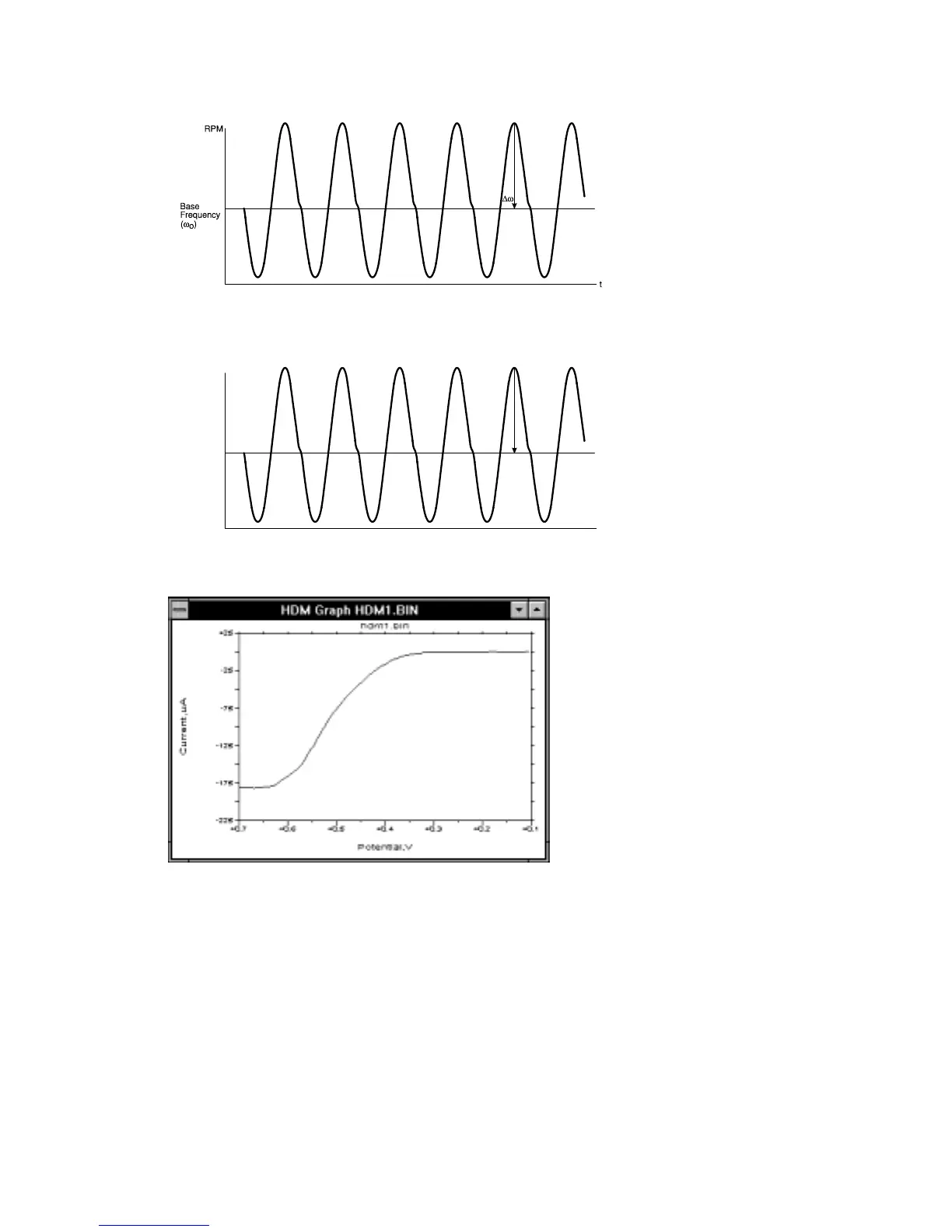
Figure 10-30.
The modulated rotation rate used for
HDM
.
Current
t
∆
i
i
ω
o
Figure 10-31.
A.C. current output for
HDM
.
Figure 10-32.
Typical current response for
HDM
.
∆
i only depends on the rate of mass transport to the working electrode, so there is no
contribution from charging current, oxidation or reduction of the electrode or
adsorbed species or electrolyte/solvent.
HDM
is therfore suitable for measurement of
submicromolar concentrations of solution species, and also for measurements near
the limits of solvent or electrolyte oxidation or reduction.



 To Next Page