45
44
The Water Supply
HEMODIALYSIS BASICS
The water used for dialysis must be of a high quality since
the water is used to prepare dialysate.
A hemodialysis patient is exposed to several hundred liters
of dialysate per week, which is separated from the blood only
by a thin membrane.
The incoming water is therefore purified before it is used
by the dialysis machine in a reverse osmosis (RO) unit. This
device uses a semipermeable membrane that allows the
passage of water but removes most other contaminants.
Pretreatment of the water may be required before it enters
the RO unit.
• A water softener to remove hardness
• A carbon filter to remove chlorine and chloramines
• A sediment filter to remove particulate matter
The water should be analyzed on a regular basis, both from
a chemical and microbiological standpoint, to ensure that it
complies with relevant standards for dialysis water.
Efficiency of Hemodialysis
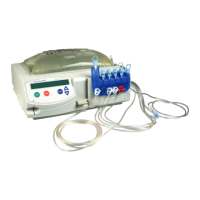
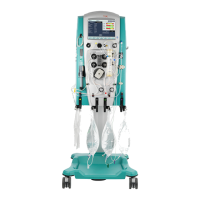
Note: Image is representative of facilities
that use a portable RO system.
How do we know that the prescription and the treatment are adequate?
To accomplish a satisfactory dialysis treatment, four things have to be achieved:
1. Adequate removal of excess fluid
2. Adequate removal of unwanted solutes i.e., waste products
3. Correct electrolyte (salt) imbalances
4. Restore buffer (bicarbonate) balance
Note: The time the blood pump is stopped as well as the time the dialysate is bypassed will reduce
the effective treatment time.
Removal of excess fluid
Accurate weight and assessment of fluid balance must be performed prior to initiating a treatment.
The fluid volume to be removed, the UF goal, is calculated from the weight gain since the last treatment,
to which is added the volume of the drinks to be consumed during the session as well as any infusions.
The target weight is called dry weight. This is the weight a healthy person with a normal fluid regulation
would have had.
When the UF goal is set, the machine can calculate the required UF rate by considering the treatment time,
normally between 3 and 4 hours for conventional HD.



 To Next Page
 Loading...