29
Note:
- If voltage between test terminals is higher than 10 V the continuity measurement cannot be
performed.
- Before performing continuity measurement compensate test lead resistance if necessary. The
compensation is performed in LowΩfunction.
5.3 Testing RCDs (FI/RCD)
When testing RCDs, the following sub-functions can be performed:
- Contact voltage measurement
- Trip-out time measurement
- Trip-out current measurement
- RCD autotest
In general the following parameters and limits can be set when testing RCDs:
- Limit contact voltage
- Nominal differential RCD trip-out current
- Multiplier of nominal differential RCD trip-out current
- RCD type
- Test current starting polarity
5.3.1 Limit contact voltage
Safety contact voltage is limited to 50 V AC for standard domestic area. In special environments
(hospitals, wet places, etc.) contact voltages up to 25 V AC are permitted.
Limit contact voltage can be set in UC Contact voltage function only!
5.3.2 Nominal differential trip-out current
Nominal residual current is the rated trip-out current of the RCD. The following RCD current ratings
can be set: 10 mA, 30 mA, 100 mA, 300 mA, 500 mA and 1000 mA.
5.3.3 Multiplier of nominal residual current
Selected nominal differential current can be multiplied by ½; 1; 2 or 5.
5.3.4 RCD type and test current starting polarity
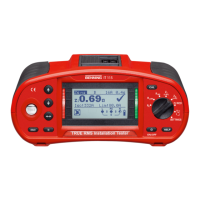
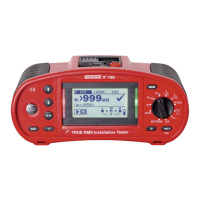
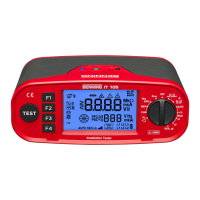
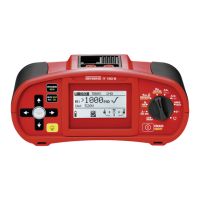
The BENNING IT 110/ BENNING IT 120 B enables testing of general (non-delayed, G) and selec-
tive (time-delayed, S) RCDs, which are suited for:
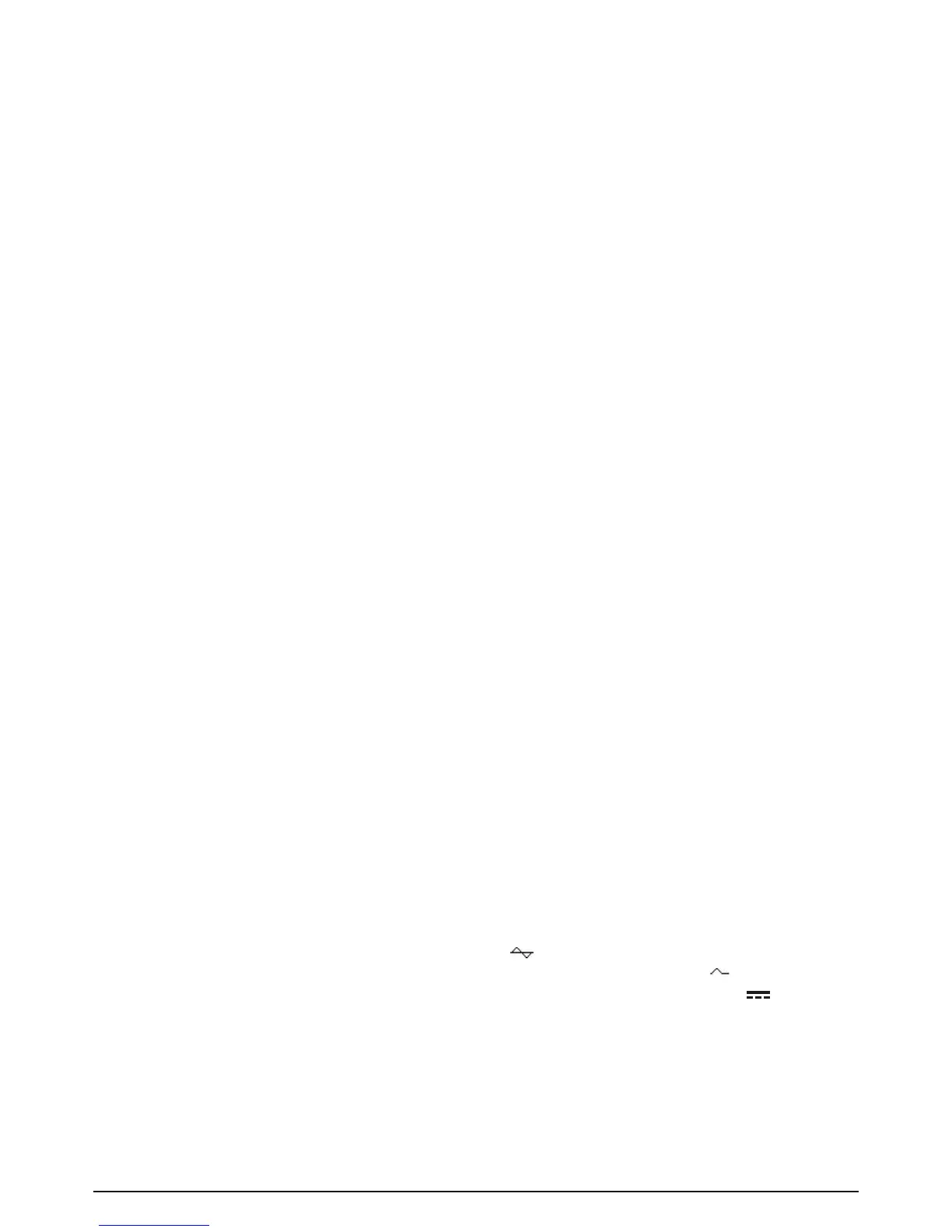
- Alternating residual current (AC type, marked with
symbol)
- Pulsating DC residual current (A type, pulsed current-sensitive, marked with symbol)
- Smooth DC residual current (type B, universal current sensitive, marked with the
symbol)
For RCDs of the types A and AC, the fault current can be started with the positive half-wave at 0°
or with the negative half-wave at 180°.


 To Next Page