EasyManua.ls Logo

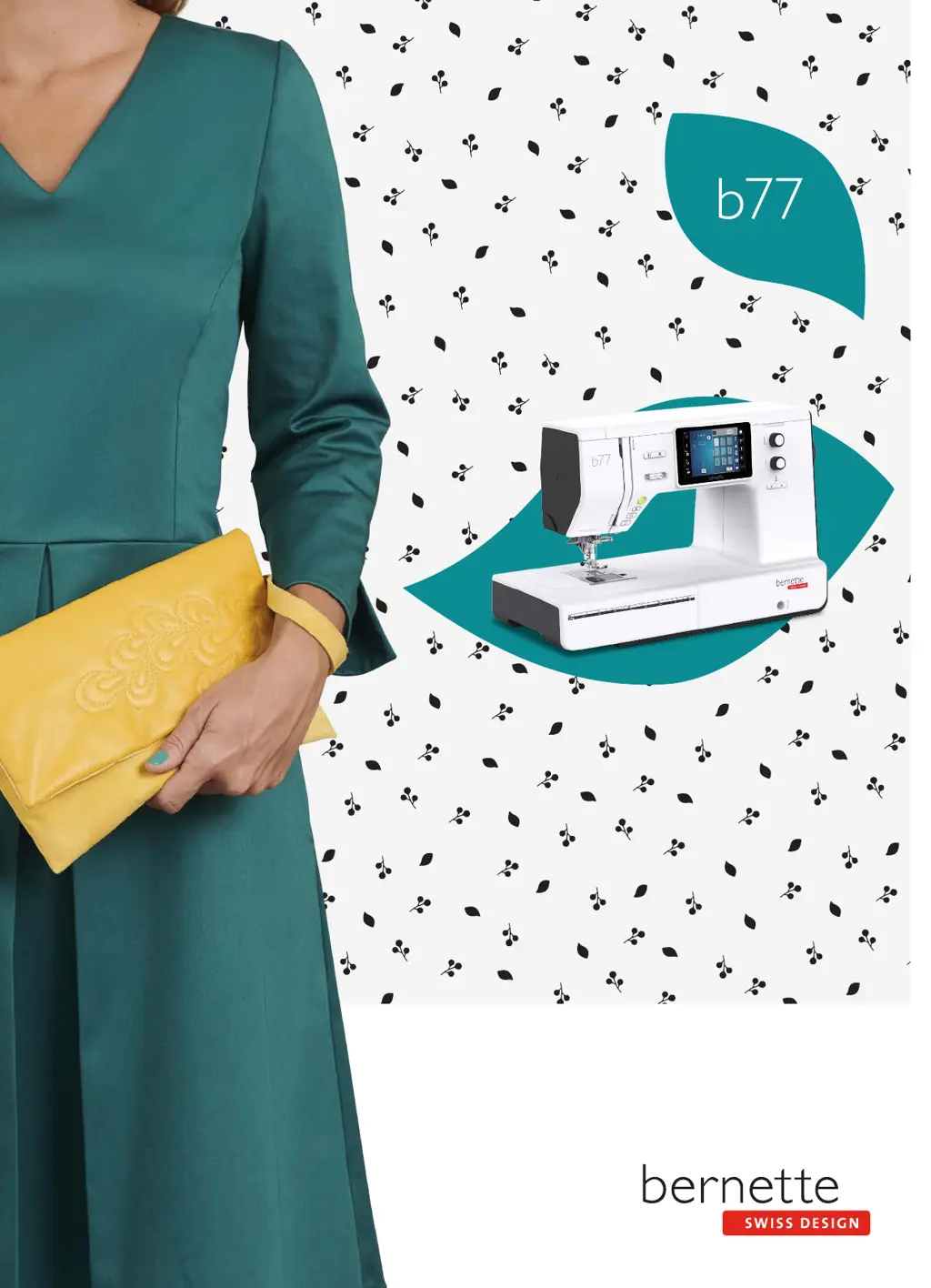
Bernette b77 - User Manual

Bernette b77
106 pages
Print Icon
To Next Page IconTo Next Page
Loading...
User Manual

Table of Contents

Other manuals for Bernette b77

Questions and Answers

  • J
    Jared FreemanAug 18, 2025
    What to do if my Bernette b77 is skipping stitches?
    • Y
      yfranklinAug 18, 2025
      To resolve skipped stitches on your Bernette Sewing Machine: * Use the needle system 130/705H. * Replace the needle if it is blunt or bent. * Use a new BERNINA quality needle. * Insert the needle with the flat side to the back as far up as it will go into the needle holder and tighten the screw. * Match the needle point to the texture of the material.
  • S
    Sara RobinsonAug 21, 2025
    How to fix uneven stitch formation on my Bernette b77?
    • M
      Michelle MartinezAug 21, 2025
      To fix uneven stitch formation on your Bernette Sewing Machine, consider the following: * Adjust the upper thread tension if it's too tight or loose. * Replace the needle if it's blunt or bent, ensuring you use a new BERNINA quality needle. * Use quality thread and match the needle with the thread size if the combination is incorrect. * Rethread the machine if it's incorrectly threaded. * Feed the fabric evenly if it has been pulled. * Remove any dust or thread remnants from under the tension spring of the bobbin case.
  • A
    April RodgersAug 23, 2025
    What causes needle breaks on my Bernette b77?
    • M
      Michele FisherAug 23, 2025
      To correct needle breaks on your Bernette Sewing Machine: * Insert the needle with the flat side to the back as far up as it will go into the needle holder and tighten the screw. * Feed the fabric evenly if it has been pulled. * Use the appropriate presser foot, e.g. Jeans foot No. 8 for thick material if thick fabric has been pushed. * Use quality thread if the thread is knotted.
  • A
    Anita BarnesAug 26, 2025
    Why does the upper thread keep breaking on my Bernette b77 Sewing Machine?
    • J
      johnliAug 26, 2025
      When the upper thread breaks on your Bernette Sewing Machine, it could be due to several reasons. You may have an incorrect needle/thread combination, so ensure they are properly matched. The upper thread might be too tight; try reducing the tension. It could also be incorrectly threaded, so rethread the machine. Using poor quality thread can also cause breakage, so switch to a quality thread. If the stitch plate or hook tip is damaged, contact a specialized Bernette dealer to repair the damages or replace the stitch plate.
  • D
    davidbakerAug 28, 2025
    What to do if the display is inactive on my Bernette b77 Sewing Machine?
    • T
      Tracey RobertsAug 28, 2025
      To address a Bernette Sewing Machine display that is inactive: * Switch the machine off if the calibrating data is incorrect. * Switch the machine on and simultaneously press and hold down the buttons «Needle Left/Right». * Recalibrate the display. * Tap «eco Mode» if the eco Mode is active.
  • N
    Norman JohnsonAug 30, 2025
    Why is the stitch width not adjustable on my Bernette Sewing Machine?
    • M
      mmillerAug 30, 2025
      To resolve the issue of the stitch width not being adjustable on your Bernette Sewing Machine: * Replace the needle if the selected needle and stitch plate cannot be used in combination. * Replace the stitch plate.
  • V
    victoriagonzalesSep 1, 2025
    Why is the speed too low on my Bernette Sewing Machine?
    • B
      boydjulieSep 1, 2025
      To address the issue of the speed being too low on your Bernette Sewing Machine: * Place the machine in a warm room one hour before use if there is an unfavorable room temperature. * Adjust the sewing speed in the Setup Program. * Adjust the slide.
  • E
    elizabeth18Sep 3, 2025
    Why is my Bernette b77 producing faulty stitching?
    • P
      Patrick ThomasSep 3, 2025
      Faulty stitching on your Bernette Sewing Machine can be caused by a few things. Thread remnants might be caught between the thread tension discs; fold a piece of thin material and slide the folded edge between the thread tension discs to remove them. The machine might be incorrectly threaded, so rethread it. Thread could also be caught in the hook; remove the upper thread and the bobbin case, then turn the handwheel backwards and forwards by hand to remove any thread remnants. Finally, check that you're using the correct needle/thread combination.
  • D
    deborah45Sep 6, 2025
    Why does the needle keep breaking on my Bernette Sewing Machine?
    • C
      Caleb MooreSep 6, 2025
      If the needle breaks on your Bernette Sewing Machine, it could be due to a few reasons. Ensure the needle is correctly inserted with the flat side to the back, as far up as it will go into the needle holder, and tighten the screw. Avoid pulling the fabric; instead, feed it evenly. If you're sewing thick fabric, use the appropriate presser foot, such as Jeans foot No. 8, and use the height compensating tool when sewing over a thick seam. Finally, knotted thread can cause the needle to break, so use quality thread.
  • E
    Edward Gomez MDSep 8, 2025
    What causes the lower thread to break on my Bernette b77 Sewing Machine?
    • X
      xdanielsSep 8, 2025
      If the lower thread breaks on your Bernette Sewing Machine, there are several potential causes. The bobbin might not be inserted correctly; remove and reinsert the bobbin, ensuring the thread runs easily. The bobbin could also be wound incorrectly, so check the bobbin and thread. A damaged stitch hole in the stitch plate can also cause this issue; contact a specialized Bernette dealer to have the damages repaired or replace the stitch plate. Lastly, a blunt or bent needle can contribute to thread breakage, so replace the needle.

Summary

IMPORTANT SAFETY INSTRUCTIONS

General Safety Guidelines

Essential safety rules for machine operation, environment, and condition.

Accessories and Supplies Safety

Safety recommendations for using accessories and supplies with the machine.

Appropriate Use and User Supervision

Guidelines on proper machine use, cleaning, maintenance, and supervision.

Important Information

Instruction Manual Availability

Information on obtaining and using the short and detailed instruction manuals.

Proper Machine Usage

Defines intended use for private household purposes and liability.

Equipment and Delivery Scope

Notes on illustrations, accessories, and potential product changes.

Servicing Double-Insulated Products

Instructions and precautions for servicing double-insulated machines.

Environmental Protection Commitment

BERNINA's commitment to environmental protection and machine disposal guidelines.

Explanation of Symbols

Defines hazard symbols (DANGER, WARNING, CAUTION, NOTICE) used in the manual.

1 My bernette

1.1 Overview Machine

Identification of machine parts and controls on the front, top, and back.

1.2 Accessory

Lists and describes included accessories for the sewing machine.

1.3 Overview User Interface

Explanation of the machine's display, icons, and interface functions.

1.4 Needle, Thread, Fabric

Guidance on selecting and using needles, threads, and fabric types.

2 Sewing Preparation

2.1 Connection and Switching On

Steps for connecting the power cable, foot control, and turning the machine on.

2.2 Spool Pin

Instructions for using the horizontal and second spool pins.

2.3 Freearm

Description of the freearm and its benefits for sewing projects.

2.4 Sewing Table and Accessory Box

How to attach, remove, and use the sewing table and accessory box.

2.5 Raising or Lowering the Feed Dog

Instructions for operating the feed dog lever.

2.6 Using the Slide-on Table

Guide on attaching and removing the slide-on extension table.

2.7 Presser Foot

Adjusting presser foot position and changing presser feet.

2.8 Needle and Stitch Plate

Procedures for changing needles and stitch plates.

2.9 Threading

Step-by-step instructions for threading the upper thread and twin needle.

3 Setup Program

3.1 Sewing Settings

Configuring sewing parameters like thread tension, speed, and securing stitches.

3.2 Selecting Personal Settings

Customizing display color and other personal preferences.

3.3 Monitoring Functions

Activating thread indicators for monitoring sewing.

3.4 Sound On;Off

Enabling or disabling machine sounds.

3.5 Machine Settings

Adjusting display brightness, sewing light, and calibrating the screen.

4 System Settings

4.1 Using eco Mode

Engaging the energy-saving mode for extended idle periods.

4.2 Calling up the Creative Consultant

Using the consultant for project advice on fabric, needles, and feet.

4.3 Cancelling Any Alterations with clr

Resetting design alterations to default settings.

5 Creative Sewing

5.1 Overview Selection Menu Sewing

Navigating the stitch selection menus for patterns, alphabets, and buttonholes.

5.2 Dual feed

Instructions on applying and using the dual feed mechanism for even fabric feeding.

5.3 Regulating the Speed

Adjusting the sewing speed using the control slide.

5.4 Adjusting the Upper Thread Tension

Fine-tuning upper thread tension for different fabrics and threads.

5.5 Editing Stitch Patterns

Modifying stitch width, length, balance, and pattern repeat.

5.6 Combining stitch patterns

Creating, editing, and managing combinations of stitch patterns.

5.7 Administering Stitch Patterns

Saving, overwriting, loading, and deleting stitch patterns in personal memory.

6 Practical Stitches

6.1 Overview Practical Stitches

A catalog of practical stitches with names and descriptions.

6.2 Sewing Straight Stitch

Guidance on sewing a straight stitch with length adjustment.

6.3 Securing with the Automatic Securing Program

Using the automatic securing program for reinforcing stitches.

6.4 Sewing in the Zipper

Step-by-step instructions for sewing zippers.

6.5 Sewing Triple Straight Stitch

Techniques for sewing durable triple straight stitches.

6.6 Sewing Triple Zigzag

Using triple zigzag stitches for firm fabrics and hems.

6.7 Manual Darning

Performing manual darning on fabric holes and worn areas.

6.8 Reinforced Darning, Automatic

Using automatic programs for reinforced darning.

6.9 Finishing Edges

Finishing fabric edges using zigzag stitches.

6.10 Sewing Double Overlock

Creating double overlock seams for knit and woven fabrics.

6.11 Sewing Vari Overlock

Sewing overcasting stitches to prevent fraying.

6.12 Edgestitching Using the Seam Guide

Using the seam guide for precise edgestitching.

6.13 Sewing a Narrow Hem

Creating narrow hems with a specialized foot.

6.14 Sewing Blind Hems

Instructions for sewing invisible blind hems.

6.15 Sewing Visible Hems

Sewing visible hems on elastic fabrics.

6.16 Sewing Basting Stitches

How to sew basting stitches for temporary seams.

6.17 Sew Thick Areas

Techniques for sewing through thick fabric layers.

6.18 Sewing Corners

Techniques for sewing neat corners by pivoting the fabric.

7 Decorative Stitches

7.1 Overview Decorative Stitches

Introduction to decorative stitches and their suitability for different fabrics.

7.2 Altering the Stitch Density

Adjusting stitch density for satin stitches to control spacing.

7.3 Sewing Cross Stitches

Techniques for sewing cross stitches for decorative effects.

8 Alphabets

8.1 Overview Alphabet

Introduction to available block, double-block, and script alphabets.

8.2 Creating Lettering

Steps for creating custom lettering and text using the machine's alphabets.

9 Buttonholes

9.1 Overview Buttonholes

Catalog of buttonhole types and their applications for different fabrics.

9.2 Marking Buttonholes

How to mark buttonhole positions on the fabric accurately.

9.3 Sewing a Buttonhole Automatically

Step-by-step guide to sewing automatic buttonholes.

9.4 Reinforce Buttonhole

Techniques for reinforcing buttonholes, especially on stretch fabrics.

9.5 Sewing On Buttons

Using the machine to sew on buttons with two or four holes.

9.6 Sewing Eyelets

Instructions for sewing decorative eyelets.

10 Quilting

10.1 Overview Quilt Stitches

A list of various quilt stitches and their intended uses.

10.2 Quilting, Securing Program

Using the securing program for quilting stitches.

10.3 Sewing Hand-look Quilt Stitches

Techniques for achieving a hand-sewn look with quilt stitches.

10.4 Guiding the Quilt Work Freely

Tips for free-motion quilting and guiding fabric with specialized feet.

11 Maintenance and Cleaning

11.1 Cleaning and Maintenance Intervals

Recommended intervals and importance of cleaning and maintenance.

11.2 Cleaning the Display

How to safely clean the machine's touch display.

11.3 Cleaning the Feed Dog

Procedures for cleaning the feed dog and removing debris.

11.4 Cleaning the Hook

Steps for cleaning the hook and shuttle race area.

11.5 Oiling the Needle Bar

Instructions for lubricating the needle bar for smooth operation.

12 Errors and Faults

12.1 Troubleshooting

Common faults, their causes, and suggested repairs for stitch formation issues.

12.2 Error messages

Explanations of error messages displayed by the machine and their solutions.

13 Technical data

Sewing Light and Speed Specifications

Details on LED light power and maximum sewing speed.

Machine Dimensions and Weight

Physical measurements and weight of the machine and accessory box.

Energy Consumption and Voltage

Information on power consumption and input voltage requirements.

Electrical Protection Class

Specifies the electrical protection class of the machine.

14 Appendix

14.1 Overview Stitch Patterns

Visual index of all practical, buttonhole, decorative, and quilt stitches.

Bernette b77 Specifications

General IconGeneral
Sewing Speed1000 stitches per minute
Screen5-inch color touch screen
Needle Positions15
Maximum Stitch Width7 mm
Maximum Stitch Length5 mm
USB PortYes
LED Sewing Light4 LEDs
MemoryYes
Start/Stop ButtonYes
Bobbin SystemDrop-in
TypeComputerized
Buttonholes17
Presser Feet8 included
Speed ControlYes
Drop FeedYes
Free ArmYes
Presser Foot LiftManual & Automatic (2-level)
Feed Dogs7

Related product manuals