Practical Stitches
76
2022-08 EN 5020077.40A.04
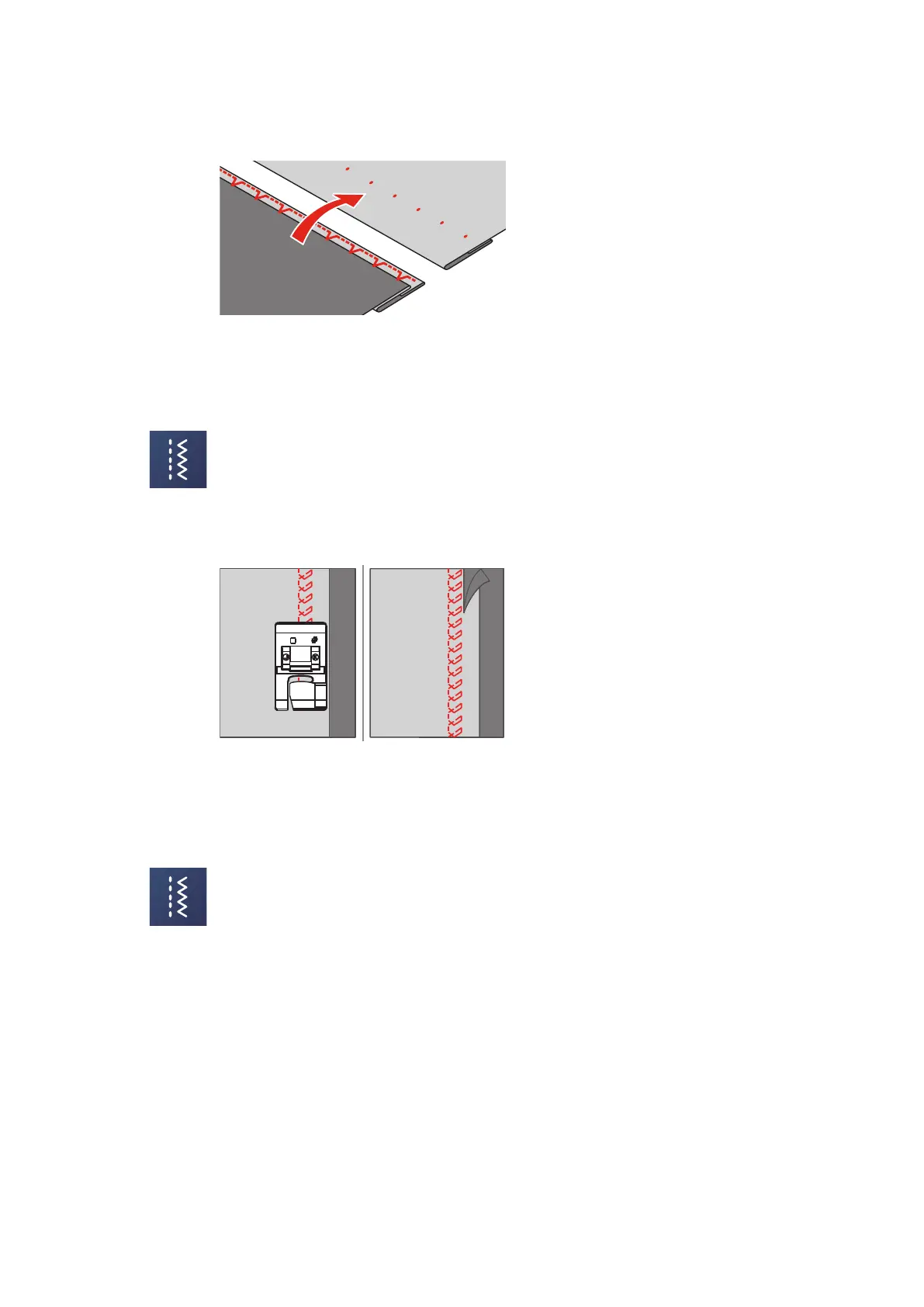
> Turn over the fabric.
6.15 Sewing Visible Hems
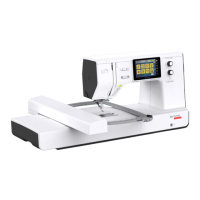
The visible hem is particularly suitable for elastic seams in tricot made of cotton, wool, synthetic and mixed
fibers.
> Attach the Embroidery Foot (JK).
> Tap «Practical Stitches».
> Select the Tricot Stitch No.14.
> Iron the hem and baste if necessary.
> Reduce the presser foot pressure if necessary.
> Sew the hem in the desired depth on the right side of the fabric.
> Trim off the remaining fabric on the wrong side of the fabric.
6.16 Sewing Basting Stitches
When sewing basting stitches, it is recommended to use a fine darning thread. This is easier to remove. The
longest stitch possible is 5mm. The recommended stitch length is 3.5–5mm. The basting stitch is suitable
or sewing projects where a very long stitch length is required.
> Attach the Zigzag Foot (DA).
> Tap «Practical Stitches».
> Select the Basting Stitch No.21.
> Select the stitch length.
> Pin the fabric layers at a right angle to basting direction to prevent the layers from slipping.
> Sew 3–4 securing stitches at the beginning and at the end.
6.17 Sew Thick Areas
> Attach the Zigzag Foot (DA).
– The black button on the left side of the presser foot will lock the presser foot in a horizontal position if
you push it in before lowering the presser foot (1). This ensures even feeding at the beginning of a
seam and helps when sewing multiple layers of fabric such as sewing over seams when hemming
jeans.
> Once the highest point has been reached, lower the needle and raise the presser foot.


 To Next Page