Chapter 5 Programmable Parameters
Evia HF / HF-T Technical Manual
PAGE 50
5.13.3 Search Type
Interval Time of Day
This feature determines when the device performs a Ventricular Capture Control test to check the
current threshold.
• Interval — Interval starts the next Active Threshold Monitoring test at a programmed time from
when the previous threshold test was performed. This time may vary due to retesting
programming changes or threshold testing done after loss of capture. By default, it is set to once
every 24 hours.
• Time of day — The time of day allows the user to program a specific time of day when the Active
Threshold Monitoring test is performed. By default the time is set to 2:00 AM. This may be
changed if the patient is sensitive to the pacing test occurring at night and may be set to a time
when the patient is awake.
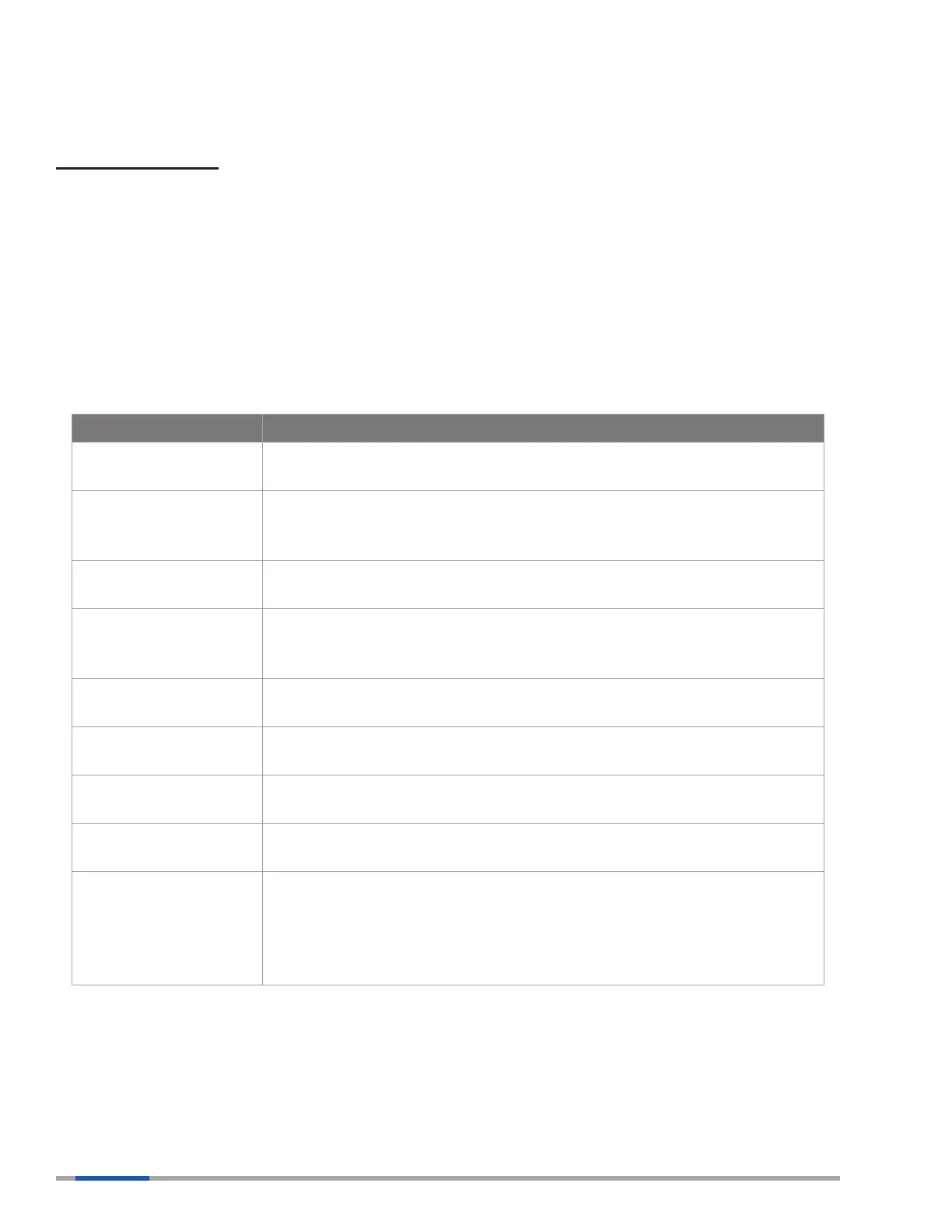
Term Denition
CV
Capture Verication—A component of the VCC feature that provides
beat-to-beat classication of capture and non-capture.
ATM
Automatic Threshold Measurement—A component of the VCC feature
that periodically measures the ventricular pacing threshold. ATM can
only occur after a successful CV.
Evoked Response
The intracardiac signal measured during electrical activation of the
cardiac tissue.
LOC
Loss-of-Capture—The VCC feature classies loss of capture when a
series of ventricular pacing pulses at varying AV delays did not capture
(with a maximum of 3 consecutive NC’s).
MaxVCCAmp
Threshold test start—This programmable parameter is the maximum
voltage setting that VCC will set after a successful CV.
NC
Non-Capture—The VCC feature identies a non-capture as a single
ventricular pacing pulse without capture.
Polarization Artifact
The signal or noise caused by the pacing pulse between the pacing
electrode and the cardiac tissue.
Safety Margin
The safety margin is the difference between the pacing threshold and
the programmed pacing amplitude.
SA
Signal Analysis—A component of the VCC feature that periodically
determines whether evoked responses are appropriately detected and
that pacing artifact is sufciently small in amplitude. If the SA determines
that the signal is not acceptable, then the other portions of the VCC
feature cannot be activated.
Table 13: Acronyms and Terms



 To Next Page