Chapter 6 Statistics
Evia HF / HF-T Technical Manual
PAGE 74
The Mode Switching graph presents data as the number of mode switch events, as well as their total
duration. The intervention rate for mode switch is listed on this page, as well.
NOTE:
If two mode switch events occur within 25 seconds of each other, the device will count two events, but
only one Holter may be recorded.
6.3.4 Ventricular Arrhythmia
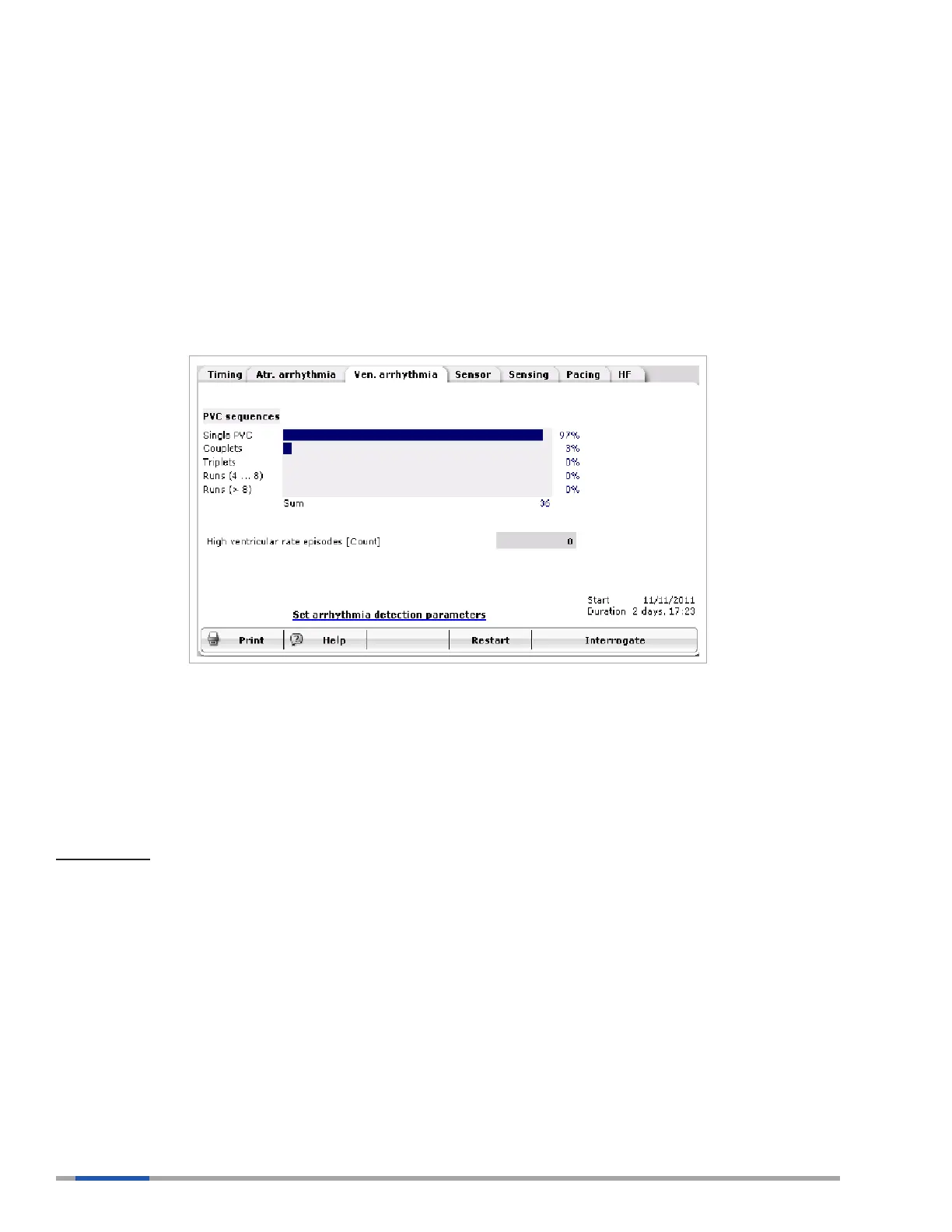
The PVC sequences graph provides information related to the number and type of PVC sequences.
These sequences include single PVC events, couplets, triplets, runs of 4-8 events and runs of more
than eight events.
Figure 43: Ventricular Arrhythmia Screen
Evia CRT-P counts each type of PVC sequence. Each sequence is counted in the sum total below the
bar graph in Figure 43. The Sum value is the total number of sequences that have occurred. Each
sequence is also given a percentage value; comparing each event sequence against the total number
of event sequences.
The Ventricular statistic also displays the total number of HVR events that have occurred.
Key Points:
In order to be counted, PVCs must meet the following criteria:
• Two ventricular events with no Ap or As in between
• An Ars occurring more than 350 ms from the subsequent Vs.
An increase in PVC/h may indicate greater susceptibility to ventricular arrhythmias.
If the patient has a large amount of PVCs causing a low CRT pacing percentage, programming RVES
triggering ON may improve the CRT pacing percentage.
A high number of PVCs may indicate atrial undersensing.



 To Next Page