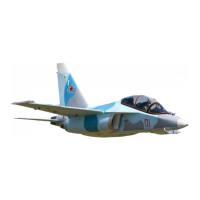
YAK 130
BVM ©2016 52 Mar. 23, 2016
Flush Mount Vent and Overflow System
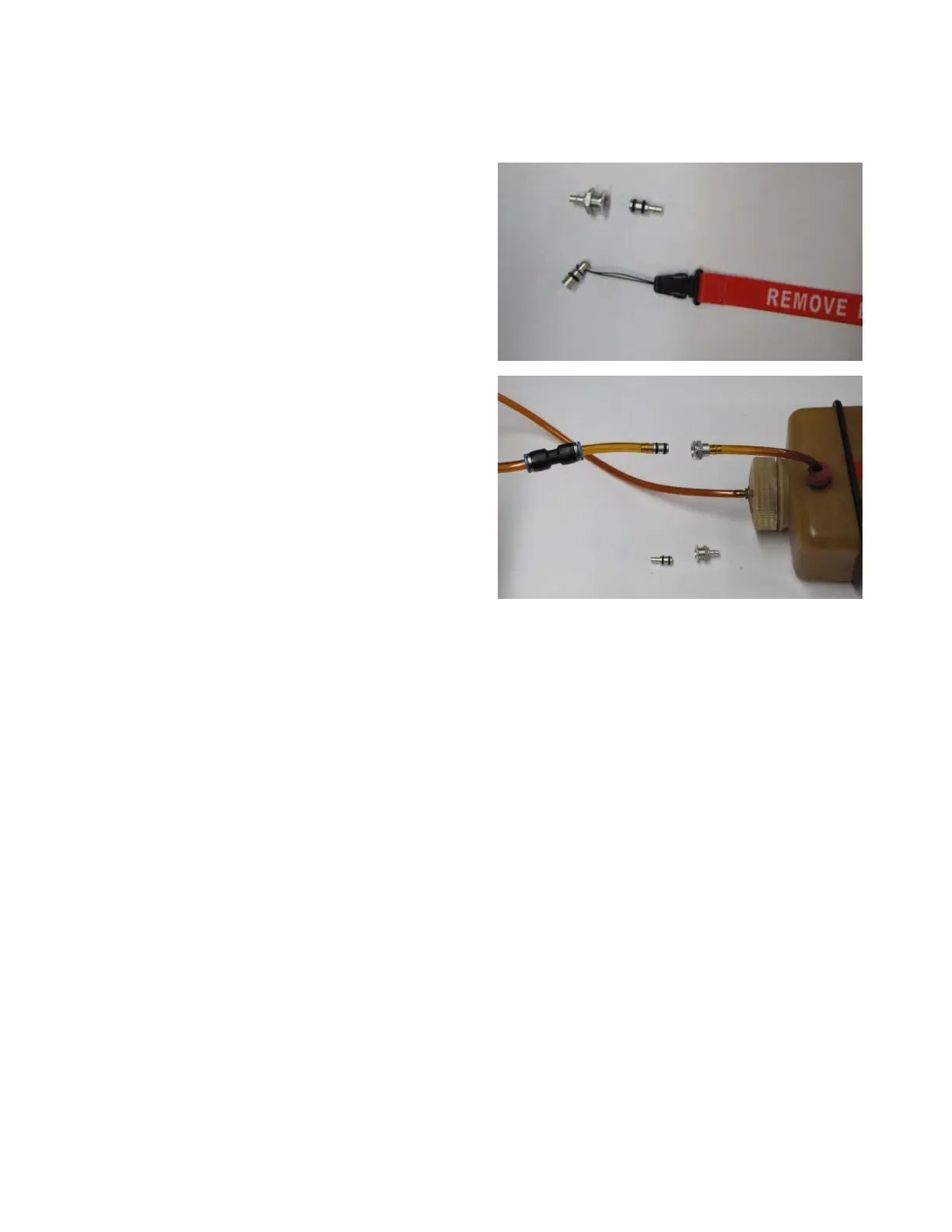
A flush mounted vent system is used on
both the fuel and smoke systems. A
magnetic vent plug with red “Remove
Before Flight” tag and BVM Overflow/Taxi
tank conversion fittings are provided.
Install the fittings to your overflow/taxi tank.
Use an overflow tank while fueling to
prevent spillage and to ensure fuel tanks
are full before flight.
Use BVM Overflow tank Part #BVM6047
Gyro Sense
While still in your shop, check that the control surfaces move in accordance with the
transmitter stick commands with the gyro “OFF”. Now, check that the gyro corrective action is
in the proper direction on all 3 axes. Check with the gyro selected to the low rate and high
rate condition. Move the models nose to the left, as if you were sitting in the cockpit, and the
rudder should correct with a movement to the right. Check also the correct gyro action in the
roll and pitch axes.
It is BVM’s practice on a first gyro assisted flight to take-off with the transmitter 3 position
gyro assigned switch in the “OFF” position. Climb to a safe altitude and trim the model for the
various flight configurations and speed. Then, at a medium speed, turn the gyro “ON” to the
“Low Rate” position and check the trims and gyro for correct sensing and flight stability. If
anything is not right, immediately select the “OFF” position with the transmitter 3 position
switch. You may even brief your “caller” to do so if you prefer.
If all is good in the “Low Rate (gain)”, you can try the “High Rate” operation. Fine adjustment
of the “Low Rate” and “High Rate” percentages can be dialed in after a few flights in various
wind conditions.
We generally utilize the “High Rate” selection for landing, especially if the wind is a bit gusty
and crossed. As is always good practice in aviation; “err on the safe side”.


 To Next Page