Using Apollo
40 ©2020 CAE 905K351052 v1.1
CAEApollo
Respiratory System
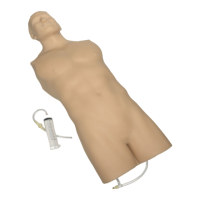
Apollo Prehospital’s Respiratory system is comprised of the airway management, spontaneous
breathing and ventilation features. On Apollo Nursing, various clinical signs such as breath sounds,
chest excursion and airway patency can be physically demonstrated. A series of speakers inside each
simulator can generate a range of breath and throat sounds used in diagnosing conditions. With the
manikin, learners can:
• Manage difficult airways
• Perform intubation and procedural suctioning
• Recognize and resolve right mainstem intubation
• Perform needle decompression
• Perform chest tube insertion
• Perform cricothyrotomy
• Maintain tracheostomy site
Respiratory System Controls
Apollo uses both physical and mathematical models to achieve an extremely accurate simulation of
respiration. Apollo’s chest rises and falls, mimicking inspiration and expiration. Apollo Prehospital’s
lungs also react realistically to intubation as well as to pathophysiologic states.
Respiratory System Controls
Anatomy,
Physiology and
Clinical Signs
Clinical Interventions, Patient
Monitoring and Scenarios
Software Control Manual Control
Spontaneous
Breathing
Normal tidal breathing and
pathophysiological conditions such
as atelectasis, pneumothorax,
asthma and COPD.
None required, but
adjustable.
VIEW: Respiratory
None required.
Exhaled CO
2
(Prehospital
only)
Measure the presence or absence
of CO
2
during positive pressure
ventilation.
None required. CO
2
canister is
inserted
Pneumothorax
or Hemothorax
Increase in intrapleural volume,
leading to asymmetrical breathing.
None required, but
adjustable.
VIEW: Respiratory
CONTROL:
Intrapleural
Volume (Left or
Right)
None required.


 To Next Page