Using Apollo
50 ©2020 CAE 905K351052 v1.1
CAEApollo
2. Using the proper clinical technique, insert the suction catheter until
resistance is encountered at the bifurcation.
3. Withdraw and apply suction. Fluid can be suctioned over a distance of
approximately 4 cm distal to the bifurcation. Use only distilled water with
food coloring, if desired.
Note: Cleanup is very important when using simulated fluids. For more information on cleaning the
manikin fluid system, see the Care and Maintenance of this user guide.
Cardiovascular System
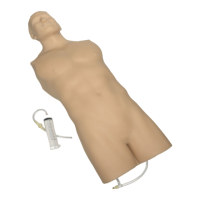
The Apollo manikin includes cardiovascular features that allow learners to practice basic assessment
and life support skill sets. With the Apollo manikin, learners can:
• Palpate pulses
• Place IV lines and catheters
• Administer IM and SQ injections
• Perform IO procedures
• Auscultate realistic heart sounds
• Perform chest compressions
• Perform ECG monitoring
• Performor real defibrillation with a commercial defibrillator
Cardiovascular System Controls
With Apollo’s Cardiovascular system, users can replicate the clinical signs associated with cardiac
activity, including palpable pulses, heart sounds, and electrical activity.
Cardiovascular System Controls
Anatomy,
Physiology and
Clinical Signs
Clinical Interventions, Patient
Monitoring and Scenarios.
Software Control Manual Control
Heart Sounds Normal and abnormal heart sounds
are synchronized to the cardiac cycle
and audible with a standard stetho-
scope. Heart sounds can be auscul-
tated over the lower sternal border
and apex.
None required;
specific sounds
can be selected.
From the
Run
screen, tap
Sounds and select
Heart tab.
None required.


 To Next Page