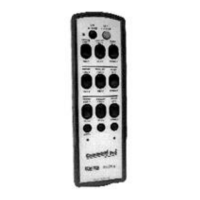
• When an operator is putting on or taking off the controller by means of its belt loop strap, carrying
harness or shoulder strap, the controller shall be switched ‘OFF’ beforehand, using the appropriate
ON/OFF switch(es). When the controller is equipped with a STOP button, it shall be set to the ‘STOP’
position before switching off power to the controller
• The portable remote controller shall always be switched ‘OFF’ when not in use and, when practical,
stored under lock and key
Operating the Remote Controlled Crane
• Check all crane limit switches at the beginning of each shift or when a new operator takes control of the
crane. While checking the limit switches, the hoist shall be centered over an area free of personnel and
equipment so that if the limit switches fail, and the hook and block assembly falls, no one will be injured
and no equipment will be damaged
• The limit switches shall never be used as regular stopping devices. They are intended to be protective
devices only
• The bridge and trolley brakes shall be tested at the beginning of each shift or when a new operator takes
control of the crane. They should be tested with the bridge and trolley at low speed
• When lifting maximum or near maximum loads, the operator shall test the hoist brakes by raising the load
a few inches from the floor. If hoist brakes do not hold, immediately lower the load to the floor and make
a report to the supervisor
• Do not make lifts in excess of the rated capacity of the crane
• When making lifts, the bridge and trolley shall be centered directly over the load to prevent load swinging
when the load is raised
• Side pulls shall be made only with the permission, and under the direct supervision, of management.
When such a lift is being made, operators shall not position themselves in the line or path of travel of the
load, but shall operate the crane from a position to the side opposite to the path of travel
• When raising or lowering a load, proceed slowly and make certain the load is under control. Tag lines
shall be used for handling lengths or bulky loads. Take the slack out of the chains or slings gradually.
Make sure all personnel are clear before making a lift
• PRC crane operators shall keep all parts of their bodies away from the load and never position
themselves under the load
• Do not make a lift or move the crane if anyone is in a position to be injured
• If a PRC crane operator is being helped, he or she shall not move the crane until he or she receives an
‘all clear’ signal from the helper(s)
• Loads shall not be carried over workers' heads
• If anyone is in the path of travel, the portable remote control crane operator shall stop and clear the area
before proceeding
• Bumping into runway stops or into other cranes on the same runway is prohibited
• When moving the crane, the PRC crane operator shall make sure the hook block, attachment and/or
cables will not fall on nearby equipment
• The PRC crane operator shall not drag slings, chains, etc., along the floor. These could snag on
something on the floor, causing the cables to break and strike the operator or a fellow worker
• If gloves are not required for safety reasons, they shall not be used when operating the portable remote
controller
• All loose material or parts shall be removed from the load before starting the lift. Such material can fall,
damaging equipment or injuring people below



 To Next Page