Troubleshooting
98-158751-C Chapter 7: Maintenance and troubleshooting 7-7
7.5 Troubleshooting
7.5.1 Status signalling
Built-In Test Equipment (BITE)
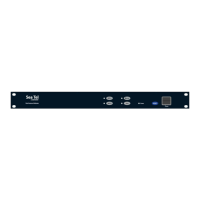
The CSDU provides a Built-In Test Equipment (BITE) function in order to make fault
diagnostics easy during service and installation.
The BITE test is done during:
• Power On Self Test (POST), which is automatically performed each time the system is
powered on.
• Person Activated Self Test (PAST), which is initiated by pressing the Push To Test
button on the front panel of the CSDU.
Also, during operation a Continuous Monitoring BITE function is performed.
Each LRU in the AVIATOR 700S system has its own BITE function but they are all
controlled and monitored by the CSDU in the system.
Results from the BITE tests for the complete AVIATOR 700S system are shown as four
digit error codes. The two most significant digits represent the main group. The two least
significant digits give further details. The CSDU BITE codes inform you that there are
errors in the CSDU. Use the CSDU diagnostic report for further information on the BITE
errors.
Means of signalling
The AVIATOR 700S System provides various methods for signalling the status of the
system.
• LEDs on the front panel of the CSDU are used to signal:
• Power on/off
• Logon
• Fail/Pass
• Connected display units (e.g. MCDU) display messages concerning:
• information from the services
• status information from the system to the user
• equipment errors.
• Security and system log files: In Maintenance allowed mode.
Messages in the MCDU display
Two types of messages are displayed:
• Cause codes are information from the services or status information from the system to
the user.
• BITE codes are information about errors in the equipment.
For further information and lists of the possible error codes, refer to the appendix System
messages on page B-1.



 To Next Page