1.2.4 Translator
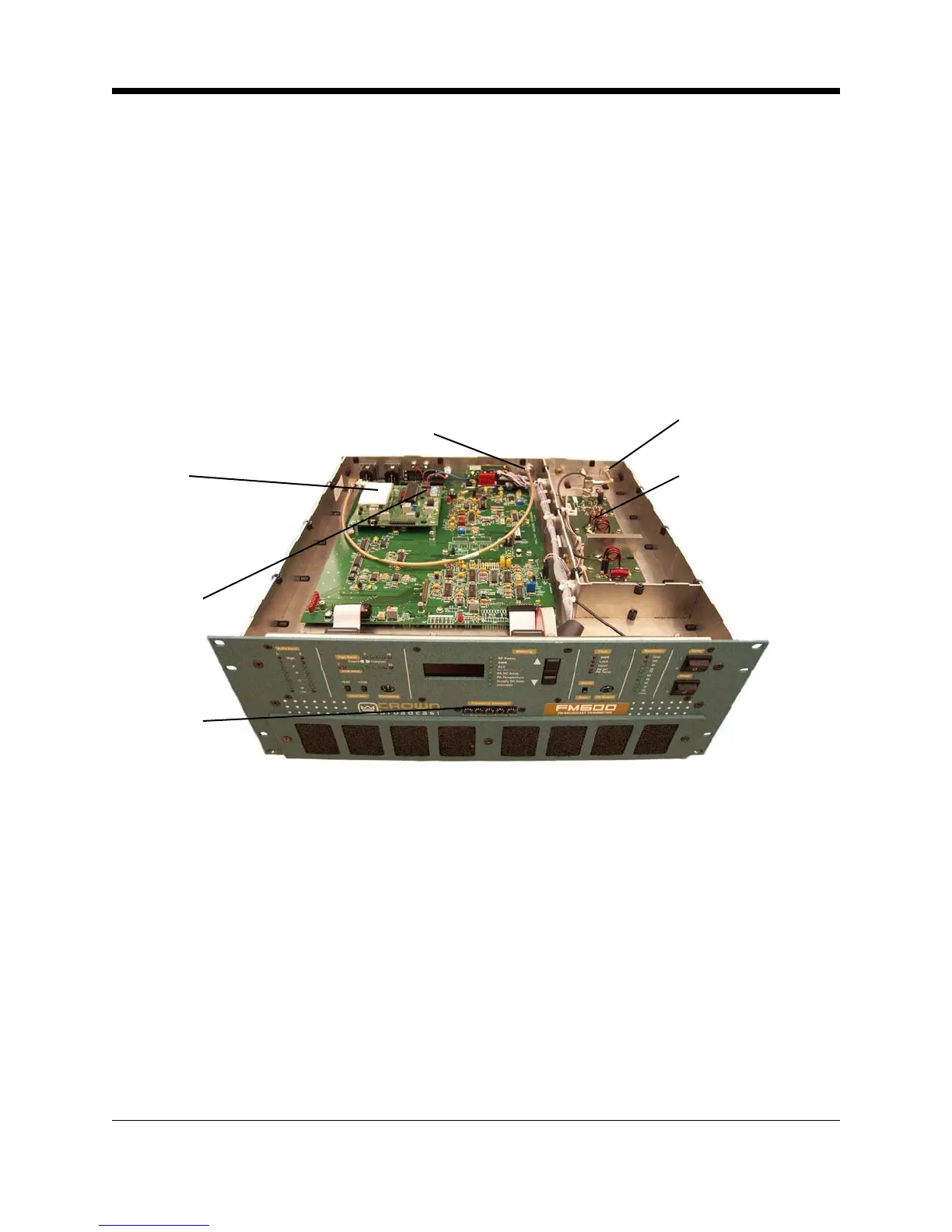
A receiver configuration (FM600R, for example) replaces the audio processor/stereo generator
board with a receiver module. This added feature makes the FM600 ideal for translator service
in terrestrial-fed networks. These networks represent a popular and effective way to increase
your broadcasting coverage. Translators, acting as repeater emitters, are necessary links in
this chain of events.
Traditionally, network engineers have relied on multiple steps and multiple pieces of equipment
to accomplish the task. Others have integrated the translator function (receiver and exciter) to
feed an amplifier. Crown, on the other hand, starts with an integrated transmitter and adds a
solid-state Receiver Module to form the ideal translator.
This option enables RF input and RF output on any of Crown’s FM series of transmitters. In
addition, the module supplies a composite output to the RF exciter portion of the transmitter.
From here, the signal is brought to full power by the built-in power amplifier for retransmission.
The Receiver Module has been specifically designed to handle SCA channel output up to 100
kHz for audio and high-speed data.
FSK ID programming is built-in to ensure compliance with FCC regulations regarding the on-air
identification of translators. Simply specify the call sign of the repeater station when ordering.
Should you need to change the location of the translator, replacement FSK chips are available.
The Receiver Module option should be ordered at the time of initial transmitter purchase. How-
ever, an option kit is available for field converting existing Crown units.
In the translator configuration there are differences in the function of the front panel. See Sec-
tion 3 for a description.
1-5 Getting Acquainted
Frequency
Selection
(Receive)
Receiver
Module
(Option)
RF Input
(Receive Antenna)
Frequency
Selection
Transmit
RF Output
RF Low
Pass Filter
Illustration 1–3 Crown's Integrated Translator



 To Next Page