MAINTENANCE SECTION 5
Page 47
DRESSTA OM560C99/1E
5.15. SEAT BELT
WARNING! Do not use bleach, color dye or solvents on the seat belt webbing,
because this can weaken it and cause personal injury. Clean the seat belt only
with warm water and a mild detergent. Replace belts when worn, frayed, torn,
stiff, or rotted webbing or defects of the tang, buckle or anchors are detected.
Keep belt flat to avoid twisting and roping when not being used. Do not place heavy or sharp objects
on the belt.
The entire seat belt assembly should be inspected periodically for corrosion, wear, fraying or weak
spots. The seat belt mounting bolts should also be periodically inspected for looses.
5.16. STEERING GEAR
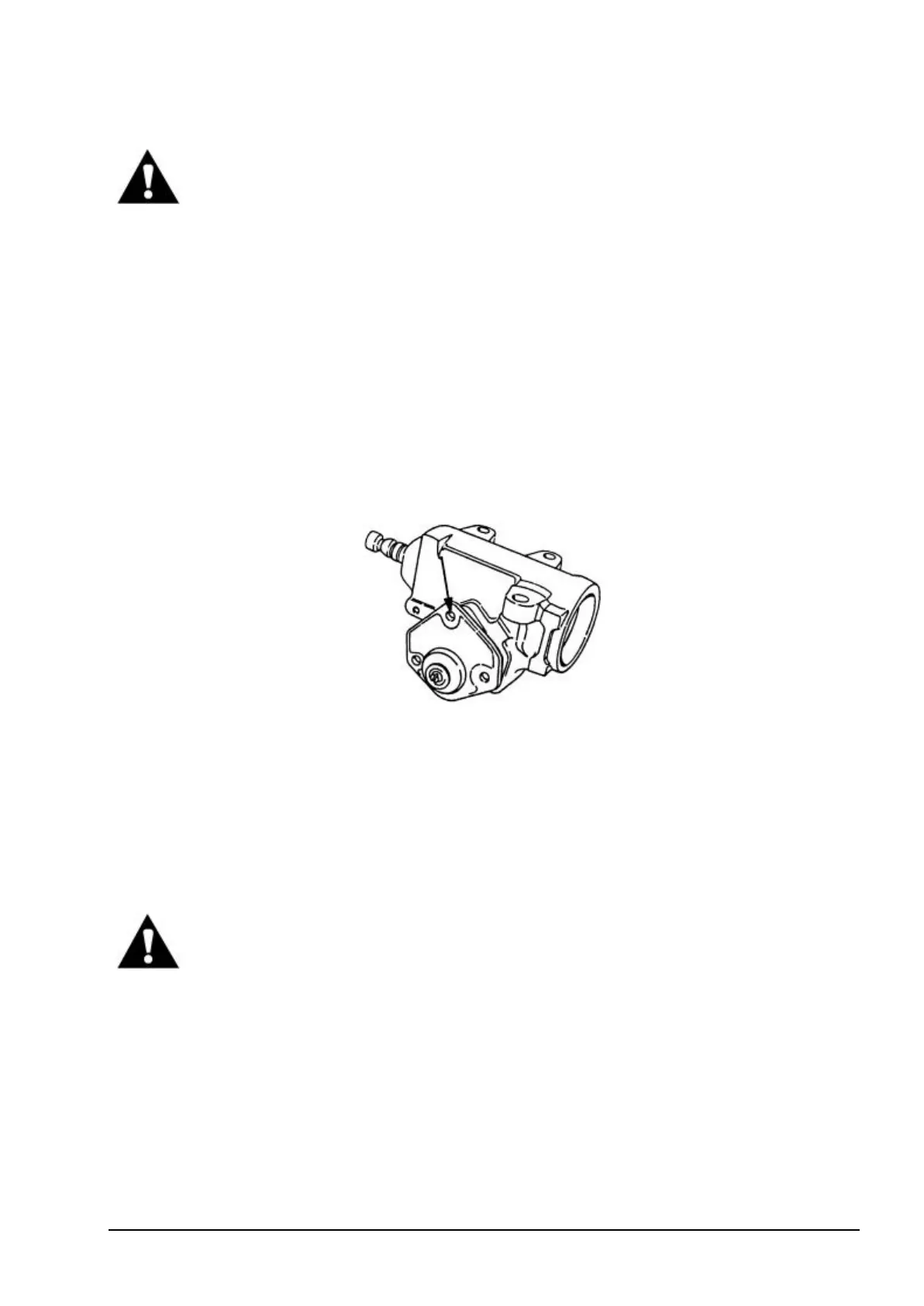
Check the lubricant level by removing the cap screw in the side cover, Fig. 5.52. If the lubricant is
below the cap screw hole add lubricant through the hole as necessary. Refer to "REFILL
SPECIFICATIONS AND CAPACITIES CHART" for grade of lubricant specified.
Fig. 5.52. Steering Gear Fill Location
5.17. TIRES AND RIMS
Avoid parking the machine in puddles of oil, grease or gasoline because this damages the tires.
INFLATION
WARNING! Never inflate a flat tire without inspecting the tire, rim and wheel for
damage. Be sure all components are properly assembled. Unmounted tires
being inflated or deflated should be placed in a tire safety cage. Inflate the tire
to 35 kPa and check that all components are properly seated. Never stand
directly in front of a tire and rim assembly while inflating. Use a clip-on chuck
with a hose long enough to allow the person inflating the tire to stand to the
side. Serious injury could result if the tire and mounting were to separate.
PROPER INFLATION
Maintaining the proper air pressure provides maximum road contact and results in increased tire
life. Check inflation pressures with an accurate tire pressure gauge when the tires are cool. Be sure
to install valve caps after inflating a tire. Refer to SPECIFICATIONS for normal operating inflation
pressure. Never vent built-up pressure in a tire, such as encountered on hot days. Pressure build-
up on hot days actually protects the tires by avoiding excessive sidewall flexing and its overheating,
which are detrimental to tire life. Venting tires will also result in underinflation when the tire cools.


 To Next Page