Operating Instructions For TD/TAD4 Dual Fuel Burner
June 13 154 of 165 TD/TAD4 Manual Rev 4
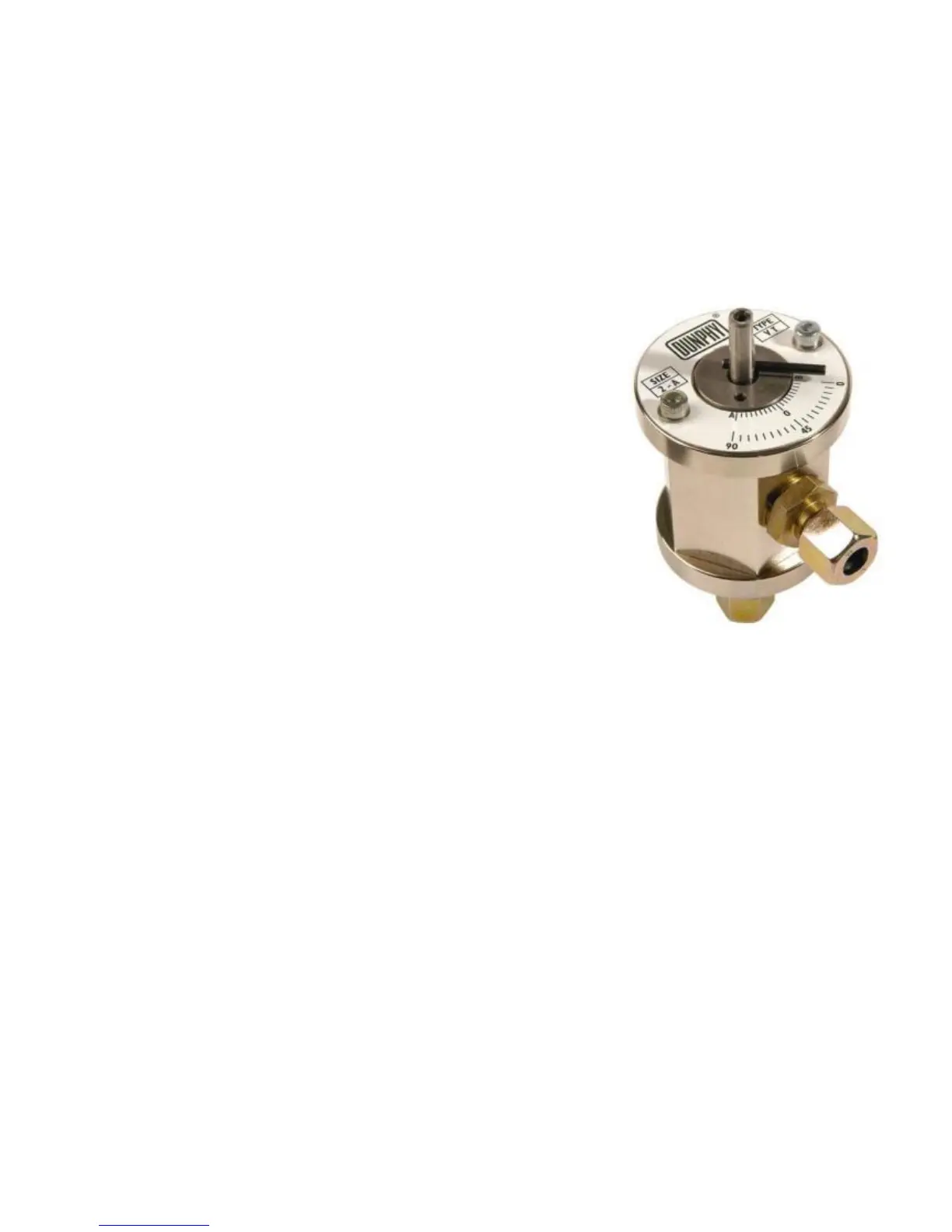
12.7 Variotronic VT Oil Metering Valve
12.7.1 General Description
The Variotronic oil valve has been designed to work primarily in conjunction with electronic
positioning motors for the accurate control of fluids, fuel oils and liquids as defined in the
specification of recommended applications.
The design of the valve incorporates an adjustable linear characterising spool which enables the
valve to operate to a virtually linear characteristic. the characterising spool adjusts the output of the
valve in relation to the metering valve spindle. This changes the flow rate of the valve - thus
ensuring that the maximum angular rotation is utilised to optimise the flow accurately.
12.7.2 Construction
The valve construction consists of a carbon steel body which is
drilled at each end to accommodate the valve output port and the
valve retaining cap. The output port is secured by 6 screws with an
oil seal 'O' ring sealing the face of the end cap and valve body. An
identical construction is on the drive end of the valve.
The end cap has a duel function in retaining the spool sleeve and
providing a clamp for adjustment. The valve control flow spindle is
mounted directly through the spool and retained by the output port
plate. This also has a duel function acting as a surface thrust plate
for the valve control. When the valve is used in conjunction with an
electronic servo motor, there are mounting pillar locations provided
at 52mm hole centres (which is the European standard for the 4Nm
required torque for operating this type of valve.)
12.7.3 Valve Maintenance
All rotating valves do eventually require maintenance, but maintenance is only generally necessary
as a result of wear on oil seals or 'O' rings. as a general guide we recommend that 'O' rings are
normally re-placed every 2 years or 20,000 hours, but this could vary on the type of fuel being
used, generally when operating on heavy fuel oils the service frequency should be reduced to 12
months. The normal grade of 'O' ring seals fitted within the valve is Viton.
Special materials are available for corrosive or fuels that contain corrosive substances. The
general service and maintenance of the valve is a very simple operation and all the seals could be
changed within a matter of minutes. It is essential to ensure that all replacement seals are of the
correct specification, any deviation from the specification could lead to premature seal failure and
even leakage from either the valve spindle or retaining faces.
12.7.4 Changing Seals
It is recommended that a spare set of seals is always retained for service and maintenance of the
valve. Changing the seals is a relatively simple task.
A. Isolate all electrical and fuel supplies
B. Ensure that the valve is cold and that there is zero pressure within the hydraulic circuit
C. Disconnect the valve drain mechanism, either mechanically or via electric servomotor
D. Before dismantling the valve, ensure that the positions are appropriately marked so that the
re-assembly, particularly of the spool ring can be repeated to the original settings. Remove
the 2 pillars securing the index plate. this will then expose the 4 countersunk retaining
screws on the valve retaining cap. The valve can then be de-assembled.


 To Next Page