245
WSG-1068 STARTER SYSTEM
Starter Motor - Motor Ground Circuit
A slow cranking condition can be caused by resistance
in the ground or return portion of the cranking circuit.
Check the voltage drop in the ground circuit as follows:
1. Disconnect the inertia fuel shutoff switch (on
road vehicle only).
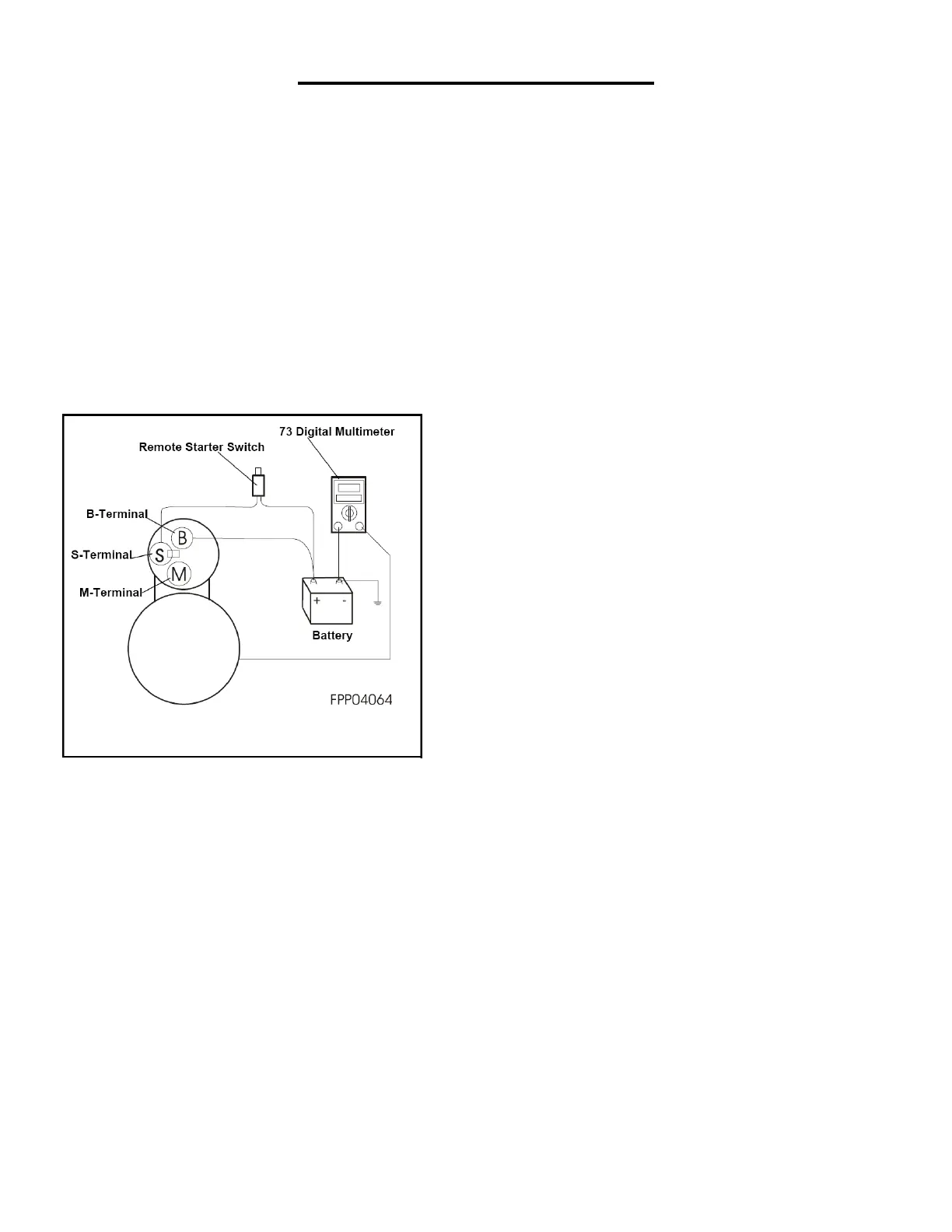
2. Connect a remote starter switch between the
starter motor solenoid S-terminal and the battery
positive (+) terminal.
3. Connect the 73 Digital Multimeter positive lead
to the starter motor housing (the connection
must be clean and free of rust or grease).
Connect the negative lead to the negative (-)
battery terminal.
4. Engage the remote starter switch and crank the
engine. Read and record the voltage reading.
The reading should be 0.5 volts or less.
5. If the voltage drop is more than 0.5 volts, clean
the negative cable connections at the battery
and body connections, and retest.
6. If the voltage drop is greater than 0.5 volts,
determine which way the current is flowing in the
cable. Connect the 73 Digital Multimeter positive
lead to the end of the cable nearest battery
positive.
7. Connect the multimeter negative lead to the
terminal at the other end of the cable.
8. Crank the engine and observe the voltage
reading. The voltage reading should be 0.5 volts
or lower. If the voltage drop is too high, clean the
terminal ends. Retest, and if still high, replace
the cable. If the voltage reading is less than 0.5
volts and the engine still cranks slowly, replace
the starter motor.



 To Next Page