System Reference 7
Latch-Lock
Latch-Lock is a control mode available to any dimmer circuit (see
Control
on
page 17
). Similar to
switched mode, Latch-Lock features an additional safeguard so that circuits cannot be turned on or off
as easily. The circuit only turns on when a
defined
control level range is held for a
specified
amount of
time, and only turns off when a different control level range is held for another amount of time.
Latch-Lock is useful for avoiding accidental dowsing of arc lamps during shows (often caused by
running the grandmaster down). By requiring a level range and time, most master fades will not hover
in a given range for long enough to trigger on or off.
The level ranges and times can be edited on a per dimmer basis (see
Dimmer Property Definitions
on
page 17
). On and Off level ranges may not overlap.
Lug
“Lug” refers to a physical position in the rack. Lugs are always numbered counting downwards from
the top of the rack, starting at 1. Some modules may take up multiple lug positions in the rack.
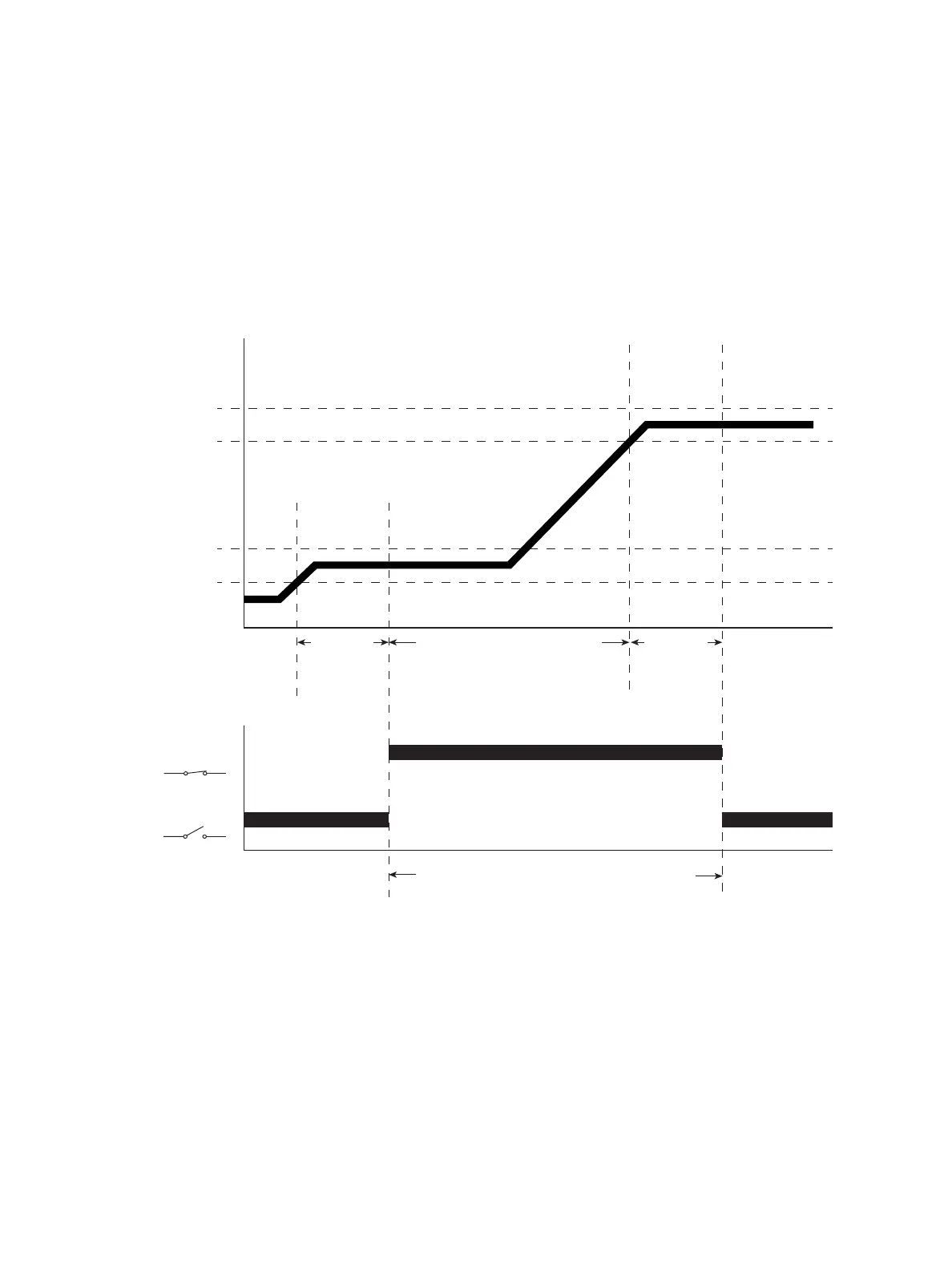
Level
Time
Latch-Lock on range
Latch-Lock
On Time
Latch-Lock off range
Latch-Lock
Off Time
During this time interval the
control source can go to any level
and the circuit will stay on (relay
closed) as long as the control
source level does not stay in the
Latch-Lock off range longer than
the Latch-Lock off time value.
Control Level
relay open
(circuit off)
relay closed
(circuit on)
Time
relay closes
(circuit turns on)
relay opens
(circuit turns off)
Diagram of How Latch-Lock is Applied to a Circuit


 To Next Page