Page 10CWT S5 Installation & Maintenance ManualIssue 5
Safety
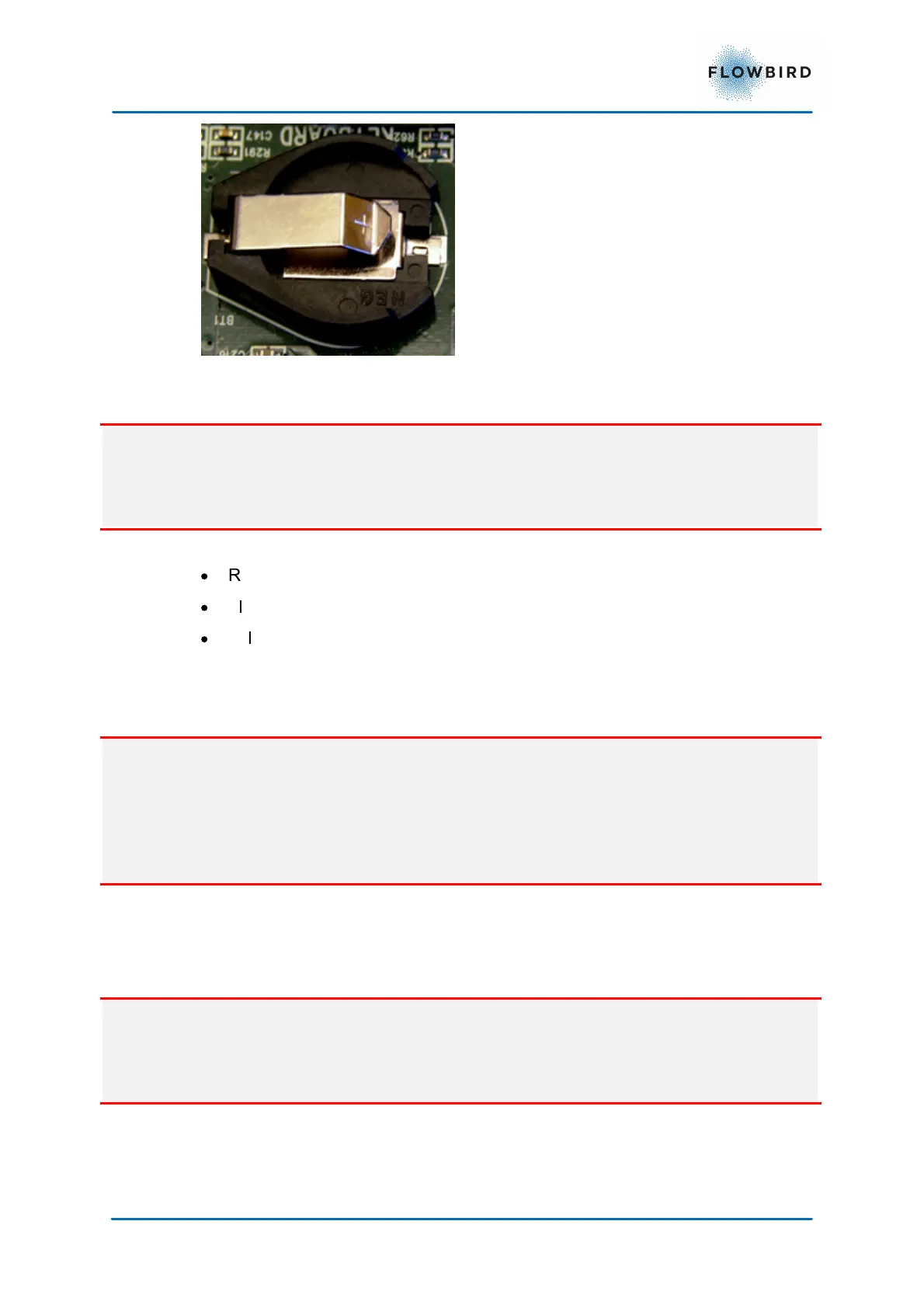
Figure 1, Backup Battery case
3.2.2
Short-circuit risk
Warning:
Although the battery voltage is relatively low, there is a risk of personal injury
(such as burns) if the battery poles are short-circuited. Make sure you do not
short-circuit the battery when using tools and other metal objects.
When working with equipment connected to the power supply:
·
Remove rings, necklaces, watches, key rings with chains, etc.
·
Always use insulated tools.
·
Follow all applicable local worker safety regulations.
3.2.3
Corrosive acid
Only batteries that are not maintenance-free need to be checked regularly.
Warning
The sulphuric acid used in lead batteries is corrosive. Always wear eye
protection when checking the battery acid level and refilling with water. If you get
acid in your eyes, flush them immediately with water. There should possibilities
for flushing eyes available on facilities where the battery is charged. If you get
acid on your skin, wash immediately with soap and water.
Handle the battery with care during transportation and installation.
Follow all applicable local worker safety regulations.
3.2.4
Risk of explosion
Warning:
Battery charging develops hydrogen gas that is highly explosive and
inflammable. The charging area must therefore be well ventilated. Besides
hydrogen gas, an acid fog is also developed.
An explosion may also occur within a few seconds if the battery poles are short
circuited by a metal object such as a wrench and sulphuric acid will then be
spread around.



 To Next Page