inputs (2 inputs / each axis). The general inputs as well as the index pulse can also be used as high speed latches
for each axis. A high speed encoder compare output is also provided.
4183
The DMC-4153 through DMC-4183 controller provides an additional 8 optoisolated inputs and 8
optoisolated outputs.
System Elements
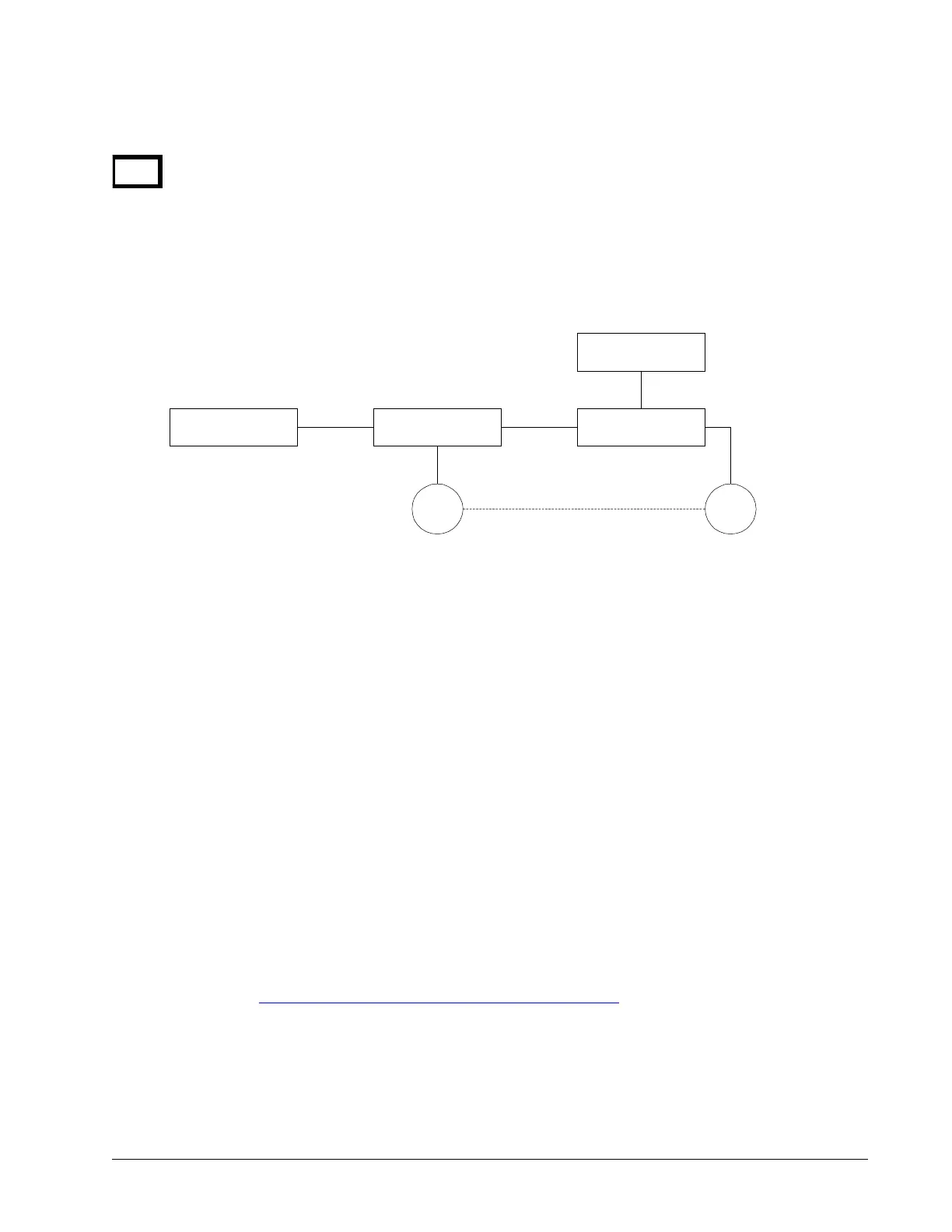
As shown in Figure 1.5, the DMC-41x3 is part of a motion control system which includes amplifiers, motors and
encoders. These elements are described below.
Figure 1.5: Elements of Servo Systems
Motor
A motor converts current into torque which produces motion. Each axis of motion requires a motor sized properly
to move the load at the required speed and acceleration.
The motor may be a step or servo motor and can be brush-type or brushless, rotary or linear. For step motors, the
controller can be configured to control full-step, half-step, or microstep drives. An encoder is not required when
step motors are used.
Other motors and devices such as Ultrasonic Ceramic motors and voice coils can be controlled with the DMC-41x3.
Amplifier (Driver)
For each axis, the power amplifier converts a ±10 volt signal from the controller into current to drive the motor.
For stepper motors, the amplifier converts step and direction signals into current. The amplifier should be sized
properly to meet the power requirements of the motor. For brushless motors, an amplifier that provides
electronic commutation is required or the controller must be configured to provide sinusoidal commutation. The
amplifiers may be either pulse-width-modulated (PWM) or linear. They may also be configured for operation with
or without a tachometer. For current amplifiers, the amplifier gain should be set such that a 10 volt command
generates the maximum required current. For example, if the motor peak current is 10A, the amplifier gain should
be 1 A/V. For velocity mode amplifiers, 10 volts should run the motor at the maximum speed.
Galil offers amplifiers that are integrated into the same enclosure as the DMC-41x3. See the Integrated section in
the Appendices or http://galil.com/motion-controllers/multi-axis/dmc-41x3 for more information.
Encoder
An encoder translates motion into electrical pulses which are fed back into the controller. The DMC-41x3 accepts
feedback from either a rotary or linear encoder. Typical encoders provide two channels in quadrature, known as
Chapter 1 Overview ▫ 9 DMC-41x3 User Manual
Computer DMC-41x3 Controller
Amplifier (Driver)
Power Supply
Encoder Motor


 To Next Page