2: HCGSN
32
Geodesic Sensor Net Technical Manual
S-MAN-200-GSNR-001 • January 31, 2007
Tension Structure and Pedestal Design
The geodesic tessellation that is the basis of both the HCGSN and GSN 200 provides
not only even intersensor distances across the head surface, but also uniform radial
compression at each sensor pedestal. The tessellation ensures a rapid, evenly spaced,
and comfortable Net application that requires no scalp abrasion.
Precision Structure
The HCGSN features an innovative elastomer geodesic structure. This structure
results in millimeter accuracy in the positioning of the sensors, enhanced head fit, and
improved EEG signal quality.
Low-Profile Pedestal
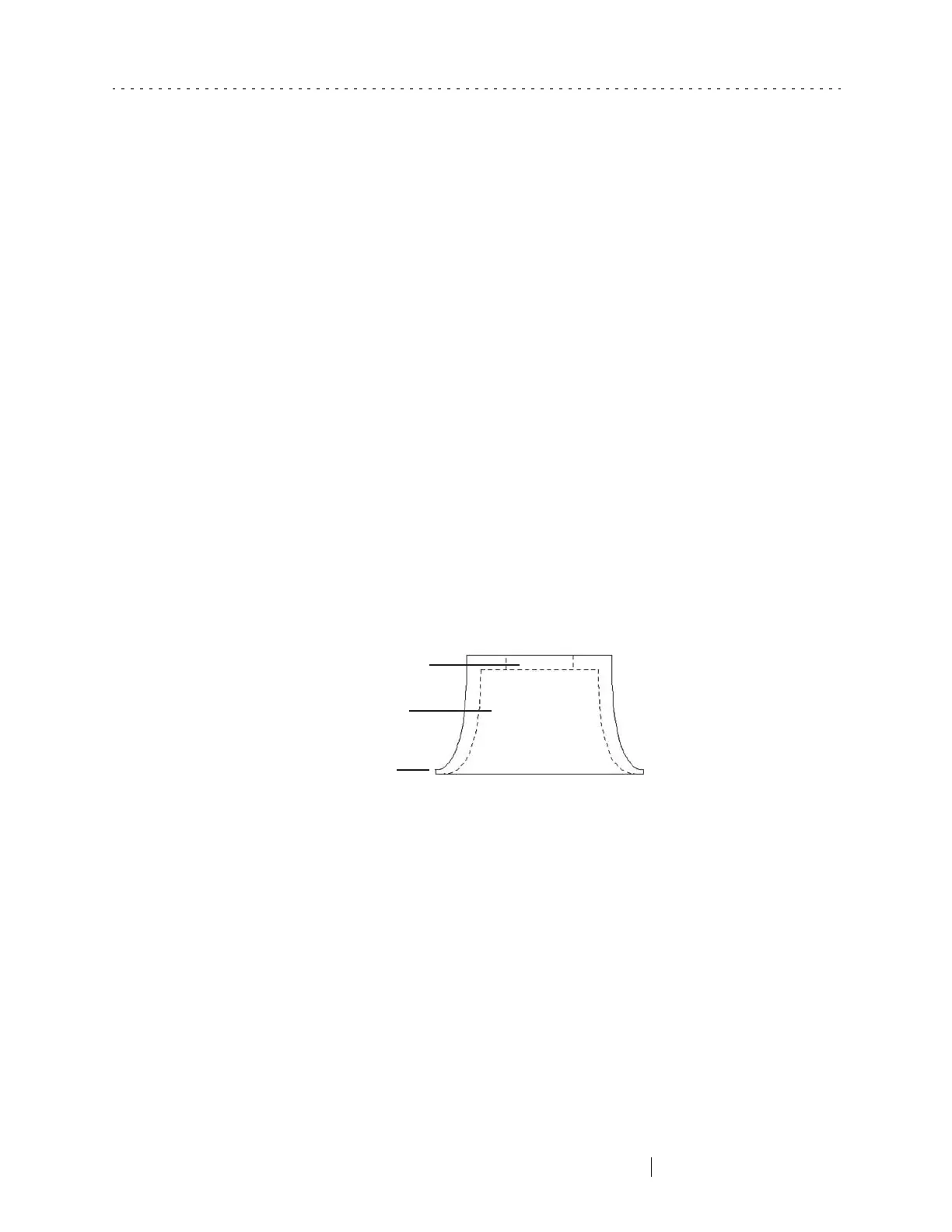
The HCGSN features a low-profile electrode pedestal, known as the
HydroCel
Hydrating Skin Interface Chamber
(Figure 2-4).
The low-profile electrode is designed to support both comfort and signal quality
for sleep studies, during long-term monitoring, and in confined spaces such as
magnetoencephalography dewars. The improved pedestal design achieves the low-
profile form factor while maintaining the Net’s adaptability to a wide variety of hair
types, lengths, and styles.
The pedestal is called a
hydrating skin interface chamber
because it creates a sealed
micro-environment that promotes additional comfort and recording duration. The
pedestal’s soft, flexible foot forms a seal with the skin, encapsulating the
electrolyte
and
electrode
within the chamber. The pedestal foot lifts and rakes the hair during
application, positioning the chamber under the hair and directly against the scalp.
The pedestal can work with or without sponge inserts.
Figure 2-4. HydroCel Hydrating Skin Interface Chamber
Soft, flexible foot
Hydrating chamber
Opening for electrode



 To Next Page