67
Panel Saw
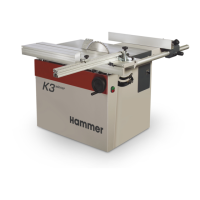
K3 basic/K3 winner
Operation
Warning! Risk of injury: An outrigger with an outrigger table is required when working with heavy work-
pieces and especially when working with large panels!
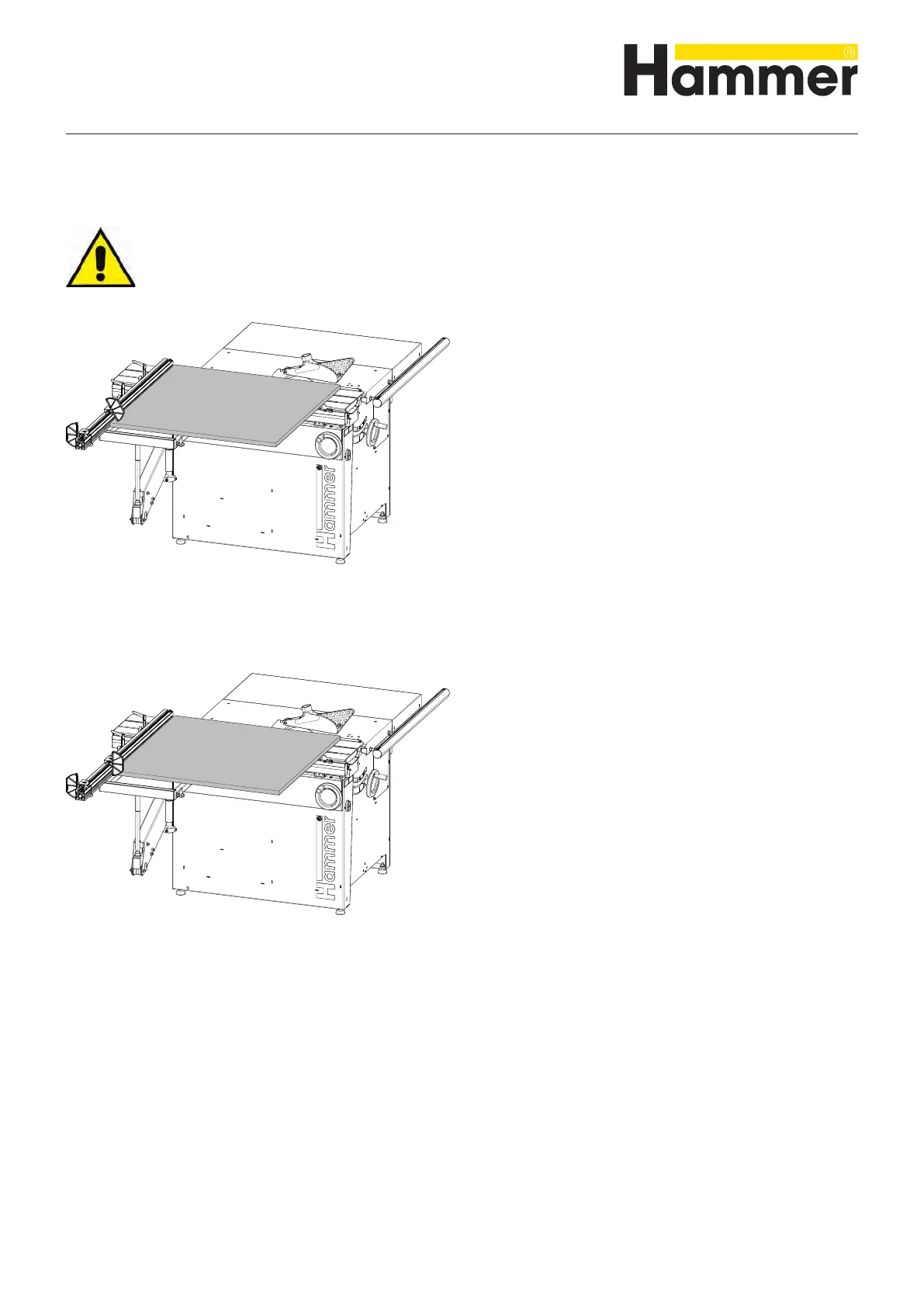
Fig. 96: Cutting with an outrigger
Fig. 97: Cutting with an outrigger
9.7.10 Cutting with an outrigger
Rough cut:
1. Take note of general procedures for authorised work-
ing techniques.
2. Move the parallel cutting fence as far away as pos-
sible from the saw blade.
3. Set the cross fence to the desired dimensions.
4. Undo the sliding table catch.
5. Place the work-piece against the crosscut fence.
6. Lift the end stop up and place it onto the workpiece
(Fig.).
7. Place the work-piece against the crosscut fence.
8. Switch on the circular saw.
9. Switch the scoring unit on, if necessary.
10. Feed the work-piece constantly past the circular saw,
keeping your fingers balled into a fist.
11. Pull the work-piece a few millimeters away from the
saw blade and move the sliding table into the initial
position.
Precise cut:
1. Lower the end stop.
2. Place the work-piece against the crosscut fence and
the end stop.
3. Press the work-piece against the crosscut fence.
4. Feed the work-piece constantly past the circular saw,
keeping your fingers balled into a fist.


 To Next Page