EasyManua.ls Logo

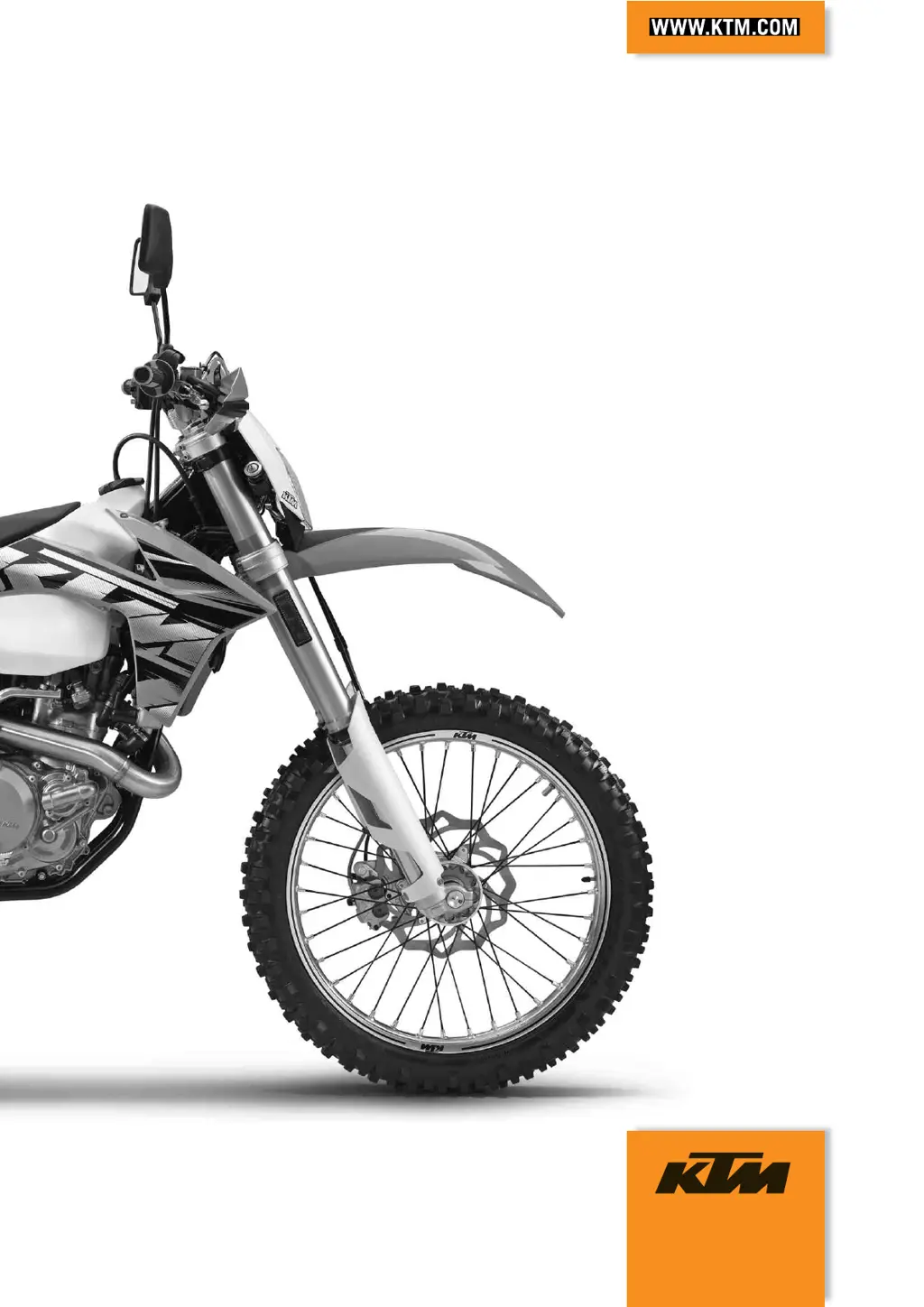
KTM 500 EXC - User Manual

KTM 500 EXC
119 pages
Print Icon
To Next Page IconTo Next Page
Loading...
OWNER'S MANUAL 2013
500 EXC USA
Art. no. 3211868en

Table of Contents

Questions and Answers

  • L
    Lindsey DennisSep 3, 2025
    What to do if KTM 500 EXC Motorcycle engine does not speed up?
    • J
      Jerry GonzalesSep 3, 2025
      If your KTM Motorcycle engine does not speed up, it could be due to a defect in the fuel injection system. To resolve this, read out the fault memory using the KTM diagnostics tool. Other potential issues include the ignition coil, spark plug connector, and the stator winding of the alternator.
  • P
    Preston HallSep 2, 2025
    What to do if KTM 500 EXC engine turns but does not start?
    • M
      Melinda RodriguezSep 2, 2025
      If your KTM Motorcycle engine turns but doesn't start, several issues could be the cause. First, ensure you are following the correct start procedure. Check that the fuel hose connection is properly joined. Also, inspect the fuses of individual power consumers. Other potential causes include an incorrectly set idle speed (adjust it), a spark plug that is oily or wet (clean, dry, or replace it), or a spark plug with an improper electrode distance (adjust the plug gap to 0.9 mm (0.035 in)). You may also need to check the ignition system, wiring harness, and electrical system, clean the plug connection and treat it with contact spray, and read out the fault memory using the KTM diagnostics tool.
  • R
    Robert MartinezSep 1, 2025
    What causes a KTM 500 EXC engine not to speed up properly?
    • A
      Adam TapiaSep 1, 2025
      If your KTM Motorcycle engine does not speed up properly, it could be due to a defect in the fuel injection system. Alternatively, the ignition system might be defective; check the secondary winding, spark plug connector, and the stator winding of the alternator.
  • G
    Gabriela LiuAug 31, 2025
    Why my KTM 500 EXC Motorcycle engine turns over but won't start?
    • N
      Nicholas JosephAug 31, 2025
      If your KTM Motorcycle engine turns over but doesn't start, several issues could be the cause. You might be making an operating error, so ensure you're following the correct start procedure. Check that the fuel hose connection is properly joined. Blown fuses (fuse 1 or fuse 2) can also prevent starting, so replace them if necessary. Other potential causes include an incorrectly set idle speed (adjust it), a spark plug that's oily or wet (clean, dry, or replace it), or an incorrect spark plug electrode gap (adjust to 0.9 mm). The ignition system or fuel injection system may be defective, requiring further inspection. A short-circuit cable in the wiring harness, or a defective kill switch or emergency OFF switch could also be the culprit, so check the wiring harness and electrical system.
  • D
    David OrtizAug 30, 2025
    What to do if my KTM 500 EXC engine cannot be cranked with the electric starter?
    • D
      Dana RobinsonAug 30, 2025
      If your KTM Motorcycle engine won't crank with the electric starter, there are several potential causes. It could be due to an operating error; make sure you're following the correct start procedure. The battery might be discharged, in which case you should charge it and check the charging voltage, closed current, and stator winding of the alternator. Also, check the main fuse and fuse 3, and replace them if blown. Finally, the starter relay or starter motor could be defective, so inspect those as well.
  • S
    stacey69Aug 29, 2025
    Why my KTM Motorcycle engine cannot be cranked (electric starter)?
    • M
      Maria BradshawAug 29, 2025
      If your KTM Motorcycle engine cannot be cranked using the electric starter, it could be due to several reasons. First, ensure you are following the correct start procedure. If that's not the issue, the battery might be discharged, so charge it, and check the charging voltage, closed current, and stator winding of the alternator. Also, check the main fuse and Fuse 5, replacing them if blown.
  • A
    Amanda RamirezAug 28, 2025
    What to do if my KTM Motorcycle engine turns but does not start?
    • C
      Claudia CruzAug 28, 2025
      If the KTM Motorcycle engine turns but does not start, several factors could be at play. First, ensure the fuel hose connection is properly joined. Check fuses 1 and 2, replacing them if blown. Inspect the spark plug; clean and dry it if oily or wet, or replace it if needed. Adjust the plug gap to 0.9 mm (0.035 in) if it's too wide. Also, the idle speed may need adjustment. If these steps don't resolve the issue, there may be a defect in the fuel injection system, which requires reading out the fault memory using the KTM diagnostics tool. Finally, check the wiring harness and ignition system.
  • K
    Kevin GreenAug 27, 2025
    Why is my KTM 500 EXC battery discharged?
    • A
      Alicia LeeAug 27, 2025
      A discharged battery in your KTM Motorcycle can occur if the alternator isn't charging the battery, necessitating a check of the charging voltage and the stator winding of the alternator. Another cause could be an undesired power consumer draining the battery, requiring a check of the closed current.
  • M
    Mary DavisAug 26, 2025
    What causes a KTM 500 EXC Motorcycle engine to not speed up?
    • J
      john95Aug 27, 2025
      If your KTM Motorcycle engine isn't speeding up as expected, it could be due to a defect in the fuel injection system, which would require reading the fault memory using the KTM diagnostics tool. Alternatively, a defective ignition system, including the ignition coil, spark plug connector, or stator winding of the alternator, might be the cause.
  • J
    Judy BennettAug 25, 2025
    Why does my KTM Motorcycle engine have so little power?
    • T
      Thomas GarciaAug 26, 2025
      Several factors can contribute to a KTM Motorcycle engine having too little power. A heavily contaminated air filter requires cleaning of the air filter and air filter box. A very dirty fuel filter or fuel screen needs to be changed. A defect in the fuel injection system may be present, requiring diagnosis with the KTM diagnostics tool. An exhaust system that is leaky, deformed, or has too little glass fiber yarn filling in the main silencer should be inspected for damage, and the glass fiber yarn filling should be changed. Insufficient valve clearance requires adjustment. Lastly, a defective ignition system, including the ignition coil, spark plug connector, or stator winding of the alternator, could be the cause.

Summary

Means of Representation and Safety Advice

Symbols and Formats Used

Explains the meaning of specific symbols and typographical formats used in the manual.

General Safety Advice and Risk Levels

Provides essential safety instructions, intended use, and risk level identification.

Vehicle Labels and Safety Warnings

Identifies vehicle labels and provides warnings on reporting defects and tampering.

Safe Operation and Protective Clothing

Advises on safe operation, protective clothing, and work rules.

Important Notes and Vehicle Identification

Warranty, Service, and Spare Parts

Covers important notes on warranty, service, spare parts, and customer service.

Vehicle Views and Serial Number Locations

Shows views of the vehicle and details on serial number locations.

Part Number Identification

Indicates the location of part numbers for the fork and shock absorber.

Vehicle Controls and Operation

Handlebar Controls Overview

Describes clutch, brake levers, throttle grip, horn, and light switch.

Switchgear and Indicator Lamps

Explains turn signals, emergency OFF, starter, ignition lock, and indicator lamps.

Speedometer Functions and Settings

Details speedometer overview, modes, clock, and unit settings.

Fuel Filler Cap Operation

Provides instructions for safely opening and closing the fuel filler cap.

Engine Tuning Controls

Describes idle speed adjustment, shift lever, and kick starter.

Steering Lock and Unlocking Procedures

Explains the steering lock mechanism for security.

Preparing for Use and Riding Instructions

First Use Advice and Pre-Ride Checks

Essential advice for first-time use and pre-ride checks for safety.

Engine Running-in and Difficult Riding Conditions

Guides on engine running-in and preparing for challenging riding conditions.

Riding Instructions: Starting, Shifting, Braking

Covers starting off, shifting gears, riding techniques, and braking.

Stopping, Parking, Transport, and Refueling

Explains stopping, parking, transport procedures, and safe refueling.

Service Schedule and Chassis Tuning

Recommended Service Schedule

Outlines service intervals and tasks for motorcycle maintenance.

Suspension Tuning Basics

Covers adjusting suspension settings based on rider weight and conditions.

Shock Absorber Adjustment Procedures

Details adjusting shock absorber compression and rebound damping.

Fork Adjustment Procedures

Details adjusting fork compression and rebound damping.

Handlebar Position Adjustment

Explains how to adjust the handlebar position for ergonomics.

Service Work on Chassis Components

Fork and Triple Clamp Service

Covers raising, removing/installing fork legs, triple clamps, and protectors.

Front Fender and Shock Absorber Service

Details removing/installing front fender and shock absorber.

Seat, Air Filter Box, and Air Filter Service

Covers removing/mounting seat, air filter box, and cleaning air filter.

Exhaust and Fuel Tank Service

Details main silencer and fuel tank removal/installation.

Chain Maintenance and Adjustment

Covers chain cleaning, tension checking/adjustment, and checking guide.

Frame and Swingarm Inspection

Explains inspection procedures for the frame and swingarm.

Clutch Lever and Hydraulic System Service

Covers adjusting clutch lever and servicing the hydraulic clutch fluid.

Brake System Maintenance

Hand Brake Lever Checks and Adjustments

Explains checking and adjusting the free travel of the hand brake lever.

Brake Disc Checks

Details checking brake discs for wear and damage.

Front Brake Linings Service

Covers checking and changing front brake linings.

Foot Brake Lever Checks and Adjustments

Explains checking and adjusting the foot brake lever free travel and position.

Rear Brake Linings Service

Covers checking and changing rear brake linings.

Wheels, Tires, and Spoke Tension

Front and Rear Wheel Service

Details removing and installing the front and rear wheels.

Tire Condition and Air Pressure Checks

Explains checking tire condition, tread depth, and air pressure.

Spoke Tension Check and Correction

Details checking and correcting spoke tension for wheel balance.

Electrical System Maintenance

Battery Service (Removal, Installation, Charging)

Covers battery removal, installation, and charging procedures.

Fuse Replacement Procedures

Details replacing main fuse and fuses for power consumers.

Headlight and Turn Signal Bulb Replacement

Details replacing headlight and turn signal bulbs.

Headlight Setting Adjustment

Explains checking and adjusting the headlight beam setting.

Speedometer Battery Replacement

Details replacing the speedometer battery.

Cooling System Maintenance

Antifreeze and Coolant Level Checks

Explains checking antifreeze and coolant levels and radiator cap.

Coolant Draining and Refilling

Details procedures for draining and refilling the cooling system.

Engine Tuning and Service

Throttle Cable Play Adjustment

Covers checking and adjusting the throttle cable play.

Idle Speed and Shift Lever Adjustments

Details adjusting idle speed and shift lever position.

Fuel Screen and Engine Oil Level Checks

Explains changing fuel screen and checking engine oil level.

Engine Oil and Filter Change

Details changing engine oil, oil filter, and cleaning oil screens.

Cleaning, Care, and Winter Operation

Motorcycle Cleaning Procedures

Provides detailed instructions for cleaning the motorcycle safely.

Winter Operation Maintenance

Outlines maintenance steps for winter operation and corrosion prevention.

Storage and Preparing for Use

Motorcycle Storage Procedures

Details steps for storing the motorcycle for extended periods.

Preparing for Use After Storage

Outlines steps to prepare the motorcycle after it has been stored.

Troubleshooting and Blink Codes

Engine Starting and Running Issues

Lists common engine starting and running problems and their causes/actions.

Engine Performance and Fuel Consumption Issues

Addresses issues like low power, high consumption, and stalling.

FI Warning Lamp (MIL) Codes

Provides a list of FI warning lamp blink codes and their error conditions.

Technical Data and Specifications

Engine and Tightening Torque Specifications

Lists engine specifications and tightening torques for various components.

Capacities and Chassis Specifications

Provides capacities for fluids and specifications for chassis parts.

Electrical System, Tires, and Fork Data

Lists specifications for electrical system, tires, and fork.

Shock Absorber and Chassis Tightening Torques

Provides shock absorber specifications and chassis tightening torques.

Substances and Auxiliary Materials

Recommended Fluids and Grades

Lists recommended brake fluid, coolant, and engine oil types.

Recommended Auxiliary Substances

Lists recommended auxiliary substances like cleaners and lubricants.

Standards and Specifications

JASO T903 MA and SAE Standards

Explains standards for motorcycle oils and SAE viscosity classification.

KTM 500 EXC Specifications

General IconGeneral
Engine TypeSingle cylinder, 4-stroke
Bore x Stroke95 mm x 72 mm
StarterElectric starter
Transmission6-speed
CoolingLiquid cooled
Rear SuspensionWP XPLOR PDS shock absorber
Ground Clearance355 mm
Seat Height960 mm
ABSNo
Displacement510.9 cm³
Fuel SystemKeihin EFI, throttle body 42 mm
FrameCentral double-cradle type 25CrMo4 steel
Front SuspensionWP Xplor 48, USD fork
Front Brake260 mm disc
Rear Brake220 mm disc
Fuel Tank Capacity8.5 liters

Related product manuals