UNITY MOTORHOME MOTORHOME OPERATION
37
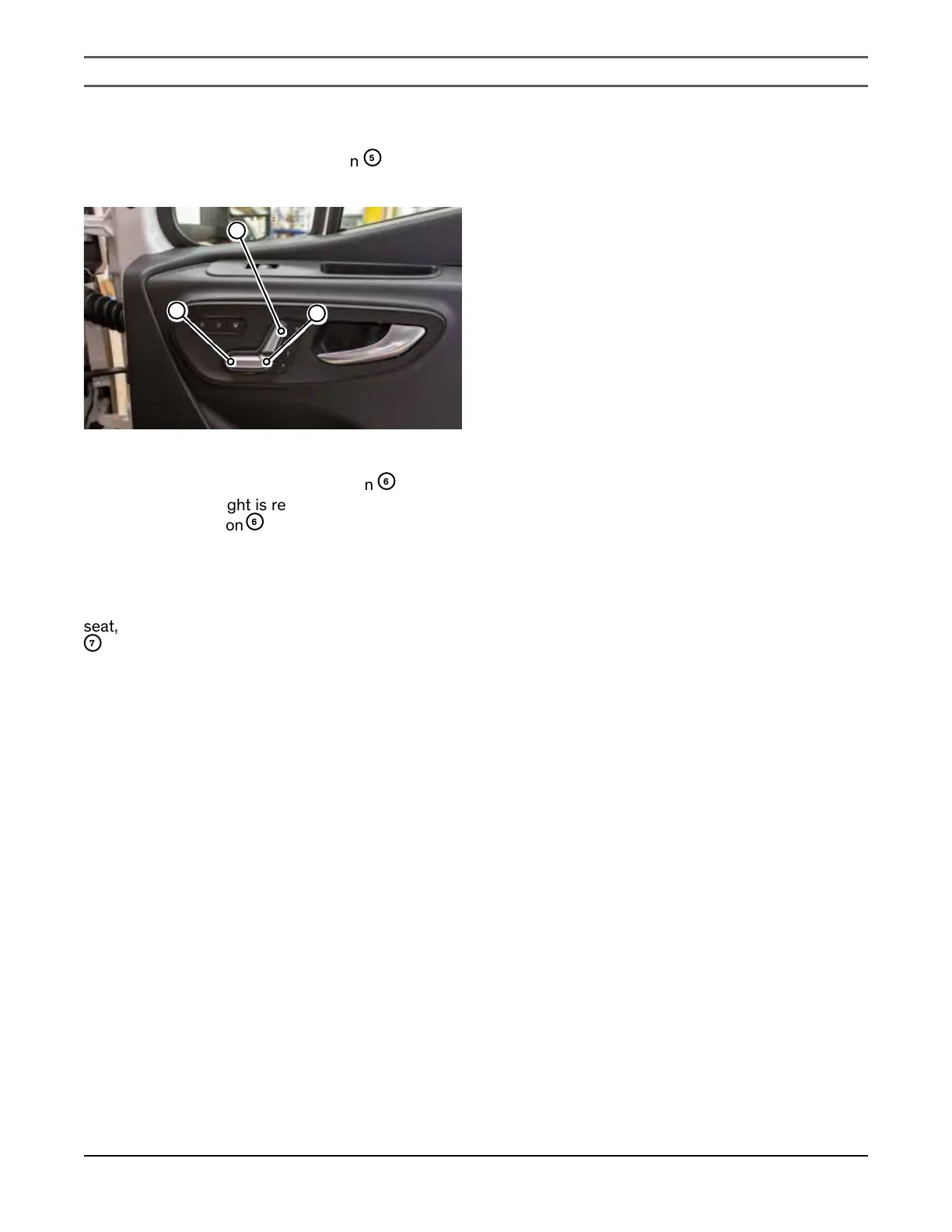
BACK REST ADJUSTMENT
Slide the back rest adjustment button
5
forward or
backward to adjust the angle of the seat back.
5
6
7
SEAT HEIGHT ADJUSTMENT
To raise the seat height, push the button
6
upwards
until the desired height is reached. To lower the seat
height, push the button
6
downwards until the desired
height is reached.
SEAT CUSHION HEIGHT ADJUSTMENT
To raise only the seat cushion without raising the entire
seat, push the seat cushion height adjustment button
7
up or down to adjust the height of the seat cushion.
TRAVELING
Refer to the chassis manual in the Motorhome
Information Kit for engine starting, operation and
stopping instructions.
DRIVING CHARACTERISTICS
CONTROLS
Your motorhome driver controls are similar to those
of an automobile. Steering and braking controls are
power assisted to help make driving as comfortable
as possible. Your motorhome is much higher, wider
and heavier than any automobile so the operator must
anticipate and account for the differences.
GENERAL HANDLING
The motorhome power-to-weight ratio is lower than that
of the average automobile. It is essential to compensate
for slower acceleration when moving into traffic or when
passing another vehicle. Allow extra room to corner and
to change lanes. When going underneath a bridge or
similar overhang, you must be aware of your maximum
height. (Measurement must include the air conditioner
plus 6 in. (152 mm). Height may vary depending on
chassis, make, suspension, tire pressure, roof loads
and air conditioner.)
HIGH WIND HANDLING
High winds or strong wind gusts may lead to
unpredictable handling and motorhome control.
When encountering high winds or strong wind gusts,
proceed as follows:
•
Slow down significantly so you can maintain control
of your motorhome.
•
Find a safe place to pull off the road and take shelter.
•Park your motorhome facing directly into the wind
to minimize high wind buffeting.
MOUNTAIN DRIVING
When driving in hilly or mountainous terrain, exercise
safe driving techniques that match terrain conditions.
CLIMBING A HILL
The transmission of your motorhome is designed to
automatically down-shift when required during long,
uphill climbs. If the transmission frequently shifts up
and down, select a lower gear for the duration of the
climb to prevent repeated shifting. This will prevent
unnecessary wear and tear on the transmission.
DESCENDING A HILL
Select a lower transmission gear when descending a hill
to avoid prolonged brake applications. Under extreme
conditions, prolonged brake applications could lead to
excessive brake wear, overheating and failure causing
you to lose control of the motorhome


 To Next Page