S80 Version 4.92 November 2014
Page 38 of 61
5.5.9.1
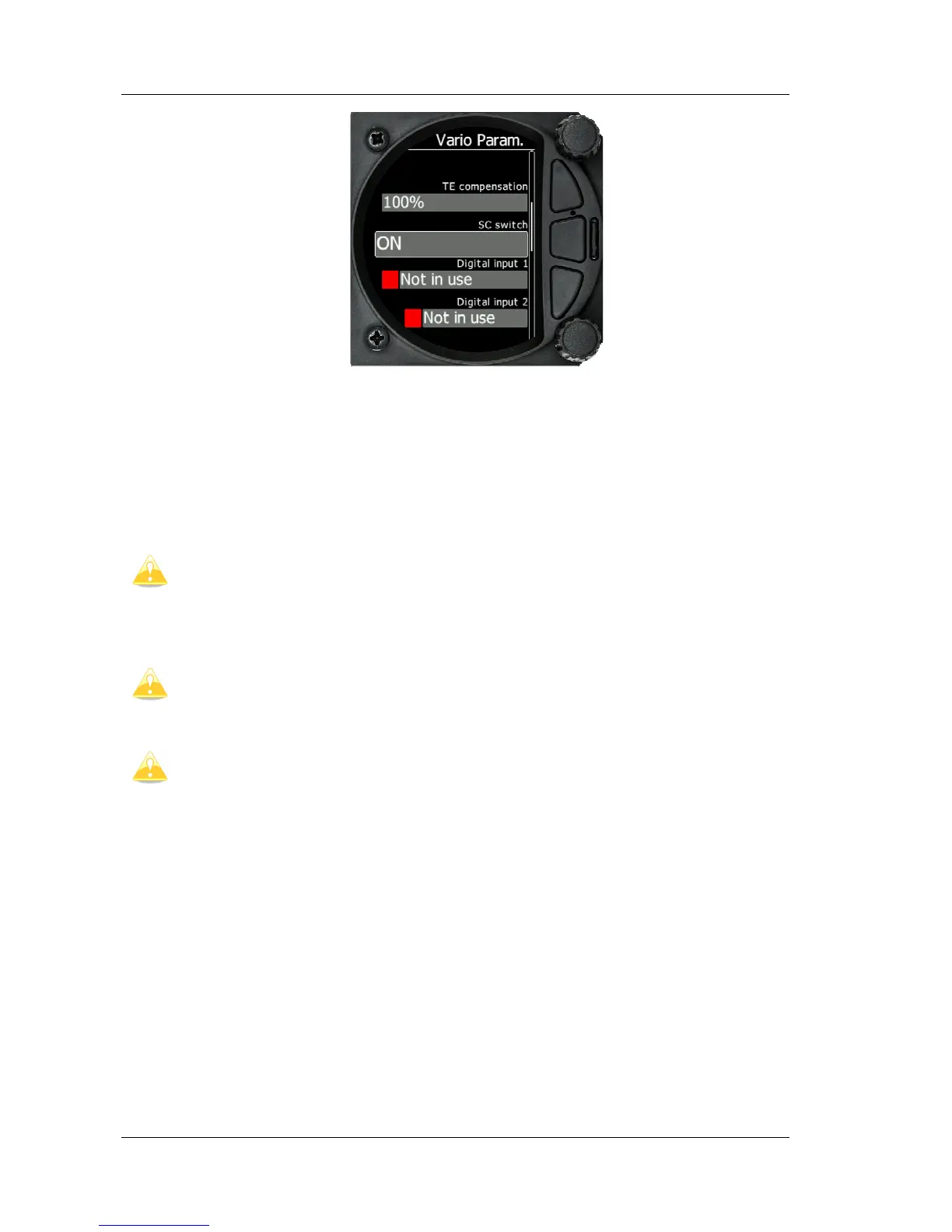
TE compensation
The LXNAV S80 offers two methods of vario Electronic Total Energy Compensation:
• TE Pitot tube
• Electronic TE compensation
It is important to note that the method of TE compensation is set up when the
instrument is installed by virtue of the pneumatic connections made to the TE and
static ports. Changing the compensation type in the setup screen below WILL
NOT change the method of compensation - the pneumatic plumbing has to be
changed first.
If the TE pitot tube has been connected TE compensation should be set to 0%.
There is no further adjustment of TE compensation possible. Quality of the TE
tube is the one and only factor.
If the electronic TE option has been installed TE compensation should be set to
100%.
The electronic TE compensation can be fine-tuned during flight using the following
procedure: it is essential that this is only done in smooth air; it is not possible to tune the
TE accurately in turbulent air.
Set TE compensation to 100%. Accelerate up to approximately 160 km/h (75 kts) and keep
the speed stable for a few seconds. Gently reduce the speed to 80 km/h (45 kts). Observe
the vario indicator during the manoeuvre. At 160 km/h the vario will indicate about –2 m/s
(-4 kts). During the speed reduction the vario should move towards zero and should never
exceed zero (slightly positive indications are acceptable). If the vario shows a climb the
compensation is too low; increase the TE%; and vice versa. Try another “zoom” to assess
the change and make further adjustments if necessary.
Electronic TE compensation is only effective when the Pitot tube and static sources are co-
located and the pneumatic lines to the instrument are approximately the same length. The
best sensor to use is the combined pitot/static Prandtl tube. If problems are experienced
with the electronic TE compensation the most likely cause is the glider's static source. The
static source can be checked by plumbing the pneumatic tubes for electronic compensation


 To Next Page