S80 Version 4.92 November 2014
Page 8 of 61
• 100Hz sampling rate for very fast response.
• Speed to fly indication.
• TE compensation can be selected to be either pneumatic TE probe or electronic TE.
• Multilanguage user interface - in a future firmware release
• Audio equalizer, for custom vario sound performance
3.1.2 Interfaces
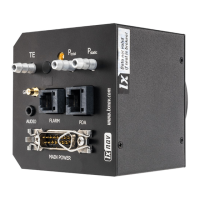
• GPS/Flarm port input/output on RS232 level (Standard IGC RJ11 connector)
• PDA port input/output on RS232 or LV-TTL (3.3V) level for PNA devices (RJ45 connector)
• Audio port (Standard 3mm phono jack)
• 1Mbit CAN bus for extension to S80D repeater
3.1.3 Options
3.1.3.1
External Options
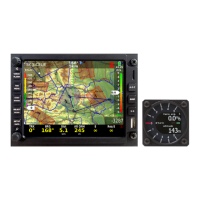
By using a CAN bus system, a second seat device can be connected. The unit installed in the
rear seat of the glider is independently powered and receives all the necessary data from the
main unit. The communication between both units is exclusively via the CAN bus system.
3.1.4 Technical Data
Power input 10-16 V DC
Consumption of LXNAV S80 at 12 V:
140 mA - minimum brightness without audio.
190 mA - maximum brightness without audio.
Consumption of LXNAV S80D at 12 V:
90 mA - minimum brightness without audio.
140 mA - maximum brightness without audio.
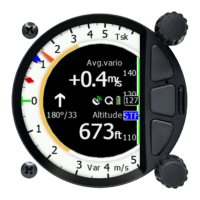
80 mm (3.15") standard aircraft cut-out for the LXNAV S80 indicator unit; 80x80x45mm •
Sensor box: 65x45x85mm (not including connector).
Weight 460g (290g for S80D)


 To Next Page