EasyManua.ls Logo

Miller Multimatic 200 - User Manual

Miller Multimatic 200
68 pages
Print Icon
To Next Page IconTo Next Page
Loading...
OM-253392L 201901
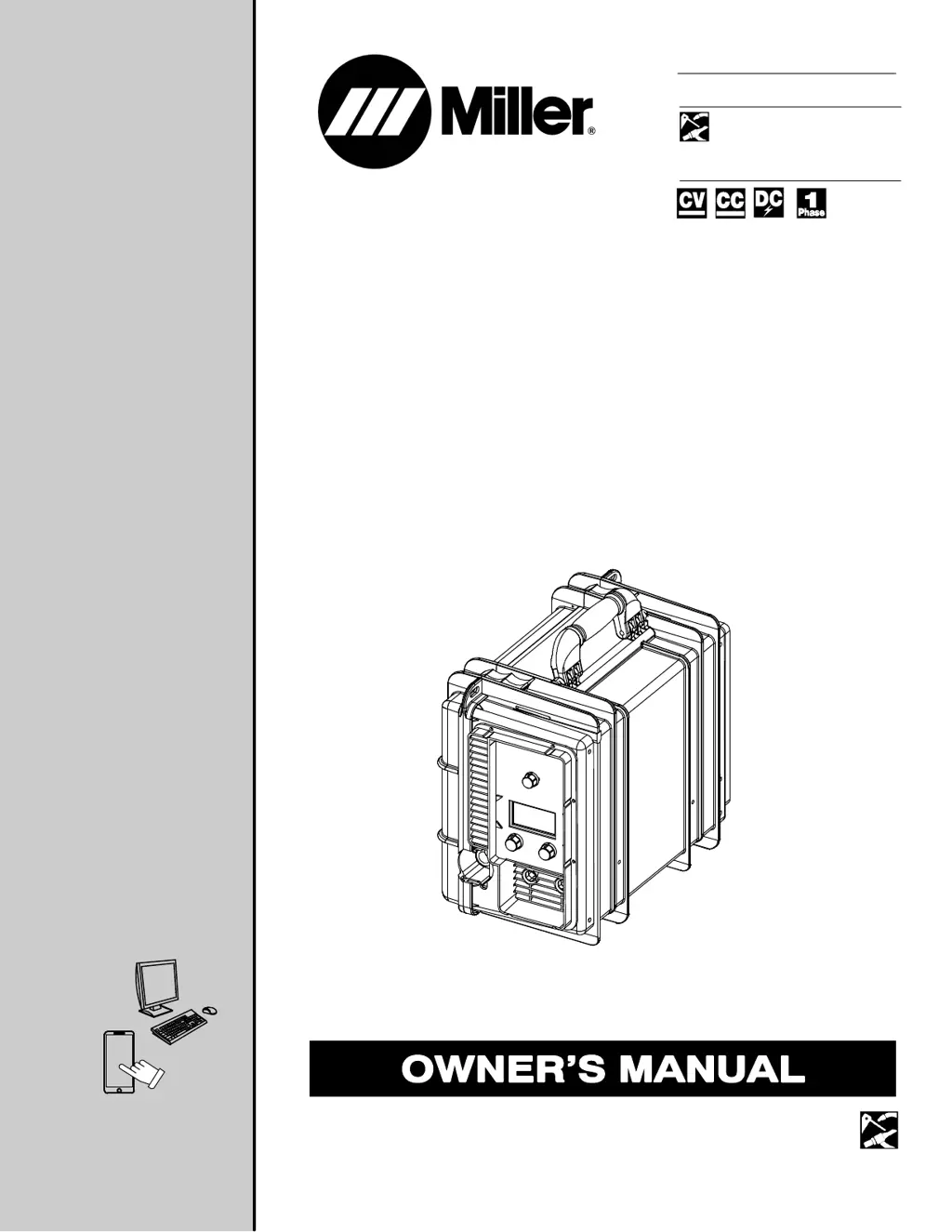
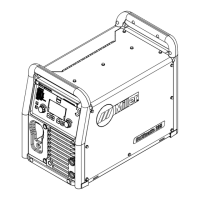
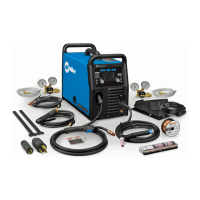
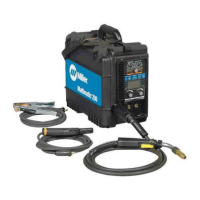
Multimatic 200
ProcessesProcesses
Description
Multiprocess Welding
Arc Welding Power Source
Wire Feeder
File: Multiprocess
For product information,
Owner’s Manual translations,
and more, visit
www.MillerWelds.com
®

Table of Contents

Questions and Answers

  • F
    fieldsmarkJul 27, 2025
    What causes erratic welding arc in Miller Welding System?
    • B
      Brittany MacdonaldJul 27, 2025
      An erratic or improper welding arc or output in your Miller Welding System can be caused by several factors. Use the correct size and type of weld cable. Clean and tighten all weld connections. Verify the electrode polarity and ensure good connections to the workpiece.
  • W
    William YoungAug 2, 2025
    Why does my Miller Multimatic 200 have stick welding problems?
    • S
      sparksnancyAug 2, 2025
      Stick welding issues such as hard starts, poor welding, or excessive spattering with your Miller Welding System can arise from using the wrong type or size of electrode. Verify the electrode polarity and ensure all connections are secure. Also, ensure that a remote control is not connected.
  • T
    tammyolsonAug 6, 2025
    How to troubleshoot TIG welding problems in my Miller Multimatic 200?
    • J
      Joshua McfarlandAug 6, 2025
      If you're experiencing TIG welding problems like a wandering arc, hard starts, poor weld quality, or spattering with your Miller Welding System, consider these points: 1. Use the correct type and size of tungsten. 2. Ensure the tungsten is properly prepared. 3. Verify the electrode polarity. 4. Shield the weld zone from drafts. 5. Check for the correct type of shielding gas. 6. Inspect and tighten all gas fittings.
  • A
    Andrew AlexanderAug 12, 2025
    What to do if my Miller Multimatic 200 Welding System has no weld output but is on?
    • J
      Jeffrey CruzAug 12, 2025
      If your Miller Welding System is on but not producing a weld, there are several potential causes. First, ensure weld cables are securely connected. Check the work clamp connection to the workpiece. If the unit overheated, allow it to cool with the fan on. Reduce the duty cycle or amperage. Ensure proper airflow to the unit. Turn the power off and on again; if the light continues to flash, consult a Factory Authorized Service Agent. Verify that the line voltage is within ±10%. Also, ensure that the remote trigger is off, wait five seconds, and restart operation.
  • C
    Carol GomezAug 16, 2025
    What to do if my Miller Welding System is completely inoperative with no weld output?
    • C
      Cathy BaxterAug 16, 2025
      If your Miller Welding System is completely inoperative and has no weld output, make sure the line disconnect switch is in the On position. Check and replace the line fuses if necessary, or reset the supplementary protector. Ensure the power cord is plugged in and the receptacle is receiving input power.
  • M
    Mr. Howard ParkerAug 21, 2025
    Why is my Miller Multimatic 200 Welding System fan not operating?
    • K
      Karen KingAug 21, 2025
      The fan in your Miller Welding System might not be operating because the unit hasn't warmed up enough to require cooling. Check for and remove any obstructions blocking the fan's movement. If the issue persists, have a Factory Authorized Service Agent inspect the fan motor and control circuitry.

Summary

Safety Precautions

Arc Welding Hazards and Practices

Details hazards associated with arc welding and essential safety practices.

General Safety Hazards

Covers hazards related to fumes, arc rays, fire, flying metal, gas, EMF, and noise.

Operational and Maintenance Safety Hazards

Details hazards like cylinder explosion, falling equipment, overheating, and static discharge.

Specifications

MIG Duty Cycle and Overheating

Explains duty cycle and overheating parameters for MIG welding.

TIG Duty Cycle and Overheating

Explains duty cycle and overheating parameters for TIG welding.

Stick Duty Cycle and Overheating

Explains duty cycle and overheating parameters for Stick welding.

Installation

Stick Welding Connections

Instructions for making proper electrical connections for stick welding.

TIG Welding Connections (DCEN)

Steps for connecting the unit for TIG welding in DCEN mode.

Wire Welding Connections

Instructions for connecting MIG and Flux-Cored wire welding systems.

Electrical Service Guide

Recommendations for electrical service requirements and circuit protection.

Connecting 120 Volt Input Power

Instructions for connecting the unit to a 120 Volt AC power source.

Connecting 230 VAC Input Power

Instructions for connecting the unit to a 230 Volt AC power source.

Connecting 230 VAC Input Power (Continued)

Continues instructions for connecting to 230 VAC power, including safety.

Operation

Machine Controls Overview

Identifies and explains the various controls on the welding machine's front panel.

Weld Parameter Chart

Provides recommended settings for various welding processes and materials.

Maintenance and Troubleshooting

Routine Maintenance Schedule

Outlines regular maintenance tasks for the welding equipment.

Error Messages and Remedies

Lists common error messages and their corresponding remedies.

General Troubleshooting Guide

Provides a guide for diagnosing and resolving common welding problems.

GMAW (MIG) Welding Guidelines

Typical GMAW (MIG) Control Settings

Provides recommended control settings for MIG welding based on material and wire.

Troubleshooting: Excessive Spatter

Addresses causes and solutions for excessive spatter during welding.

Troubleshooting: Porosity

Details causes and remedies for porosity in weld metal.

Troubleshooting Semiautomatic Welding Equipment

General troubleshooting for wire feed and welding arc issues.

Stick Welding (SMAW) Guidelines

Stick Welding Procedure

Step-by-step guide for performing stick welding with the unit.

Electrode and Amperage Selection

Chart for selecting electrodes and amperage for different welding conditions.

Stick Welding Troubleshooting

Troubleshooting common stick welding problems like porosity and spatter.

Stick Welding Defect Troubleshooting

Addresses issues like lack of penetration, burn-through, distortion, and waviness.

Tungsten Electrode Selection and Preparation

Miller Multimatic 200 Specifications

General IconGeneral
Input Voltage120/240 V
Input Hz50/60 Hz
ProcessMIG
Dimensions19.5 in (495 mm)
Wire Feed Speed Range50-700 ipm (1.27-17.78 m/min)

Related product manuals