Ethernet Cabling Guidelines
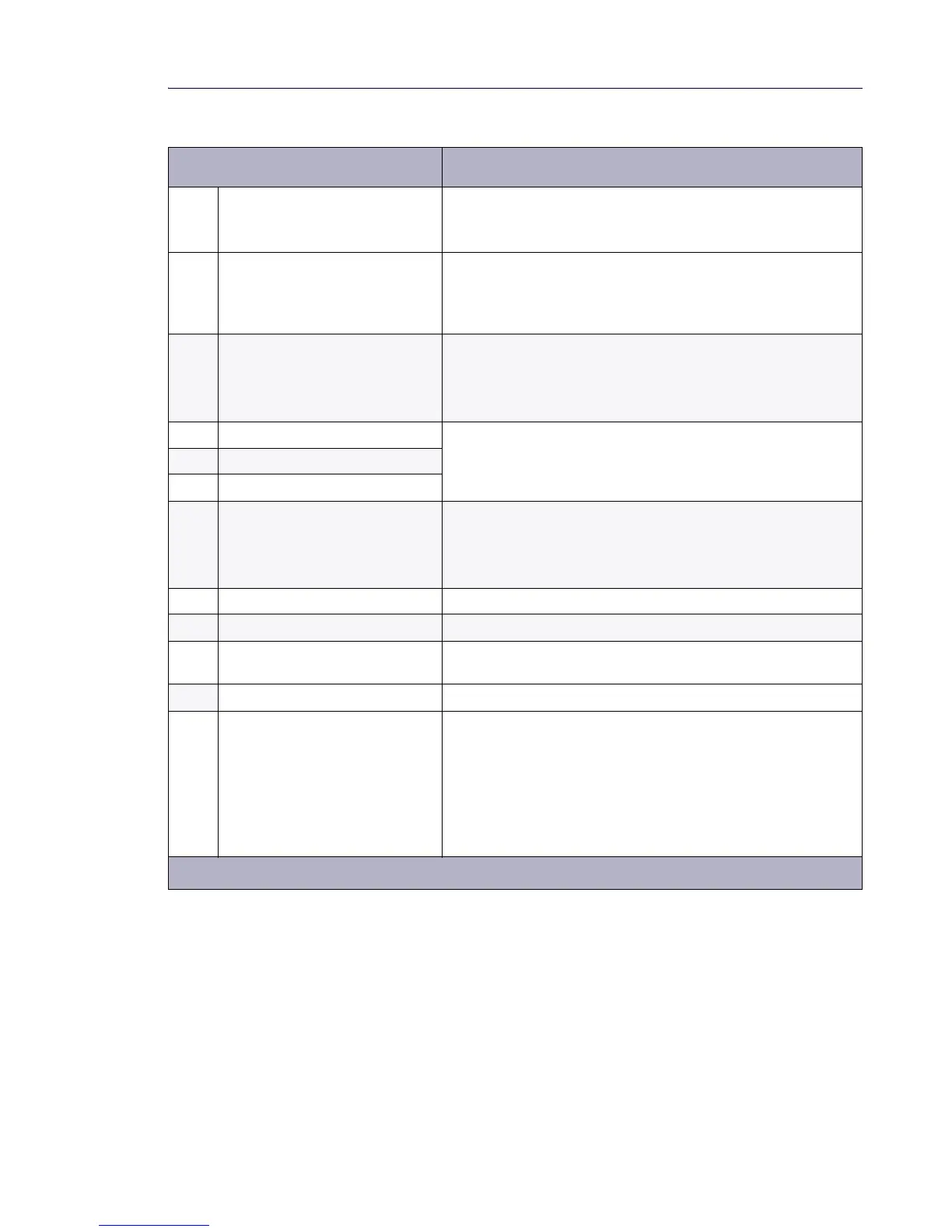
D Surge suppressing power bar • Recommended model is American Power Conversion
“SurgeArrest”
• Route power cables away from Ethernet cables
E Power outlet for desktop
equipment
• Use outlet to supply power to computer and IP Phone power
adapter only
• Do not plug other devices such as florescent lights, coffee
makers, kettles into this outlet
F Phone to power brick Ethernet
connection
• Use CAT 5 or CAT 5e cables (certified to TIA/EIA 568A)
• Maximum length 5 ft. (1.5 m)
• Route cable away from sources of interference, such as power
cables
G Monitor power cord • Plug into computer power bar
• Route cable away from Ethernet cables
H Computer power cord
I Computer
J Phone to computer Ethernet
connection
• Use CAT 5 or CAT 5e cables (certified to TIA/EIA 568A)
• Maximum length 5 ft. (1.5 m)
• Route cable away from sources of interference, such as power
cables
K Keyboard to computer connection • Route cable as required for convenience
L Monitor to computer connection • Route cable away from Ethernet cables
M Power connection to auxiliary
equipment
• Use a separate power outlet for potential noise generating
devices such as a lamp, coffee maker, or radio
N Florescent light power cord • Route cable away from Ethernet cables
O Florescent desk light • Ballast circuitry inside florescent lamps will create noise spikes
on power cables when the lamps are turned off. Ensure that
florescent lamps are plugged into dedicated surge suppressing
power bars. Voltage limiting devices inside the power bars
reduce noise spikes and reduce the risk of data errors. Some
desks have power outlets that are designated for the computer
and utility devices. These outlets have built-in surge protection.
In this case, a power bar is not required.
Table 86: Desktop Environment Cabling Guidelines (continued)
Connection Guidelines
Page 2 of 2





 To Next Page