3300 ICP General Information Guide
52
• Ensures that changes to network data are performed consistently and accurately across
the network improving change management costs.
• Simplifies network deployment and reduces initial deployment costs by synchronizing the
newly deployed 3300 ICP nodes with the existing network.
• Enhances security management across the network by allowing assureds and passwords
to be managed centrally.
After a network or cluster has been set up with System Data Synchronization, all adds,
modifications, and deletions to the system data that you have designated as shared are
automatically distributed to the other 3300 ICPs in the network or cluster.
System Data Synchronization allows form data to be shared among 3300 ICPs at the network
or cluster scope:
• At the network scope, all 3300 ICPs that are defined as network elements share specified
form data
• At the cluster scope, 3300 ICPs that are defined through System Administration
programming as members of a cluster share the specified form data
The System Data Synchronization (SDS) feature now synchronizes the data of resilient users
and devices between primary and secondary controllers. After you set up data sharing between
the primary and secondary controllers, the application automatically maintains the
synchronization of user and device data. This feature keeps user and device data, such as the
DND feature key and personal speed call keys, synchronized between the primary and
secondary controller regardless of whether the users make the changes while they are on their
primary or secondary controller.
ISDN Maintenance and Administration Tool
The ISDN Maintenance and Administration Tool (IMAT) provides the programming interface
for PRI and R2 protocols. It requires Microsoft Windows 95, Microsoft Windows 98, Microsoft
Windows 2000 Professional or Windows XP Professional.
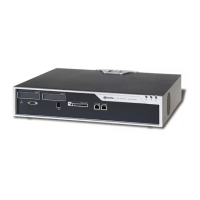
7100 Management Access Point
The Management Access Point provides secure remote management access and optional
alarm monitoring of the 3300 ICP over public network connections. It offers access security
and customer protection using dial-up or Internet VPN connectivity.
The Management Access Point requires no additional client software. It uses a 10baseT
Ethernet connection to the customer network and the dialup versions of the product support
connectivity for up to five IP-based systems over standard dialup PSTN V.90 modem. The
broadband VPN version, the Management Access Point E/E, provides support for up to 16 IP
systems for Internet VPN or dialup modem access.
Note: Embedded PRI programming for the T1/E1 module is supported via ESM rather
than IMAT.







 To Next Page