
 Need help?
Do you have a question about the Nidec COMMANDER S100 and is the answer not in the manual?
Provides essential warnings and guidance for safe operation of the drive, highlighting hazards.
Covers risks from electrical shock, burns, stored energy, and mechanical malfunctions.
Details grounding, fusing, enclosure, and environmental limits for safe and compliant installation.
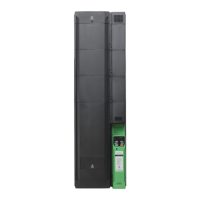
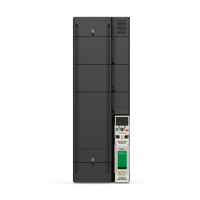
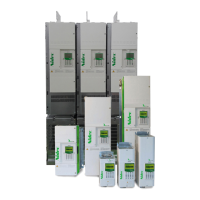
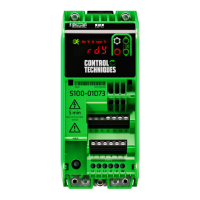
General overview of the Commander S100, its features, and model number structure.
Details drive specifications, overload limits, and key features including supplied items.
Covers planning, access, environmental protection, cooling, and fire protection for enclosures.
Provides dimensions, mounting options like DIN rail, and backplate details.
Guides on calculating enclosure size and airflow based on heat dissipation.
Details power connection diagrams, ground requirements, and cable selection guidelines.
Covers fuse/MCB selection, AC supply types, and line reactor requirements.
Discusses motor protection, voltage impact, connections, and output contactor usage.
Explains EMC requirements, compliant installation steps, and shielded cable grounding.
Details control terminal functions, specifications, and default configurations.
Details the 485 port, MODBUS RTU protocol, pin-outs, and communication setup.
Guides on using the Marshal app for commissioning, diagnostics, and parameter management.
Covers using the Connect PC tool, understanding the display, and operating the keypad.
Explains menu navigation, saving parameters, restoring defaults, and drive security.
Guides through initial drive setup, entering motor details, and configuring run/stop.
Explains controlling motor speed using various frequency references and switching methods.
Details wiring and setup for connecting motor thermistors for thermal protection.
Introduces parameter menus and the FastStart function for basic drive setup.
Describes read-only parameters for monitoring drive status, alarms, and errors.
Covers parameters for speed control, acceleration, and deceleration ramp configuration.
Details parameters for configuring motor characteristics like rated current, speed, and voltage.
Covers general drive settings, communication setup, and miscellaneous functions.
Explains PID controller parameters for closed-loop system control.
Details parameters for configuring drive inputs and outputs and relay functions.
Provides detailed descriptions of status and monitoring parameters.
Details parameters related to speed references, ramps, and stopping modes.
Provides detailed descriptions of motor setup parameters.
Details general drive settings, communication, and miscellaneous parameters.
Explains PID controller parameters and their application.
Details parameters for configuring drive inputs and outputs.
Describes the MODBUS RTU protocol, framing, registers, and function codes for drive communication.
Lists parameter update rates and identifies fast access parameters for efficient communication.
Explains drive alarms, their causes, and recommended actions to resolve them.
Details drive error codes, their diagnosis, and corrective actions to maintain operation.
Covers operating environment, temperature, altitude, and output current derating.
Provides data on drive power losses and recommendations for long-term storage.
Details EMC compliance, optional filters, and maximum motor cable lengths.
Covers drive accuracy, acoustic noise levels, and vibration test specifications.
Explains IP rating for ingress protection and UL enclosure types.
Covers UL file reference, environment, mounting, wiring, and terminal torque requirements.
Details over-voltage category, branch circuit protection, short circuit ratings, and motor overload protection.



 To Next Page

 General