Poseidon SE7EN+ User Manual Chapter 4 Page 66
Replacing the water trap sponge
If a surface interval between dives is planned to extend for an hour or more, it is a good idea
to remove the sponge from the Poseidon SE7EN+ backpack and squeeze as much water out
of it as possible. It is best to replace the sponge and cartridge (which must be removed to
access the sponge) immediately afterwards, even if the sponge isn’t completely dry, to
minimize the chance of replacing the wrong CO
2
absorbent cartridge.
After each day of diving
Open the breathing loop
At the end of each diving day, it is important to open up the breathing loop to allow the hoses
and other components to dry overnight. This is, by far, the best procedure for keeping the
inside of the breathing loop clean.
All four breathing hoses should be removed from their attachment points (mouthpiece, shoul-
der-ports, and main housing), and placed such that water inside will drain out, and somewhere
with relatively dry, well-circulated air.
Remove the shoulder ports from the counterlungs and store them where they will dry, and will
be protected from accidental damage. Remove the counterlungs from the harness and, if
possible, hang them such that water will drain from them through the Shoulder-Port connec-
tion sockets.
Remove the CO
2
absorbent cartridge and the two sponge water traps. Discard the absorbent
cartridge properly, and squeeze out the sponges and place them where they will be allowed to dry.
Store the electronics
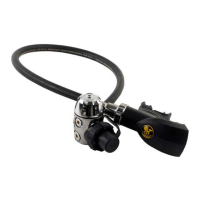
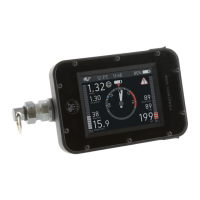
After removing the regulators from the oxygen and diluent cylinders, remove the electronics
module and place the entire electronics/pneumatics assembly where it will be able to dry. Do
not attempt to disconnect the regulators from the electronics module, or disconnect the
mouthpiece from the supply hose. It is best to keep the entire electronics/pneumatics assembly
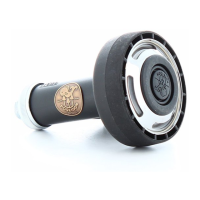
together. The mouthpiece should be in the closed-circuit position to allow the mushroom
valves to dry on all sides.
Remove the battery from the electronics Module and recharge, if necessary.
Long term storage and care
Storage
If the rebreather is not going to be used for extended periods (e.g., in excess of several weeks
or months), it’s important to disassemble and store the rebreather properly. The rst step is to
follow the instructions above for procedures to follow at the end of each diving day. Once
prepared, CO
2
absorbent cartridges cannot be stored safely for extended periods of time. It is
also important to ensure that all components are clean and dry before long-term storage, to
avoid problems of corrosion as well as mold and other biological cultures.
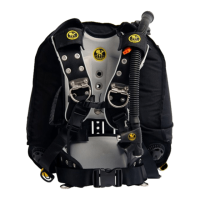
The cylinders should be removed from the backpack unit and stored in a clean, dry location.
This will prevent corrosion on the cylinders that may form from residual moisture or salt in the
webbing material of the cylinder straps, and will also prevent permanent deformation of the
straps and the rubber cylinder mounts located on the sides of the backpack unit. Cylinders
should be stored with valves installed and at least some pressure inside the cylinder. Be sure
to maintain proper inspections and certications on the cylinders if necessary.
Breathing hoses should be stored in a clean, dry location, where the insides of the hoses are
exposed to open air, and in a way that allows them to be laid straight. It is important not to
bend them sharply or store them in a way that causes deformation of the circular cross-section
of the hoses, lest such distortions become permanent.
Electronics should be stored in a clean, dry environment, with the battery and oxygen sensors
removed and stored separately. The battery should be recharged periodically, as described in


 To Next Page