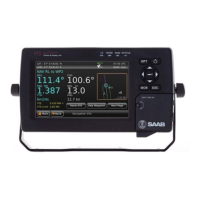
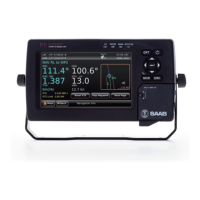
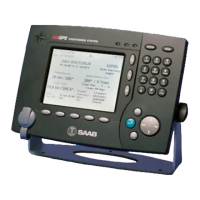
R5 SOLID AIS System
THE AUTOMATIC IDENTIFICATION SYSTEM
7000 118-200, C2 Page 8
1 THE AUTOMATIC IDENTIFICATION SYSTEM
The Automatic Identification System (AIS) is a safety information system that was
proposed as a worldwide standard in 1997 and adopted by IMO in 1998. The AIS system
is standardized by ITU, IEC, IALA and IMO and is subject to approval by a certification
body. The first type approved AIS transponder in the world was Saab TransponderTech’s
R3 Class A Transponder in 2002.
AIS allows transceivers to automatically share static and dynamic data such as ship
name, call sign, dimensions, position and sensor information on two dedicated data links
in the upper marine VHF band. There are a number of different AIS devices that can send
and receive information on the AIS data link:
Class A Transponder – This type of transponder is used on open sea waters and
is mandatory for ships of 300 gross tonnage or more on international voyages, all
cargo ships of 500 gross tonnage or more and on passenger ships.
Class B Transponder – Used on smaller vessels and pleasure crafts. It transmits
with a lower power than the class A transponder and has lower priority on the data
link.
Base Station – Fixed shore station that is typically connected to an AIS network to
collect information from all vessels at a certain port or shore line.
Repeater Stations – Used to extend coverage range by repeating incoming
messages. Can be implemented as a function in an AIS Base station or an AtoN
station.
SAR (Search and Rescue) Transponder – Used on airplanes and helicopters in
search and rescue missions.
AtoN (Aids to Navigation) – A transceiver that is fitted on buoys and lighthouses
in order to send information about their positions.
Inland AIS – A European standardized extension to Class A systems for use on
inland water ways. An inland transponder has additional messages to
communicate with bridges, ports and locks and can also send some additional
information that are useful on water ways such as blue sign indication, specific
hazardous cargo etc.
SART (Search and Rescue Transmitters) – Distress beacons for life rafts. An
active SART unit will always be sorted on top of the target list in the R5 SOLID to
accentuate its presence.
NOTE:
The R5 SOLID AIS SYSTEM can be operated in either Class A or Inland modes
depending on user need.


 To Next Page