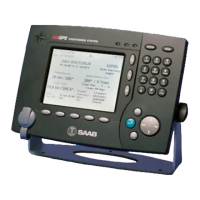
R5 SOLID AIS System
INSTALLATION
7000 118-200, C2 Page 21
Min length = (Preamp. Gain – 26 dB)/Cable attenuation per meter
Max length = (Preamp. Gain – 10 dB)/Cable attenuation per meter
3.6.3 GPS Cable Mounting
Coaxial cables (marine approved type) should be installed in separate signal cable
channels/tubes and at least 10 cm away from power supply cables. Crossing of cables
should be done at right angles (90°).
Coaxial cables should not be exposed to sharp bends, which may lead to a change of
the characteristic impedance of the cable. The minimum bending radius should be 5
times the cable's diameter.
All outdoor installed connectors should be weather proofed, e.g. with shrink tubing,
watertight seal tape or butyl rubber tape and plastic tape sealing, to protect against
water penetration into the antenna cable.
Secure the cable properly near the cable ends.
3.6.4 GPS Cable Grounding
Coaxial down-leads must be used. The coaxial shielding screen should be connected
to ground at one end.
3.7 Electrical Installation
The protocol of the serial port interfaces is compliant to IEC 61162-1Ed.4 (2010-11).
All serial ports in the R5 SOLID have the same capabilities with one exception, any Long
Range equipment must be connected to the Long Range port.
The primary external position sensor should be to the Sensor 1 port since this port has the
highest priority. The serial ports in the R5 SOLID can also receive differential corrections
in RTCM format for correction of the internal GPS receiver. The ports in the R5 SOLID
have different default baud rates but they can all be configured to any baud rate of 4800,
9600, 38400, 57600 or 115200 bps. The priority levels for input of sensor data on the
different ports are listed below:


 To Next Page