EasyManua.ls Logo

Selta SAEfon - User Manual

Selta SAEfon
82 pages
Go to English
Print Icon
To Next Page IconTo Next Page
Loading...
Question and Answer IconNeed help?

Do you have a question about the Selta SAEfon and is the answer not in the manual?

Summary

Introduction to SAEfon Telephones

Keys and Display Overview

Display

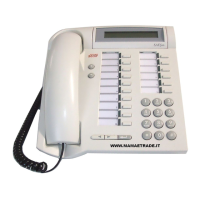
Alphanumerical display with two rows showing call status and information.

Function Keys

Sixteen programmable keys with LEDs for accessing various features.

Keypad

Standard numeric keys (0-9) along with asterisk and hash keys.

Shift and Confirming Keys

Keys used for navigating and confirming selections in programming menus.

Volume Keys

Keys used for adjusting loudspeaker volume and display contrast.

Handset

The primary communication device, used for speaking and listening.

Loudspeaker

Integrated loudspeaker for hands-free or speakerphone operations.

Hands Free

Facility enabling conversations without using the handset.

Badge Reader

Component for reading user identification badges for access or functions.

Supervision Keys

Keys on the K module for monitoring and managing calls.

Shift Pages Key

Key used to navigate between different pages of the K module.

Asynchronous Serial Interface RS232

Interface for connecting the telephone to a PC for data transfer.

Before You Telephone

Personalized Phone Cards

Details on two cards pre-programmed with basic telephone services.

Adjusting Loudspeaker Volume

Procedure for increasing or decreasing the loudspeaker volume.

Display Contrast and Ring Settings

Adjusting display contrast, viewing time/date, and disabling telephone ring.

Basic Call Handling Operations

Muting the microphone, ending calls, and activating hands-free conversations.

Outgoing Calls

Call Execution with Handset

Steps for making on-hook, internal, and direct internal calls using the handset.

Trunk Call Procedures

Making trunk calls via K module, phone book, speed dial, and PC.

Advanced Dialling Features

Utilizing multifrequency dialling and repeating the last trunk number.

Incoming Calls

Answering Incoming Calls

Procedures for answering internal, trunk, and calls for absent colleagues.

Call Management Features

Enabling call forwarding to other extensions and the 'Do Not Disturb' facility.

Extended Feature Functions

Speakerphone and Call Management

Activating speakerphone, automatic callback, holding calls, and call inclusion.

Trunk Line Availability and Storage

Booking trunk lines when busy and storing/repeating trunk numbers.

Call Transfer and Parking

Transferring active calls and placing trunk lines in common or exclusive parking.

Handling Multiple Calls

Answering second calls, switching between calls, and including other users.

Conference Calls and User Access

Setting up multi-user conferences, disabling trunk calls, and managing secret codes/badges.

Service Class and Cost Tracking

Transferring service classes, displaying call meter units, and registering call costs.

Messages

Internal Call Notifications

Notification for busy extensions, recall signals, and leaving voice messages.

Message and Appointment Management

Answering messages, paging colleagues, and setting wake-up calls/appointments.

Caller Display Messaging

Compiling absent user messages to be displayed to the caller.

Data Calls

Data Call Prerequisites and Execution

Requirements for data services and making internal data calls.

Answering and Forwarding Data Calls

Procedures for answering, terminating, forwarding, and auto-answering data calls.

Data Terminal Dialling

Instructions for executing dialling using an external data terminal.

Programming Telephone with Display

Programming Menu Access and Overview

Accessing the programming menu, display layout, and key assignments.

Function Key Configuration

Setting up function keys using LEX and MISC menus.

Directory and Telephone Setup

Configuring the phone directory and general telephone settings.

Language, Ringer, and PIN Settings

Selecting languages, configuring ringer properties, and managing PIN codes.

Display, Utilities, and Testing

Adjusting display contrast, using utilities, and performing hardware tests.

Programming Telephone without Display

Function Key Configuration

Setting up function keys and available functional codes for non-display models.

Directory Programming

Programming the phone directory for telephones without a display.

Basic Feature Settings

Configuring headset, off-hook ring, automatic hands-free, and ringer volume.

Advanced Settings and Tests

Setting ringer cadence, resetting the telephone, and performing hardware tests.

Installation

Connecting SAEfon B;T;E Models

Step-by-step guide for connecting the SAEfon B/T/E telephone models.

Connecting SAEfon TK and K Module

Connection procedures for the SAEfon TK model and its K module.

Programmable Key Labeling

Instructions for labeling freely-programmable keys with identification labels.

Safety Advice

Notes

Summary

Introduction to SAEfon Telephones

Keys and Display Overview

Display

Alphanumerical display with two rows showing call status and information.

Function Keys

Sixteen programmable keys with LEDs for accessing various features.

Keypad

Standard numeric keys (0-9) along with asterisk and hash keys.

Shift and Confirming Keys

Keys used for navigating and confirming selections in programming menus.

Volume Keys

Keys used for adjusting loudspeaker volume and display contrast.

Handset

The primary communication device, used for speaking and listening.

Loudspeaker

Integrated loudspeaker for hands-free or speakerphone operations.

Hands Free

Facility enabling conversations without using the handset.

Badge Reader

Component for reading user identification badges for access or functions.

Supervision Keys

Keys on the K module for monitoring and managing calls.

Shift Pages Key

Key used to navigate between different pages of the K module.

Asynchronous Serial Interface RS232

Interface for connecting the telephone to a PC for data transfer.

Before You Telephone

Personalized Phone Cards

Details on two cards pre-programmed with basic telephone services.

Adjusting Loudspeaker Volume

Procedure for increasing or decreasing the loudspeaker volume.

Display Contrast and Ring Settings

Adjusting display contrast, viewing time/date, and disabling telephone ring.

Basic Call Handling Operations

Muting the microphone, ending calls, and activating hands-free conversations.

Outgoing Calls

Call Execution with Handset

Steps for making on-hook, internal, and direct internal calls using the handset.

Trunk Call Procedures

Making trunk calls via K module, phone book, speed dial, and PC.

Advanced Dialling Features

Utilizing multifrequency dialling and repeating the last trunk number.

Incoming Calls

Answering Incoming Calls

Procedures for answering internal, trunk, and calls for absent colleagues.

Call Management Features

Enabling call forwarding to other extensions and the 'Do Not Disturb' facility.

Extended Feature Functions

Speakerphone and Call Management

Activating speakerphone, automatic callback, holding calls, and call inclusion.

Trunk Line Availability and Storage

Booking trunk lines when busy and storing/repeating trunk numbers.

Call Transfer and Parking

Transferring active calls and placing trunk lines in common or exclusive parking.

Handling Multiple Calls

Answering second calls, switching between calls, and including other users.

Conference Calls and User Access

Setting up multi-user conferences, disabling trunk calls, and managing secret codes/badges.

Service Class and Cost Tracking

Transferring service classes, displaying call meter units, and registering call costs.

Messages

Internal Call Notifications

Notification for busy extensions, recall signals, and leaving voice messages.

Message and Appointment Management

Answering messages, paging colleagues, and setting wake-up calls/appointments.

Caller Display Messaging

Compiling absent user messages to be displayed to the caller.

Data Calls

Data Call Prerequisites and Execution

Requirements for data services and making internal data calls.

Answering and Forwarding Data Calls

Procedures for answering, terminating, forwarding, and auto-answering data calls.

Data Terminal Dialling

Instructions for executing dialling using an external data terminal.

Programming Telephone with Display

Programming Menu Access and Overview

Accessing the programming menu, display layout, and key assignments.

Function Key Configuration

Setting up function keys using LEX and MISC menus.

Directory and Telephone Setup

Configuring the phone directory and general telephone settings.

Language, Ringer, and PIN Settings

Selecting languages, configuring ringer properties, and managing PIN codes.

Display, Utilities, and Testing

Adjusting display contrast, using utilities, and performing hardware tests.

Programming Telephone without Display

Function Key Configuration

Setting up function keys and available functional codes for non-display models.

Directory Programming

Programming the phone directory for telephones without a display.

Basic Feature Settings

Configuring headset, off-hook ring, automatic hands-free, and ringer volume.

Advanced Settings and Tests

Setting ringer cadence, resetting the telephone, and performing hardware tests.

Installation

Connecting SAEfon B;T;E Models

Step-by-step guide for connecting the SAEfon B/T/E telephone models.

Connecting SAEfon TK and K Module

Connection procedures for the SAEfon TK model and its K module.

Programmable Key Labeling

Instructions for labeling freely-programmable keys with identification labels.

Safety Advice

Notes

Selta SAEfon Specifications

General IconGeneral
DisplayGraphical LCD
ProtocolsSIP
Ethernet Ports2
Network Interface10/100 Mbps
CodecsG.711, G.729, G.726
Power Supply5V DC
ConnectorsRJ45, RJ9

Related product manuals