LR1110
User Manual Rev.1.0
UM.LR1110.W.APP March 2020
78 of 130
Semtech
www.semtech.com
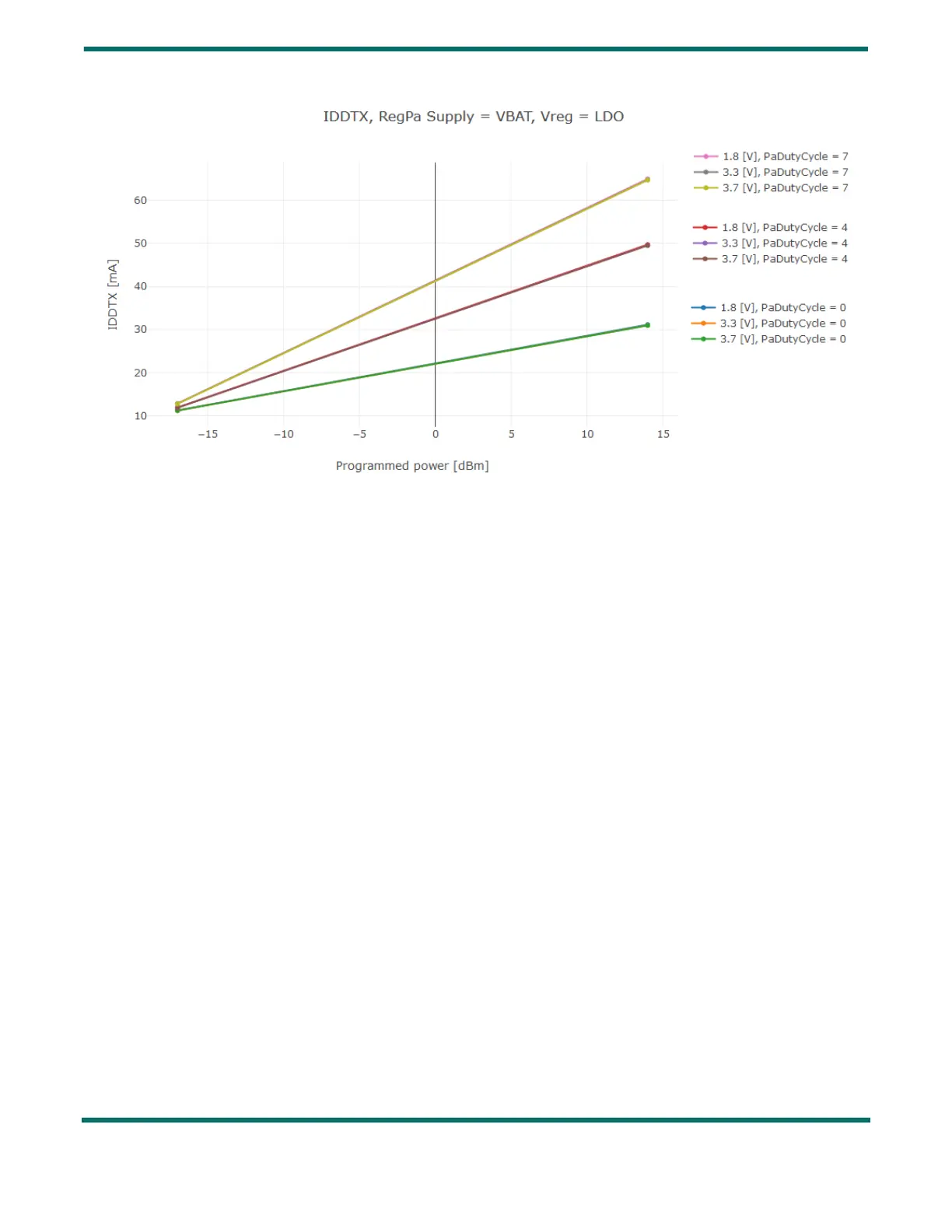
Figure 9-8: IDDTX vs TxPower, Low Power PA, LDO Configuration
9.3.2 High Power PA
Figure 9-9: IDDTX vs TxPower, High Power PA, DC-DC Configuration and Figure 9-10: IDDTX vs TxPower, High Power PA,
LDO Configuration show the impact of the supply voltage for two PaDutyCycle settings (2 and 4) in both DC-DC and LDO
configurations.
Similarly to the Low Power PA, at a given supply voltage a higher PaDutyCycle setting increases the device current
consumption. However, at a given PaDutyCycle setting, the current consumption is stable with respect to the supply
voltage, providing this latter is high enough to allow the generation of the VR_PA voltage required for the programmed
power value TxPower.
For example:
• For 3.3 V, the current consumption is approx. 98mA for PaDutyCycle=2, and approx. 118 mA for PaDutyCycle=4.
• For 1.8 V, the current consumption is approx. 69mA for PaDutyCycle=2, and approx. 81 mA for PaDutyCycle=4. This is
due to the fact that at 1.8 V of supply voltage, the maximum VR_PA voltage is 1.6 V, therefore a maximum output
power of +17dBm.
During the High Power PA operation, the DC-DC supplies the analog and digital core of the devices, whereas the PA itself
-the largest power consumption contributor- is supplied directly from VBAT. Therefore, there is no significant current
consumption difference between the DC-DC or the LDO modes during the High Power PA operation.


 To Next Page