

 To Next PageTo Next Page
 Need help?
Do you have a question about the Sharp LCD colour TV and is the answer not in the manual?
General safety warnings and guidelines for product use.
Instructions on cleaning the TV screen carefully to avoid damage.
Essential safety measures to prevent accidents, electric shock, or damage.
Guidelines for safe handling, usage, and maintenance of 3D glasses.
List of accessories provided with the TV unit.
Step-by-step guide for securely attaching the TV stand.
Safety measures to prevent the TV from tipping over.
Initial setup steps and connection guidance before powering on the TV.
Instructions for correctly inserting batteries into the remote control.
Important warnings and precautions for operating the remote control.
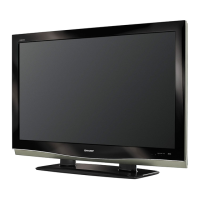
Identification of external TV components and connection terminals.
Description of each button on the remote control and its operation.
Introduction to the TV's main menu and its primary functions.
Fundamental steps for navigating and using the TV's interface.
Guide on using the on-screen keyboard for text input.
Process for setting up channels and basic TV configuration automatically.
Basic steps for operating the TV for daily viewing and standby modes.
How to use specific buttons for analogue and digital TV modes.
How to view channel lists and detailed programme information.
Options for selecting digital and analogue audio formats.
Managing favorite channels and pausing the screen image.
Using the Electronic Programme Guide and its display options.
Guide to finding and tuning to programmes using the EPG.
Methods for finding TV programmes using EPG filters.
Setting and cancelling programme timers for recording or viewing.
Important considerations and precautions before making external connections.
How to connect video sources like HDMI, DVI, and Component.
Detailed steps for Component and standard Video connections.
How to connect audio devices and set up audio outputs.
Using AQUOS LINK for integrated control of HDMI devices.
Connecting devices and selecting a recording source for AQUOS LINK.
How to use the AQUOS LINK menu for device operations.
Managing AQUOS LINK features and connecting a smartphone.
Auto power on and input selection features for AQUOS LINK.
Introduction to the various picture adjustment options available.
Detailed settings for adjusting picture quality like contrast, brightness, and colour.
Adjustments for image tone, motion, noise reduction, and sensor settings.
Introduction to the various audio adjustment options available.
Settings for surround sound, bass enhancement, and clear voice.
Options for reducing power consumption and managing standby modes.
Managing channels and performing automatic installation.
Fine-tuning analogue channel settings and colour/sound systems.
Labeling, skipping, locking, sorting, and erasing channels.
Securing settings with a password and controlling content access.
Setting, deleting passwords, and configuring parental ratings.
Adjusting clock, time display, and language preferences.
Configuring extra features and adjusting picture size manually or automatically.
Setting 4:3 modes and selecting audio input sources for PC/HDMI.
Configuring digital audio output and skipping unused input sources.
Customizing input names and automatic HDMI picture sizing.
Choosing audio output device and headphone usage.
Adjusting colour systems and channel selection visual effects.
Displaying programme info and adjusting picture position.
Customizing standby wallpaper, timers, boot logo, and front illumination.
Enabling the display of elapsed time during game mode.
Locking TV buttons and configuring network settings for content playback.
Steps for connecting the TV to a network via cable or Wi-Fi.
Detailed steps for easy and manual network setup using WPS.
Technical details of the wireless adapter.
Accessing and browsing online content via AQUOS.NET.
Managing browser data and understanding web links.
Legal disclaimers regarding third-party content and services.
Connecting, registering, and preparing a USB HDD for recording.
How to start, stop, pause, and playback recordings.
Setting timers, managing lists, and playing back recorded content.
Using time-shift playback and viewing recording status.
Configuring automatic input switching and jump playback intervals.
Formatting USB drives and accessing media via network.
Viewing thumbnails, enlarged photos, and selecting picture size for photos.
Using slide shows with background music and playing music files.
Selecting video files, playing videos, and adjusting picture size.
Supported video formats and compatibility information.
How to connect a PC to the TV using HDMI or analogue interfaces.
Adjusting PC display settings and picture size.
Using Auto Sync and Fine Sync for optimal PC image display.
Table of supported PC resolutions and connection types.
Controlling the TV from a PC using network or serial connections.
Reference for commands used to control the TV from a PC.
Important precautions and information before using 3D glasses.
Identifying parts of the 3D glasses and their basic controls.
Pairing glasses, attaching nose pads, and switching between 2D/3D modes.
Step-by-step guide for replacing the battery in the 3D glasses.
Safety warnings for 3D glasses and display format options.
How the TV detects and switches between 3D and 2D signals.
Converting 2D to 3D, accessing the 3D menu, and adjusting picture settings.
Configuring 3D auto change, depth control, and effect adjustments.
Displaying viewing time and performing a 3D test.
Technical details about the 3D glasses.
Solutions for common problems with 3D image display.
Common issues and their solutions for TV operation.
Solutions for problems related to digital TV reception.
How to restore the TV to its original factory settings.
Procedure for updating TV software using digital broadcast.
Accessing tests, messages, reports, and identification details.
Steps for updating TV software using a USB device or network connection.
Details regarding software licences and composition.
Cautions for using the TV in different temperature environments.
List of trademarks and copyright notices.
Technical specifications for the TV models.
Instructions for detaching the TV stand for wall mounting.
Safety guidelines and procedures for wall mounting the TV.
Details on required specifications for wall mount kits.
Physical dimensions and mounting hole specifications for the LC-70UD1H.
Physical dimensions and mounting hole specifications for the LC-60UD1H.
Steps to reset or clear the TV's password setting.



 General