Planning
47
Building Technologies A6V10209291_f_en_--
Fire Safety & Security Products 05.02.2010
4.1.6 Application examples
Application recommendations such as the selection of the detector settings for the
various applications are described in document 010030.
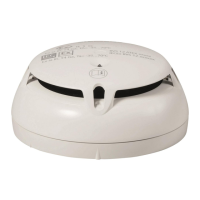
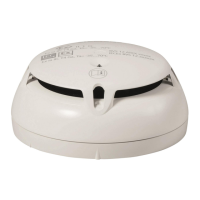
The following table includes examples regarding the selection of the parameter set
for the FDOOTC241. The examples cannot be used universally, but illustrate
typical applications.
Environment Deceptive phenomena / detector
behavior
Parameter set
Normal office, room without
any particular deceptive
phenomena
– 'Robust (2)' in sensor mode 0
Rooms with potential risk to
persons due to smoldering
fires, CO development
– 'Balanced CO (10)'
Alternatively 'Balanced (4)'
Possible deceptive
phenomena, e.g. electric
kettle
Vapor as deceptive phenomenon 'Balanced CO (10)' or 'Suppression CO (12)'
Alternatively 'Balanced (4)' or 'Suppression (5)'
Cleaning rooms (e.g. in
hotels)
Vapors from cleaning materials 'Balanced CO (10)'
Alternatively 'Balanced (4)'
Kitchen A lot of vapor as deceptive phenomenon 'Suppression CO (12)' or 'Balanced CO (10)'
Alternatively 'Suppression (5)' or 'Balanced (4)'
Hospital room, museum Quick response needed;
no deceptive phenomena expected
'Fast Response (6)'
Clean room Fast and very sensitive reaction required 'High Sensitive Fast (9)'
4.2 Technical CO alarm
NOTICE
The system is not controlled as laid down in EN 54-2
Infringement of the EN 54-2 standard.
The signals for CO detection alone must not be used to control fire detection
equipment in accordance with EN 54-2.


 To Next Page