1.1 About this User Guide
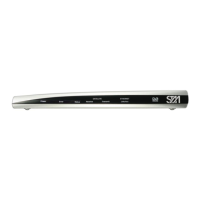
This User Guide covers the installation and operation of the SatLink 1000/1910/2000/2900, commonly
also referred to as the indoor unit (IDU) of the DVB-RCS VSAT, together with the accompanying
outdoor unit (ODU) equipment. It is intended for DVB professionals, such as service providers and
installers. Therefore, it does not contain information for non-professional users, such as given in the user
manuals of consumer electronic products. The information given pertains to the following STM software
(SW) and hardware (HW) versions and releases:
SatLink IDU Software
STM SatLink Boot loader, P/N 101225, SW build 1.8.0.2 and later
STM SatLink Boot loader, P/N 106267, version 9.0.0 and later
STM SatLink Boot loader, P/N 120044 , Revision 14.0.0 and later
STM SatLink Boot loader, P/N 120511, Revision 14.1.0 and later
STM SatLink DVB-RCS VSAT Software, P/N 120208, version 14.1.0 and later
SatLink VSAT IDU Hardware models
STM SatLink 100 DVB-S2 Plug-in card for SatLink 1910, P/N 107261
STM SatLink 1000, P/N 103346
STM SatLink 1910, P/N 103798
STM SatLink 2000, P/N 120033
STM SatLink 2900, P/N 120510
Ku-band Equipment
Transceivers
STM SatLink 4033, P/N 104804
STM SatLink 4035, P/N 106546
1.2 Initial Configuration
The VSAT IDU must be configured before it can communicate via the satellite to and from the network
Hub. The parameters to be configured are explained in section 6.2.
The configuration of the VSAT IDU can be carried out using the following configuration tools:
Web-interface (basic configuration only)
Command Line Interface (CLI)
- Via RS232/Terminal emulator (e.g. HyperTerminal)
- Telnet
SNMP
The SatLink VSAT web interface is used as the main interface for initial configuration of the VSAT
parameters and is presented in section 6. The status monitoring of the VSAT using a web interface is
presented in section 7. Configuration via CLI is presented in section 9 and management via SNMP is
presented in Appendix E. The Web interface can be used for most common configuration tasks, while
advanced configuration is only available via SNMP and CLI.


 To Next Page