Publication no. 101557
Rev 14.1.1-2
Copyright 2006-2012 – STM Group, Inc.
in coding gain of close to around 2 dB in C/N compared to DVB-S (indicated by the solid black lines) at
the same bandwidth efficiency and a 30% increase in bandwidth efficiency at the same C/N.
The code rate may be varied in small steps for each modulation, thus yielding both a high granularity and
wide range of possible C/N-bandwidth efficiency operational points. The VSATs support the following
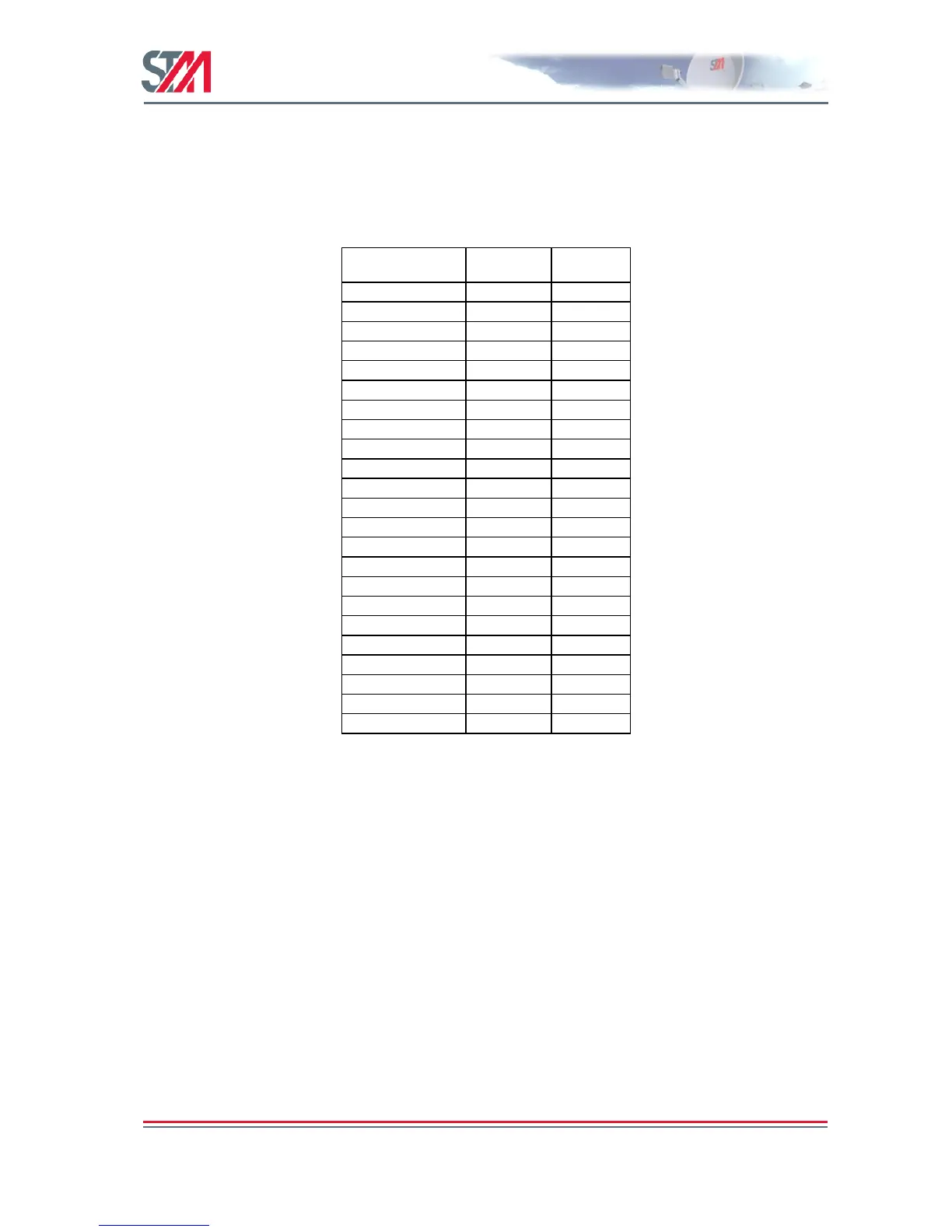
combinations of Modulation and FEC rates in DVB-S2 mode, denoted MODCODs:
The SatLink IDUs support two options for FEC frame size: 64 kbits (normal frame) and 16 kbits (short
frame). The LDPC+BCH codes are slightly more effective when used on the longer (normal) FEC frame;
i.e., the required SNR is 0.2 dB lower for normal frame than for short frame. However, the short FEC
frame is useful in several circumstances, such as reducing delay when the Forward Link information rate
is low.


 To Next Page