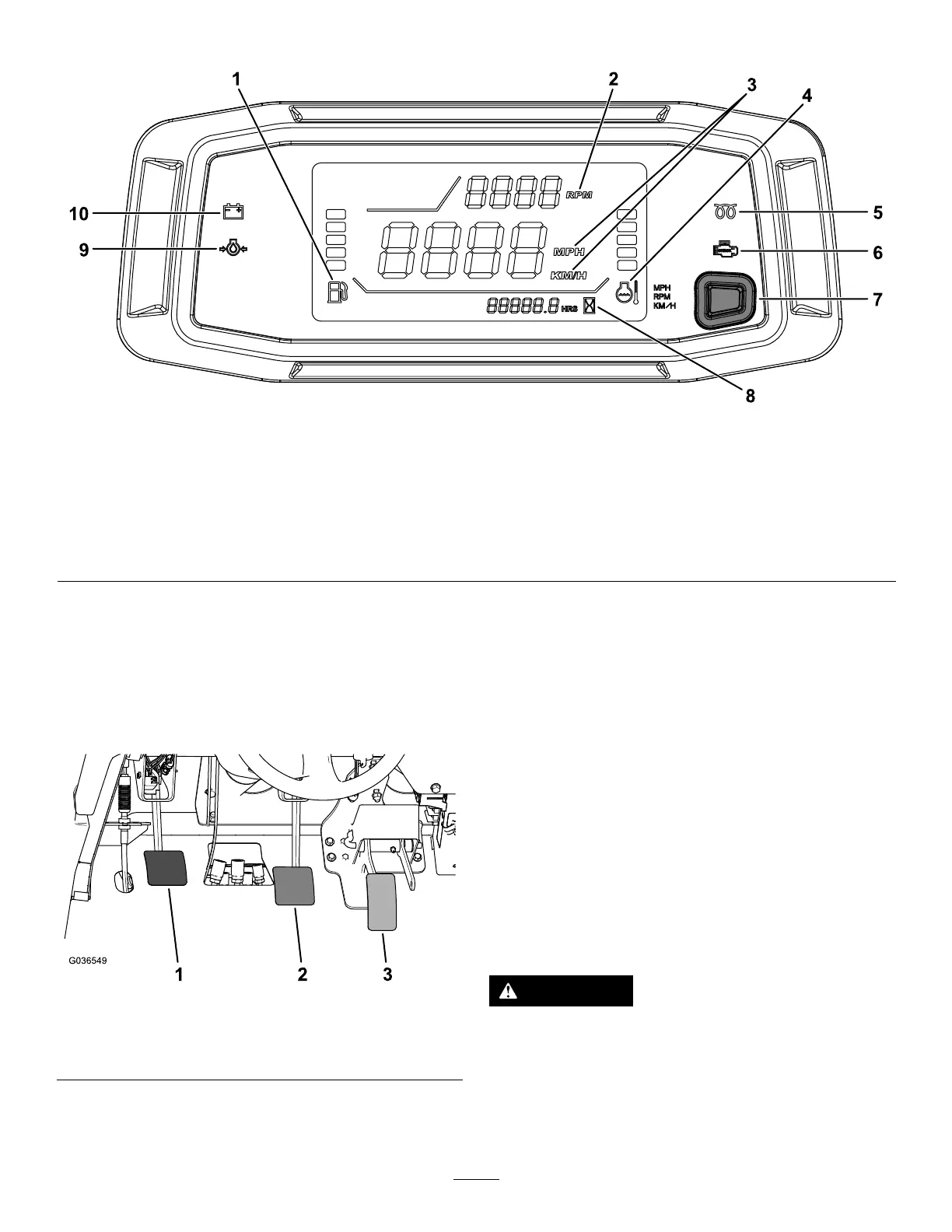
Display
g347586
Figure 6
1. Fuel gauge
6. Check-engine indicator
2. T achometer/engine speed (rpm)
7. T achometer-speedometer location change
button/Speedometer conversion button
3. Speedometer (km/h or mph)
8. Hour meter
4. Coolant-temperature gauge and light 9. Oil-pressure-warning light
5. Glow-plug indicator (diesel machines only) 10. Charge indicator
Accelerator Pedal
Use the accelerator pedal ( Figure 7 ) to vary the ground
speed of the machine when the transmission is in
gear . Pressing down the accelerator pedal increases
the engine speed and ground speed. Releasing the
pedal decreases the engine speed and ground speed.
g036549
Figure 7
1. Clutch pedal
3. Accelerator pedal
2. Brake pedal
Clutch Pedal
Y ou must fully press the clutch pedal ( Figure 7 )
to disengage the clutch when starting the engine
or shifting transmission gears. Release the pedal
smoothly when the transmission is in gear to prevent
unnecessary wear on the transmission and other
related parts.
Important: Do not ride the clutch pedal during
operation. The clutch pedal must be fully out or
the clutch slips, causing heat and wear . Never
hold the machine stopped on a hill using the
clutch pedal. Damage to the clutch may occur .
Brake Pedal
Use the brake pedal to stop or slow the machine
( Figure 7 ).
CAUTION
Operating a machine with worn or incorrectly
adjusted brakes can may result in personal
injury .
If the brake pedal travels to within 25 mm (1
inch) of the machine oor board, adjust or
repair the brakes.
15




 To Next Page