Adding Fuel
Use only clean, fresh diesel fuel or biodiesel fuels with
low (<500 ppm) or ultra-low (<15 ppm) sulfur content.
The minimum cetane rating should be 40. Purchase
fuel in quantities that can be used within 180 days
to ensure fuel freshness.
• Use summer grade diesel fuel (No. 2-D) at
temperatures above -7°C (20°F) and winter
grade (No. 1-D or No. 1-D/2-D blend) below that
temperature.
• Using winter-grade fuel at lower temperatures
provides lower ash point and cold-ow
characteristics, which eases starting and reduces
fuel-lter plugging.
Note: Using of summer-grade fuel above -7°C (20°F)
contributes toward longer fuel pump life and increased
power compared to winter-grade fuel.
Important: Do not use kerosene or gasoline
instead of diesel fuel. Failure to observe this
caution will damage the engine.
Using Biodiesel Fuel
This machine can also use a biodiesel blended fuel
of up to B20 (20% biodiesel, 80% petrodiesel). The
petrodiesel portion should be low or ultra-low sulfur .
Observe the following precautions:
• The biodiesel portion of the fuel must meet
specication ASTM D6751 or EN14214.
• The blended fuel composition should meet ASTM
D975 or EN590.
• Painted surfaces may be damaged by biodiesel
blends.
• Use B5 (biodiesel content of 5%) or lesser blends
in cold weather .
• Monitor seals, hoses, gaskets in contact with fuel
as they may degrade over time.
• Fuel lter plugging may be expected for a time
after converting to biodiesel blends.
• Contact your distributor for more information on
biodiesel.
Filling the Fuel T ank
Fuel-tank capacity: 22 L (5.85 US gallons).
1. Clean the area around the fuel-tank cap.
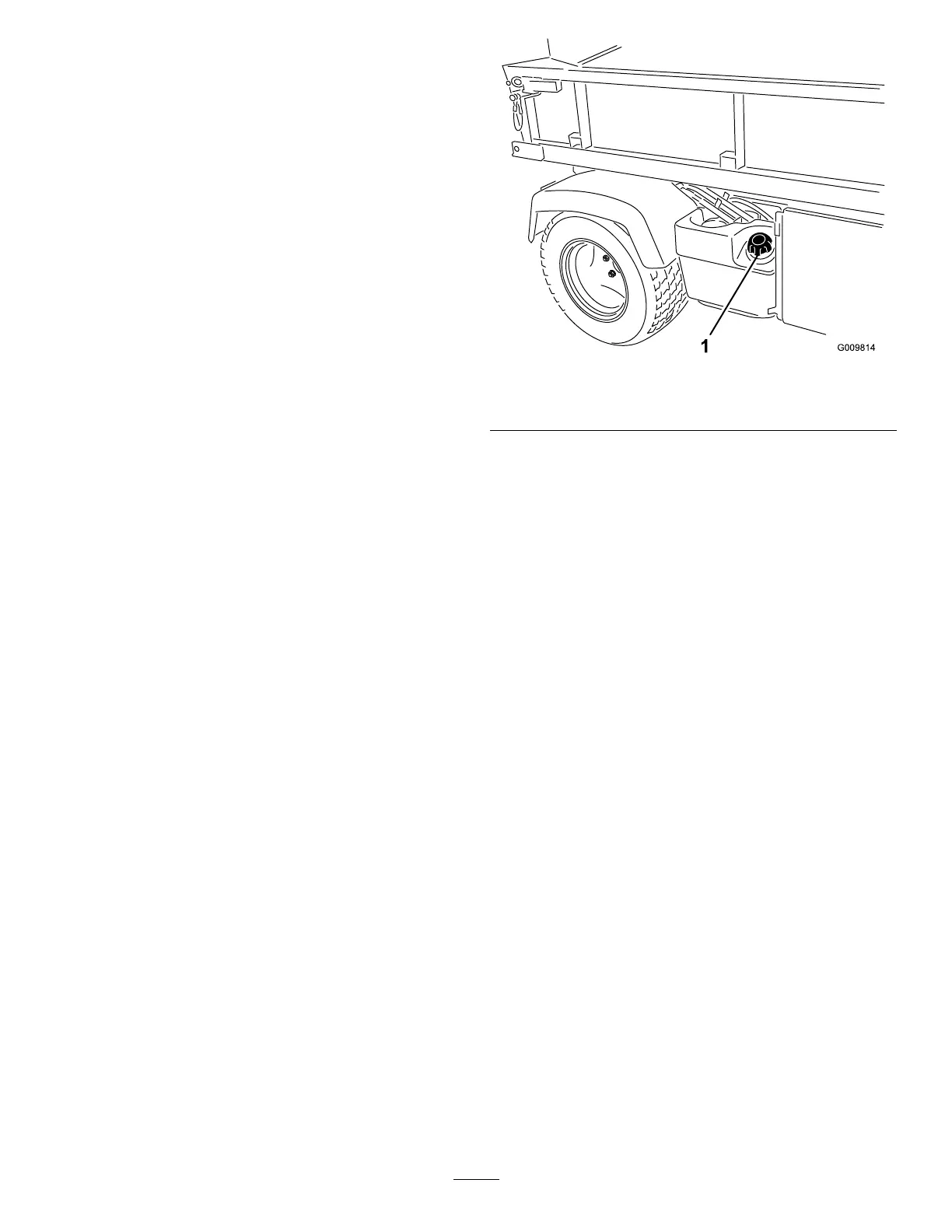
2. Remove the fuel-tank cap ( Figure 14 ).
g009814
Figure 14
1. Fuel-tank cap
3. Fill the tank slightly below the top of the tank,
(bottom of the ller neck), then install the cap.
Note: Do not overll the fuel tank with fuel.
4. Wipe up any spilled fuel to prevent a re hazard.
Breaking in a New Machine
Service Interval : After the rst 100 hours —Perform
the guidelines for breaking in a new
machine.
Perform the following to provide proper performance
for the machine:
• Ensure that the brakes are burnished; refer to 4
Burnishing the Brakes ( page 13 ) .
• Check the uid and engine-oil levels regularly .
Remain alert for signs that the machine or its
components are overheating.
• After starting a cold engine, let it warm up for about
15 seconds before using the machine.
Note: Allow more time for the engine to warm up
when operating in cold temperatures.
• V ary the machine speed during operation. A void
fast starts and quick stops.
• A break-in oil for the engine is not required.
Original engine oil is the same type specied for
regular oil changes.
• Refer to Maintenance ( page 32 ) for any special,
low-hour checks.
22




 To Next Page