
 Need help?
Do you have a question about the Tritech MicronNav and is the answer not in the manual?
Explains symbols used for hazards and important information.
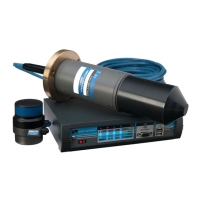
Details system specifications, including range, accuracy, and components.
Core specifications of the MicronNav system.
Technical details of the surface interface hub.
Specifications for the surface USBL transducer.
Technical specifications of the subsea modem head.
Information for preparing mounting brackets and wiring arrangements.
Instructions for mounting the subsea modem head on an ROV.
Guidance on mounting the surface transducer below water level.
Covers system requirements and software installation procedures.
Lists minimum and recommended specifications for Seanet Pro.
Step-by-step guide for installing the Seanet Pro software.
Details connecting and configuring the surface hardware components.
Procedures for configuring the subsea hardware for responder mode.
Instructions for configuring the subsea hardware for transponder mode.
How to connect and configure an external GPS receiver for synchronisation.
Guide for connecting external sensors for heading, pitch, and roll data.
Configuring data input from a remotely operated vehicle.
Instructions for connecting and displaying video input from a camera.
Procedures for verifying system functionality before deployment.
Steps to select and configure the correct MicronNav application.
Verifying transducer operation and sensor data.
Procedure for performing a hardware reset to reinstate default settings.
Steps for preparing and deploying the system for operation.
Essential checks before taking the system into the water.
Guidance on the correct deployment of the USBL dunking transducer.
How to measure and record installation offsets for calibration.
Step-by-step guide to setting up a new operational job.
Procedures for modifying parameters of an existing job.
How to load previously saved job configurations.
Configuration options for different platform types and GPS input.
How to apply datum corrections to position data.
Procedures for launching the subsea unit and verifying tracking.
Core operations and controls of the MicronNav system.
Explanation of user interface controls and functions.
Details on user-configurable features and display options.
Description of additional system controls and settings.
How to log system data and replay recorded sessions.
Correct procedure for safely shutting down the system.
Process for importing custom chart images into the system.
How to modify existing loaded chart configurations.
Procedure for removing charts from the system.
Options for controlling chart display and navigation features.
Functionality for adding, saving, and managing markers on charts.
Steps to place markers on the chart for points of interest.
How to save marker data in different file formats.
Additional chart customization and display options.
Importing BSB format charts for use with the application.
Configuring RemV4 for specific data string outputs.
Overview of available data string formats for external systems.
Details of the Proc XYZ data message structure and fields.
Details of the Raw XYZ data message structure and fields.
Description of the TP-2EC third-party data string format.
Details of the Simrad HPR 300P third-party data string format.
Description of the Simrad HPR 410 third-party data string format.
Details of the NMEA $RATTM data string format.
Description of the NMEA $GPGGA data string format.
Details of the NMEA $GPGLL data string format.
Description of the NMEA $GPRMC data string format.
Details of the $PSIMSSB third-party data string format.
Description of the NMEA $GPDBT data string format.
Notes regarding RemV4 data types and formats.
Steps to set up Seanet for converting between modes.
Procedure to reconfigure the unit to Transponder mode.
Procedure to reconfigure the unit to Responder mode.
 General
| Storage Temperature | -20°C to +60°C |
|---|---|
| Communication | RS232 |
| Transducer Depth Rating | 300 m |
| Depth Rating | 300 m |
| Type | Ultra Short Baseline (USBL) tracking system |

 To Next Page