157
3. Uncap the oil tank, pour the oil until it can be seen over the
bleeder valve, close the valve and pour oil up to the lter screen.
4. Do not start the engine or turn the steering wheel or the input
shaft lock-to-lock, until air bubbles stop coming out of the oil tank
(at least 5 times in both directions). Add some more oil into the
tank, up to the previous level.
5. Start the engine and add the oil into the tank simultaneously,
avoiding its complete emptying.
Note. If the oil foams abundantly in the tank, which means
that air has entered into the system, stop the engine and let the oil
settle for no less than 20 min (until bubbles come out from the oil).
Inspect the connections between the hoses and the power steering
units and eliminate the leakage as required.
6. Bleed the hydraulic power steering system, when the engine
is running, by turning the steering wheel lock-to-lock with no
stops in the end positions to remove residual air bulbs from the
oil. Before the hydraulic power steering system bleeding, open
the bleeder valve (the procedure is described in item 2), if the oil
is seen through the bleeder valve, close it. Do not allow the oil to
contact the engine.
7. Check the oil level in the tank. Add if necessary.
8. Cover the tank and tighten the cap by hand. Connect the
drag link, tighten (see Annex 2) and cotter the ball stud nut.
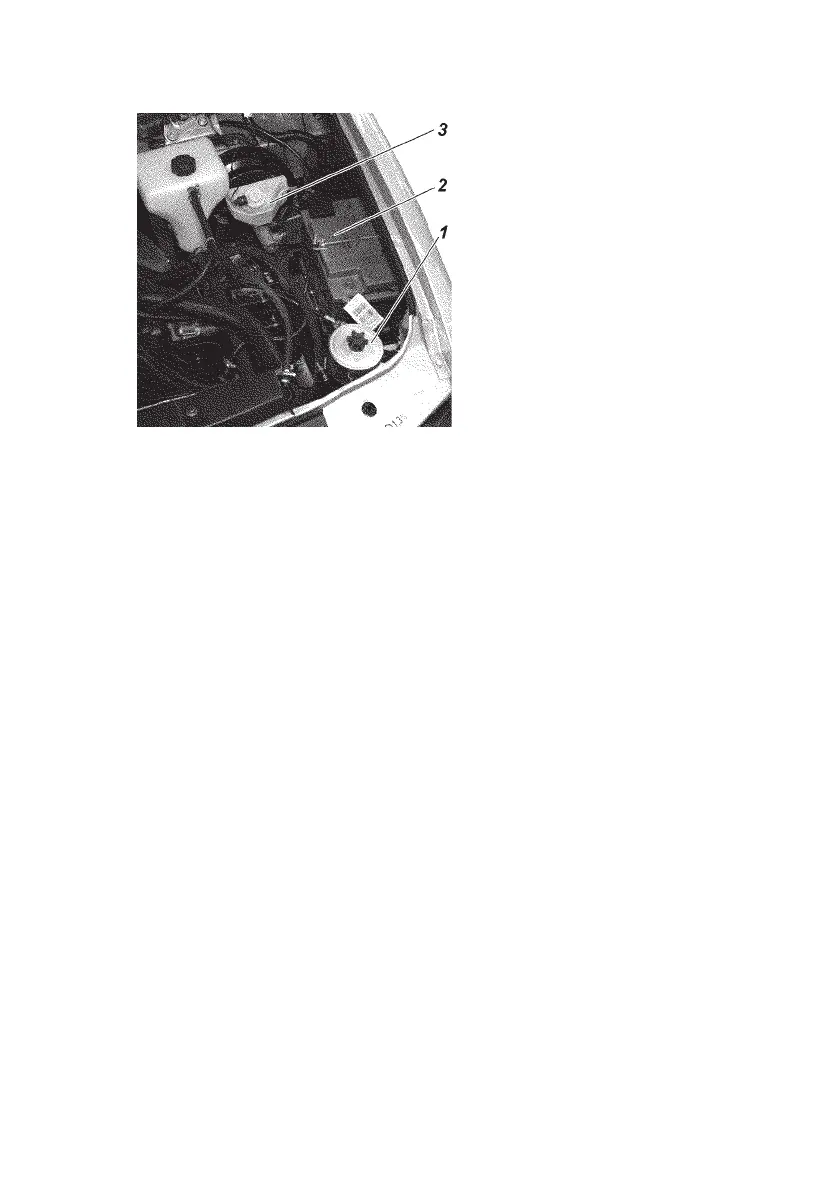
Fig. 9.20. Under the hood
(fragment):
1 — oil tank of hydraulic
power steering system; 2 —
accumulate battery; 3 — tank
of master brake cylinder.



 To Next Page