23
In a CAN bus system, several components or devices
are connected to a CAN bus cable.
With Viessmann appliances, a distinction is made
between an internal and an external CAN bus system.
Viessmann appliances with Viessmann One Base
have an internal CAN bus system and can also be
integrated into an external CAN bus system.
■
Internal CAN bus system:
The internal CAN bus system includes, for example,
the integral electronics modules and the CAN bus
cable between the indoor and outdoor units.
■
External CAN bus system:
The external CAN bus system includes, for example,
Viessmann appliances of various types and CAN
bus-capable devices from other manufacturers.
■
System network:
An external CAN bus system consisting of compati-
ble appliances with Viessmann One Base is referred
to as a system network, e.g. Vitocal 250-A and
Vitocharge VX3. The advantages of a system net-
work are, for example, shared use of a connectivity
module and joint commissioning and operation via
an app.
■
Cascade:
A cascade consists of several appliances of the
same type, e.g. several inverters, with one master
appliance and one or more slave appliances. The
control unit of the master appliance regulates the
slave appliances.
A cascade of Viessmann appliances with Viessmann
One Base forms a special system network, e.g. an
inverter cascade consisting of Vitocharge VX3 units.
CAN bus subscriber
Every component and every appliance in a CAN bus
system is a CAN bus subscriber. Each CAN bus sub-
scriber receives a unique subscriber number (node
ID). The CAN bus subscriber with subscriber number
"1" is the main appliance and controls the communi-
cation between all CAN bus subscribers.
Within any CAN bus system, only 1 CAN bus sub-
scriber is allowed to be the main appliance:
■
Internal CAN bus system:
In the internal CAN bus system, the main control unit
is always assigned subscriber number "1", e.g. the
HPMU electronics module for Vitocal.
■
External CAN bus system:
In the external CAN bus system, the appliance on
which commissioning is started is automatically the
main appliance with subscriber number "1".
■
System network:
A system network corresponds to an external CAN
bus system.
Exception: In a system network with a heat pump,
the heat pump is always the main appliance. This
means that commissioning must be started on the
heat pump in this case; see page 24.
■
Cascade:
In this special system network, the master appliance
is always the main appliance for the cascade.
Exception: In conjunction with a heat pump, the
(master) heat pump must always be the main appli-
ance for the entire system network.
Note
The subscribers of the internal and external CAN bus
system can be looked up. Assignment of subscriber
numbers to the components and appliances: See
"Overview of subscriber numbers" in the appendix.
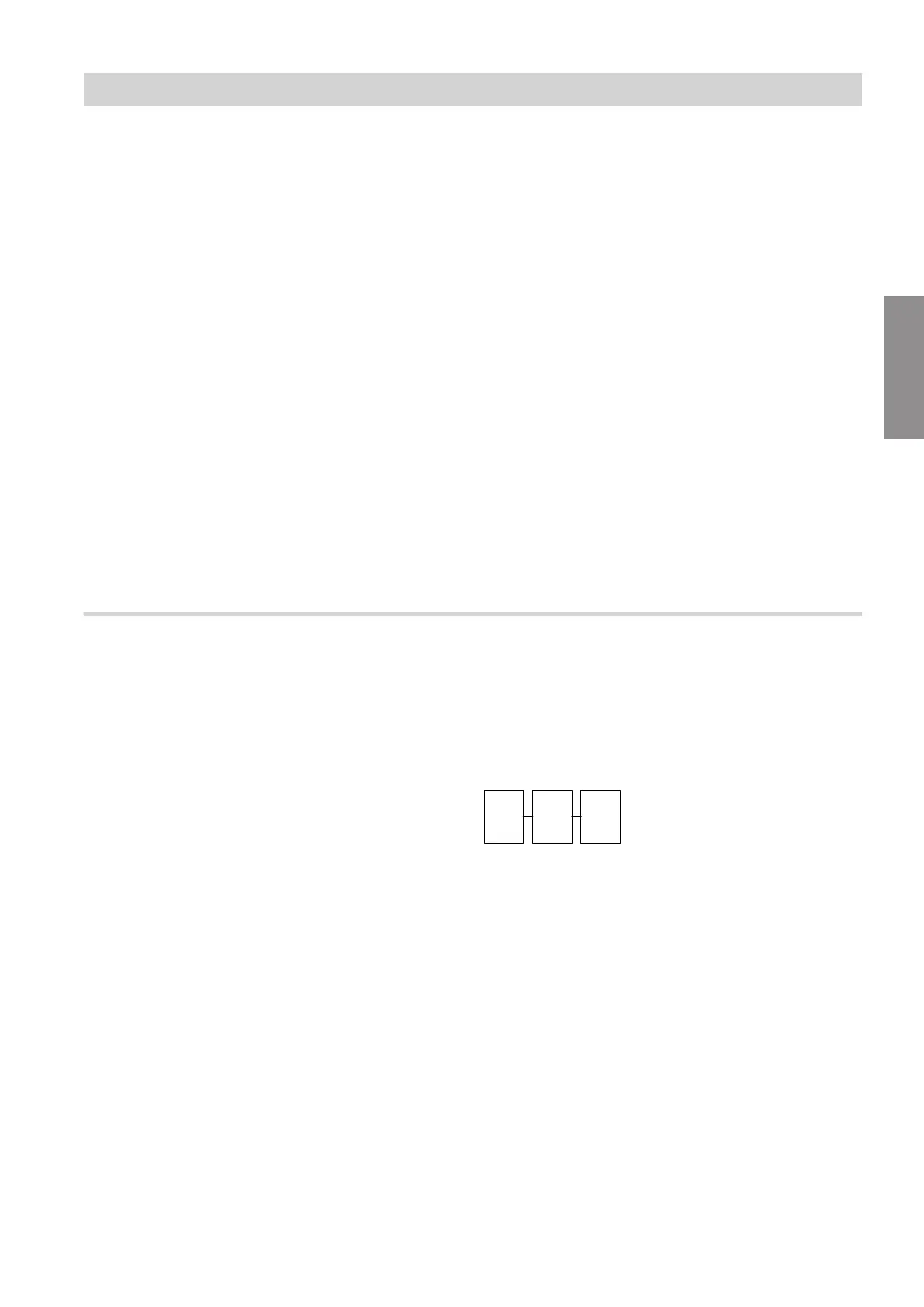
Example: System network
Fig. 1
A
Main appliance, e.g. Vitocal
B
Further Viessmann appliance, e.g. Vitoair
C
Further Viessmann appliance, e.g. Vitocharge
Function description
CAN bus system
6218234
Functions




 To Next Page