page 2 – 2
D-5000 / May 2000
MONO MIC INPUT
Mono Mic Input (MMD-600)
Module Overview
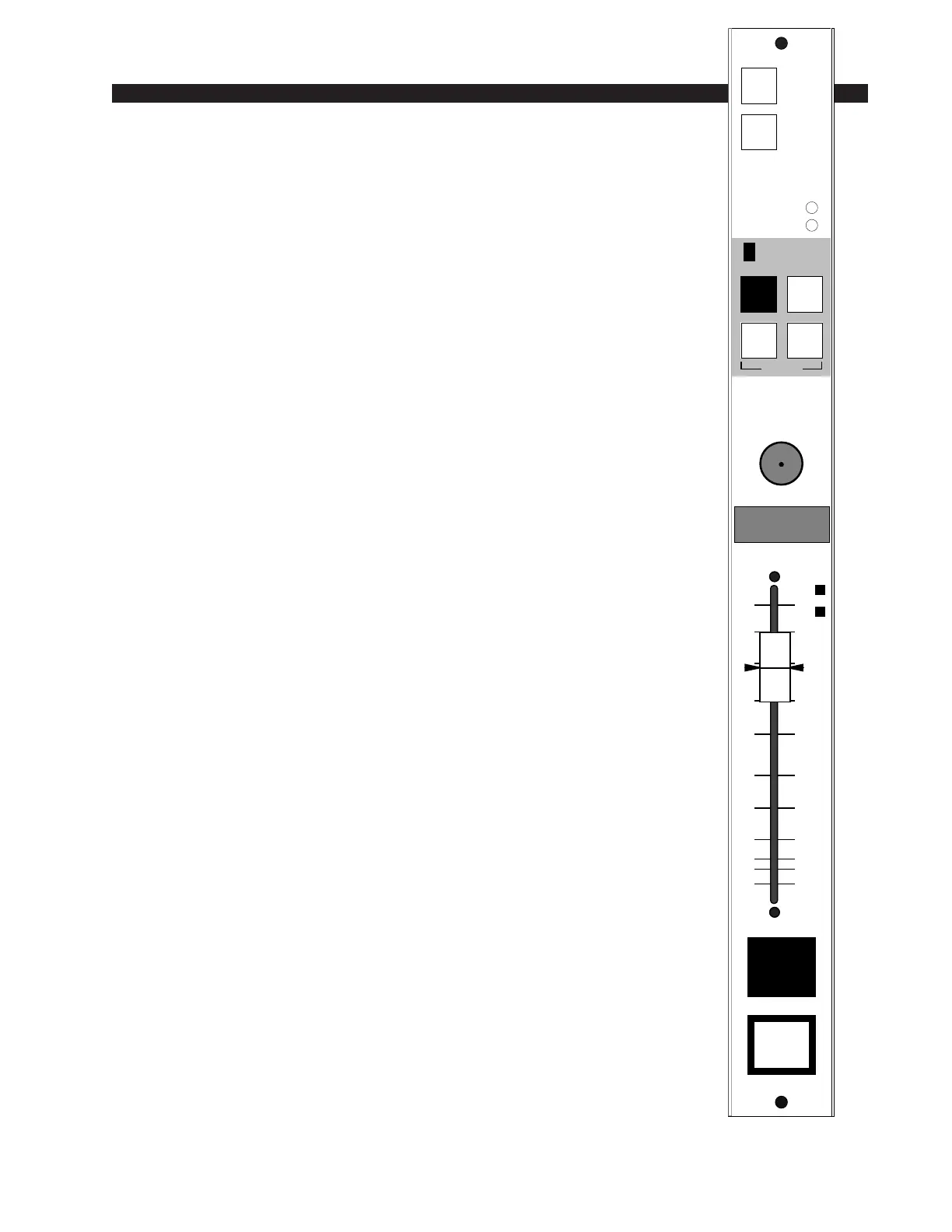
MMD-600 modules are for microphone input signals (-50dBu
nominal). Each module accepts two mono sources: A and B, switched
at the top of the module. Phantom power (+40VDC) is available at both
input ports; it may be selectively activated by an internal dipswitch (the
factory default is OFF). Recessed front panel multi-turn trimpots
(range 38dB) adjust input levels.
Example: with a microphone input of –60dBm @150Ω at the port, gain
trim can set levels from -22dBu to +16dBu (note maximum preamp gain is
+76dB).
An analog insert point (+4dBu balanced) is provided: it is post-trim,
pre-pan and may be internally bypassed, which is the factory default
setting.
Output switches assign the selected source signal to any combina-
tion of the console’s four stereo outputs: PGM (program), AUD
(audition), AUX (auxiliary) and/or UTL (utility). When the module is
assigned to PGM and turned ON, a red “On- Air” LED illuminates just
above the output assign switches.
The rotary PAN control pans the module’s monophonic signal right
and left within the assigned stereo output fields. Level is set by a Penny
& Giles long-throw fader. When the D-5000 is under external serial
control from an automation system, the Fader Null LEDs show which
direction the fader must move for manual override. The fader can be
optionally equipped with an EFS (“European fader start”) style bot-
tom-of-travel switch which will automatically activate the module’s
channel ON and OFF switches when the fader is run up and down. Any
functions these switches have been programmed to perform (see
immediately following) will also take place when this happens.
The channel ON (red) and OFF (amber) switches are at the bottom
of the module. In addition to being controlled remotely, these can also
be programmed (via internal PCB-mounted dipswitches) to perform a
variety of console control functions, including control room and studio
mutes, talkbacks, tallies, and timer restart.
All audio and control input and output signals are made via two
multi-pin DB-25 connectors mounted in the bottom of the console’s
mainframe, directly underneath each individual module.
START
PGM AUD
AUX UTL
A
B
MIC TRIM
A
B
•
LR
•
•
•
C
•
•
•
•
PAN
ON AIR
ASSIGN
–
+
FDR
NULL
0
5
10
15
20
30
40
50
70
60
00
ON
ANDY
MONO INPUT



 To Next Page