EasyManua.ls Logo

ABB PQFS - User Manual

ABB PQFS
214 pages
Print Icon
To Next Page IconTo Next Page
Loading...
INSTRUCTION MANUAL
Power Quality Filter PQFS
Installation, operation and maintenance
instructions

Table of Contents

Questions and Answers

  • M
    Melody Martinez DDSSep 14, 2025
    What does mismatch between units mean in ABB PQFS Industrial Electrical?
    • D
      Diana NelsonSep 14, 2025
      If your ABB Industrial Electrical system reports a mismatch between units, it means different units in a filter system have different ratings or connections (e.g., 3-wire and 4-wire). Recommission the filters.
  • M
    mcguirejamieAug 25, 2025
    What to do if ABB PQFS Industrial Electrical has no synchronization?
    • K
      Kevin BrownAug 25, 2025
      If your ABB Industrial Electrical system fails to synchronize, it could be due to several reasons: * The supply frequency may have changed too much or too fast. * There might be no or low voltage measured during filter initialization. * The frequency setup could be incorrect. To resolve this: 1. Measure the network frequency and its variation, ensuring they are within acceptable limits. 2. Check the phase rotation, especially if there have been recent modifications during installation. 3. Ensure that the AC voltage is being properly measured. Check for ‘Loss of phase’ fault. 4. Verify that the frequency set up during commissioning matches the network's frequency. 5. Try resetting the system by powering it off and then on again.
  • N
    Nicole GarciaAug 25, 2025
    What causes RMS overcurrent in ABB Industrial Electrical?
    • D
      Desiree YoungAug 26, 2025
      If your ABB Industrial Electrical system detects an RMS overcurrent, it means the system has detected an excessive RMS current within the filter. To address this: * Verify that the filter CTs (Current Transformers) are correctly installed and not shorted. * Ensure that the unit current ratings and the programmed order during commissioning match the physical ratings and order. * Check the filter's cooling system and monitor the IGBT temperature using the PQF-Manager. * Try deactivating harmonic and reactive power requirements to see if the problem persists.
  • R
    Richard FlynnAug 26, 2025
    What to do if ABB Industrial Electrical shows RMS overvoltage?
    • E
      Ernest TaylorAug 26, 2025
      If your ABB Industrial Electrical system is showing an RMS overvoltage, it indicates that the RMS value of the supply voltage, as measured by the AC voltage measurement board, exceeds the acceptable maximum. Here’s how to troubleshoot: * Measure the three line voltages to ensure they are within the specified limits. * Compare the line voltages measured using a voltmeter with those displayed by the filter on the PQF-Manager or PQ-Link. * Make sure that the AC voltage is being correctly measured.
  • H
    hicksdennisSep 15, 2025
    What to do if ABB Water Filtration Systems show loss of phase?
    • D
      Danny CruzSep 16, 2025
      If your ABB Water Filtration System indicates a loss of phase, it means the system has detected a loss of supply on at least one phase. Measure the three line voltages to ensure they are within acceptable limits. Compare your measurements (using a voltmeter) with the voltages displayed by the filter on the PQF-Manager or PQF-Link. Also, inspect the AC voltage measurement connectors (P6-1 to P6-4) for any loose connections or component damage. Verify the connections between the auxiliary fuses and the AC voltage measurement connectors (P6-1 to P6-4). Finally, check the filter parameters.
  • J
    Justin CurrySep 23, 2025
    What to do if ABB PQF-Manager Water Filtration Systems show ‘ACK. FAULT’ and error message ‘Bad parameters’?
    • D
      deniseburnsSep 23, 2025
      If the PQF-Manager of your ABB Water Filtration System shows ‘ACK. FAULT’ and gives the error message ‘Bad parameters’, it indicates that the filter parameters entered during commissioning are inconsistent with the filter configuration reported by the controller. You should check the commissioning parameters and correct them where necessary.
  • D
    Debra WoodSep 7, 2025
    What to do if PQF-Manager shows initializing communication error in ABB PQFS?
    • R
      Robert HartSep 8, 2025
      If, after applying auxiliary power, the PQF-Manager displays 'Initializing communication. Please wait…' and none of the LEDs on the main controller board are functioning on your ABB Industrial Electrical system, it suggests the 24 Vdc power supply to the controller board has failed, the cabling is loose, or the main controller board is faulty. Try these steps: * Check the 24 V power supply feeding the control board. * Inspect the feeding cable between the main power and the 24 V power supply. * Inspect the feeding cable between the control boards and the 24 V power supply.
  • B
    Brian TownsendSep 8, 2025
    What causes DC undervoltage (SW) in ABB PQFS Industrial Electrical?
    • A
      Austin WalkerSep 9, 2025
      If your ABB Industrial Electrical system is showing a DC software undervoltage, it means the DC software undervoltage protection has been activated. To troubleshoot: * Check the connection between the DC voltage measurement connectors (P6-5 and P6-7) and the DC capacitors. * Check flat cable connections between the Control Board and the IGBT module. * Analyze network voltage stability (amplitude and phase). * Disable reactive power compensation and balancing options to see if the problem persists. * Check the main contactor and its control signal.
  • R
    Richard BookerDec 1, 2025
    What causes temporary IGBT errors in ABB PQFS?
    • J
      Jeffrey SheltonDec 1, 2025
      If the IGBT modules in your ABB Industrial Electrical system report a transient error that was automatically cleared, it could be due to peak overcurrent or a low control voltage for the IGBT drivers. Here's what to check: * If the errors are sporadic and the system recovers, no action may be needed. * If the system frequently encounters transient errors: * Verify that the filter CTs are correctly installed and not shorted. * Ensure the unit current ratings and the order programmed during commissioning match the physical setup. * Check the filter's cooling system and monitor the IGBT temperature using the PQF-Manager. * Deactivate harmonic and reactive power requirements to see if the problem persists. * Inspect the items discussed for the ‘IGBT permanent...
  • A
    andersondouglasSep 1, 2025
    What to do if ABB PQFS Industrial Electrical shows DC overvoltage (SW)?
    • S
      snyderjonathanSep 1, 2025
      If your ABB Industrial Electrical system triggers the DC software overvoltage protection, here's what you should check: * Verify the connection between the DC voltage measurement connector (P6-5 and P6-7) and the DC capacitors. * Inspect the flat cable connections between the Control Board and the IGBT module. * Analyze the network voltage stability, including amplitude and phase. * Disable reactive power compensation and balancing options to see if the problem persists. * Deselect the high-frequency components to free up DC bus resources and see if the problem persists.

Summary

Introduction to this Manual

What this Chapter Contains

Provides an overview of the manual's content.

Intended Audience

Identifies the target users and their required knowledge.

Compatibility

Lists compatible PQF-Manager software versions.

Related Publications

Lists additional ABB documentation and resources.

Safety Instructions

General Safety Warnings

Covers critical warnings regarding electrical hazards, capacitor discharge, grounding, and breakers.

Upon Reception

Delivery Inspection and Unpacking

Guides on inspecting packaging, indicators, and unpacking the equipment.

Lifting and Transportation Guidelines

Provides guidelines for safely handling and transporting the filter.

Identification Tag

Explains the location and information on the filter's nameplate.

Storage

Specifies storage conditions and environmental limits for the PQFS.

Hardware Description

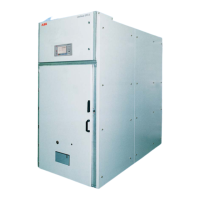
Typical PQFS Filter Panel Layout

Explains the main components of the PQFS active filter system.

PQF Current Generator Hardware

Details the power circuit and components of the PQF current generator.

PQF Main Controller

Describes the tasks and functions of the PQF main controller.

PQF-Manager User Interface

Explains how user interaction with the filter is channeled through the PQF-Manager.

Location of Main PQFS Components

Identifies the physical locations of the main PQFS components.

Active Filter Components

Shows a picture of the PQFS without the cover panel.

Active Filter Door Components and Protective Grid

Describes the PQF-Manager and protective grid on the filter door.

Mechanical Design and Installation

Installation Location Requirements

Specifies suitable indoor environments and ambient operating conditions.

Airflow and Cooling Requirements

Details heat dissipation, fan cooling, and airflow requirements.

Standard Cubicle Dimensions, Fixing Holes and Clearances

Provides standard enclosure dimensions, fixing details, and clearances.

Instructions for Mounting the Filter

Step-by-step guide for mounting the filter unit on a wall.

Filter Noise Level

Lists noise levels at one meter for different unit ratings.

Instructions for Mounting the PQF-Manager in Enclosures

Guides on relocating and mounting the PQF-Manager in enclosures.

Electrical Design and Installation

General Electrical Warnings

Covers critical warnings on voltage range, neutral connections, and protection devices.

Instructions for Connecting the PQF-Manager to a Filter System

Guides on connecting the PQF-Manager user interface to the filter.

Checking Insulation and Earth Resistance

Details the procedure for checking insulation and earth resistance.

EMC Considerations

Lists EMC guidelines the filter complies with.

Earthing Guidelines

Provides guidelines for proper earthing connections.

Selection of Power Cable Size

Explains how to determine the correct power cable section size.

Selection of Power Cable Protection;Filter Input Protection Scheme

Guides on selecting protection schemes for power cables and filter input.

Connection of the PQFS to the Network

Details connecting the PQFS to the network, including 3-wire and 4-wire modes.

Selection of the Current Transformers

Explains the selection criteria for current transformers (CTs).

Current Transformer Installation

Details the basic rules for correct CT installation.

Electrical Interconnection of PQFS Enclosures

Explains how to electrically interconnect different PQFS enclosures.

Electrical Connections to the PQF-Manager User Interface

Details electrical connections to the PQF-Manager.

Electrical Connections of Filter Options and Accessories

Details connecting optional accessories like USB, Ethernet, Modbus.

The PQF-Manager User Interface

PQF-Manager User Interface Description

Describes the touch screen interface and usage precautions.

PQF-Manager Overview and Navigation

Explains user interaction, functions, and navigation within the PQF-Manager.

Icons and Main Screen

Lists and explains status icons and main screen elements.

PQF-Manager Locking Facilities

Describes hardware and software locks for preventing unauthorized settings modification.

The ‘Measurements’ Menu

Allows monitoring various variables like voltage, current, and spectra.

The ‘Settings’ Menu

Outlines the four main levels of the Settings menu: Customer, Commissioning, Installation, Language.

The ‘Customer settings’ Menu

Menu for setting customer-specific parameters like filter modes and harmonics.

The ‘Commissioning’ Menu

Menu for commissioning engineers to set core installation and user requirements.

The ‘Installation settings’ Menu

Menu for advanced settings like auto restart, standby, clock, password, locks.

The ‘PQF Monitoring’ Menu

Allows monitoring filter load, operating point, and retrieving warnings/faults.

The ‘User Interface’ Menu

Provides basic filter data and configures touch screen and communication.

Communication

Configures settings for Modbus, Ethernet, MAC, and IP addresses.

Commissioning Instructions

Visual and Installation Check

Details visual and installation checks, including safety precautions.

Setting the Address of Each Unit in a Multi-Unit Filter and Terminate the CAN bus

Guides on setting unique addresses and terminating the CAN bus for multi-unit filters.

Voltage Rating Check;Adaptation and Phase Rotation Check

Covers checking and adapting voltage rating and verifying phase rotation.

Basic Commissioning Parameters Set Up (using PQF Manager)

Guides on setting basic parameters using the PQF-Manager.

Automatic and Manual CT Detection Procedure

Details procedures for automatic and manual CT detection.

Before Starting the Filter

Instructs to deselect harmonics and reactive power options before starting.

Start the Filter

Guides on starting the filter using the PQF-Manager.

Generate Filter Load

Guides on generating load to test filter performance.

Set Up the User Requirements

Guides on configuring user requirements like filter mode, harmonics, and reactive power.

Commissioning Report

Introduces the commissioning report template.

Filter Identification

Details filter identification information to be recorded.

Inspection on Site - Verification of the Active Filter after Installation

Checklist for verifying the filter after installation.

Programming

Steps for applying voltage and programming the filter equipment.

Testing (with load)

Guides on testing the filter with load by checking currents and voltages.

Programmed Parameters

Template for recording programmed parameters like filter mode, reactive power, harmonics.

Operating Instructions

What this Chapter Contains

Covers user operating instructions for the active filter.

Starting and Stopping the Filter

Guides on starting and stopping the filter.

Starting the Filter with the PQF-Manager

Step-by-step guide to start the filter using the PQF-Manager.

Stopping the Filter with the PQF-Manager

Step-by-step guide to stop the filter using the PQF-Manager.

Modifying the User Requirements

Guides on changing customer settings for filter mode, harmonics, and I/O.

Changing the System Temperature Unit and PQF-Manager Backlighting

Explains how to change temperature units and adjust backlight.

Consulting Filter Measurements

Guides on accessing filter measurement data.

Consulting Filter Statistics and Manufacturer Data

Guides on accessing filter statistics and manufacturer data via PQF Monitoring.

Filter Behavior on Fault - Retrieving Error Information

Explains how faults are stored and how the filter behaves during errors.

Maintenance Instructions

What this Chapter Contains

Covers maintenance instructions for ensuring filter longevity.

Maintenance Intervals

Lists routine maintenance intervals recommended by ABB.

Standard Maintenance Procedure

Provides a step-by-step standard maintenance procedure.

Fan Replacement

Details the procedure for replacing cooling fans.

DC Capacitor Change

Provides information on DC capacitor lifespan and replacement.

DC Capacitor Reforming

Explains the procedure for reforming DC capacitors after prolonged non-operation.

Output Filter Board Change

Details the lifespan and replacement of the output filter board.

Servicing Report

Introduces the servicing report for tracking maintenance activities.

Filter Identification

Section for recording filter identification details in the servicing report.

Standard Maintenance Procedure

Checklist for standard maintenance tasks.

Special Service Actions

Covers specific actions like fan, DC capacitor, and output filter board replacement.

Troubleshooting Guide

What this Chapter Contains

Outlines the chapter's content on troubleshooting, fault procedures, and errors.

Fault Treatment Procedure

Describes how faults are stored, analyzed, and treated.

Spare Part List for Normal and Dedicated Filter Servicing

Provides a standard list of spare parts for filter servicing.

Troubleshooting Guide

Provides guidance for troubleshooting issues based on PQF-Manager status and LEDs.

Verification of PQF-Manager Status and System LEDs

Guides on checking PQF-Manager status and system LEDs.

Fault Tracing

Provides tables and guidance for tracing various fault messages and symptoms.

Technical Specifications

What this Chapter Contains

Contains the technical specifications of the active filter PQFS.

Technical Specifications

Lists technical specifications including installation, filter info, and CT requirements.

Network Current Ratings

Specifies network current ratings and limits.

Modularity

Details modularity regarding power units and enclosures.

Redundancy

Explains redundancy configurations for master-master and master-slave systems.

Harmonics that can be filtered

Lists selectable harmonic orders based on neutral connection.

Filtering Efficiency

States filtering efficiency as better than 97%.

Response Time

Defines the filter's response time.

Reactive Power

Describes reactive power compensation and power factor programmability.

Load Balancing

Details load balancing modes and availability.

Start and Stop Settings

Lists start/stop, standby, and auto-restart functionalities.

Digital Inputs

Specifies the number and function of digital inputs.

Digital Outputs

Details the number and rating of digital outputs.

Alarm Contact

Describes the universal alarm contact with NO/NC outputs.

Filter Losses

Lists typical and maximum filter losses by unit rating.

Noise Intensity

Provides typical noise intensity levels.

Communication

Lists communication methods: PQF-Manager, Modbus, PQ-Link.

Programming

Details programming via PQF-Manager and USB-Ethernet.

Fuse Information

Specifies main and auxiliary circuit fuses.

Main Options

Lists main options like PQ-Link software and Modbus adapter.

ABB PQFS Specifications

General IconGeneral
TypePQFS
Power Factor CorrectionYes
Flicker ReductionYes
Load BalancingYes
Frequency50/60Hz
Harmonic MitigationYes
ProtectionOvercurrent, Overvoltage, Short Circuit
CommunicationModbus
CoolingForced Air
StandardsIEC
Protection DegreeIP54

Related product manuals