CYC5000 User Guide www.arrow.com
Page | 50 March 2023
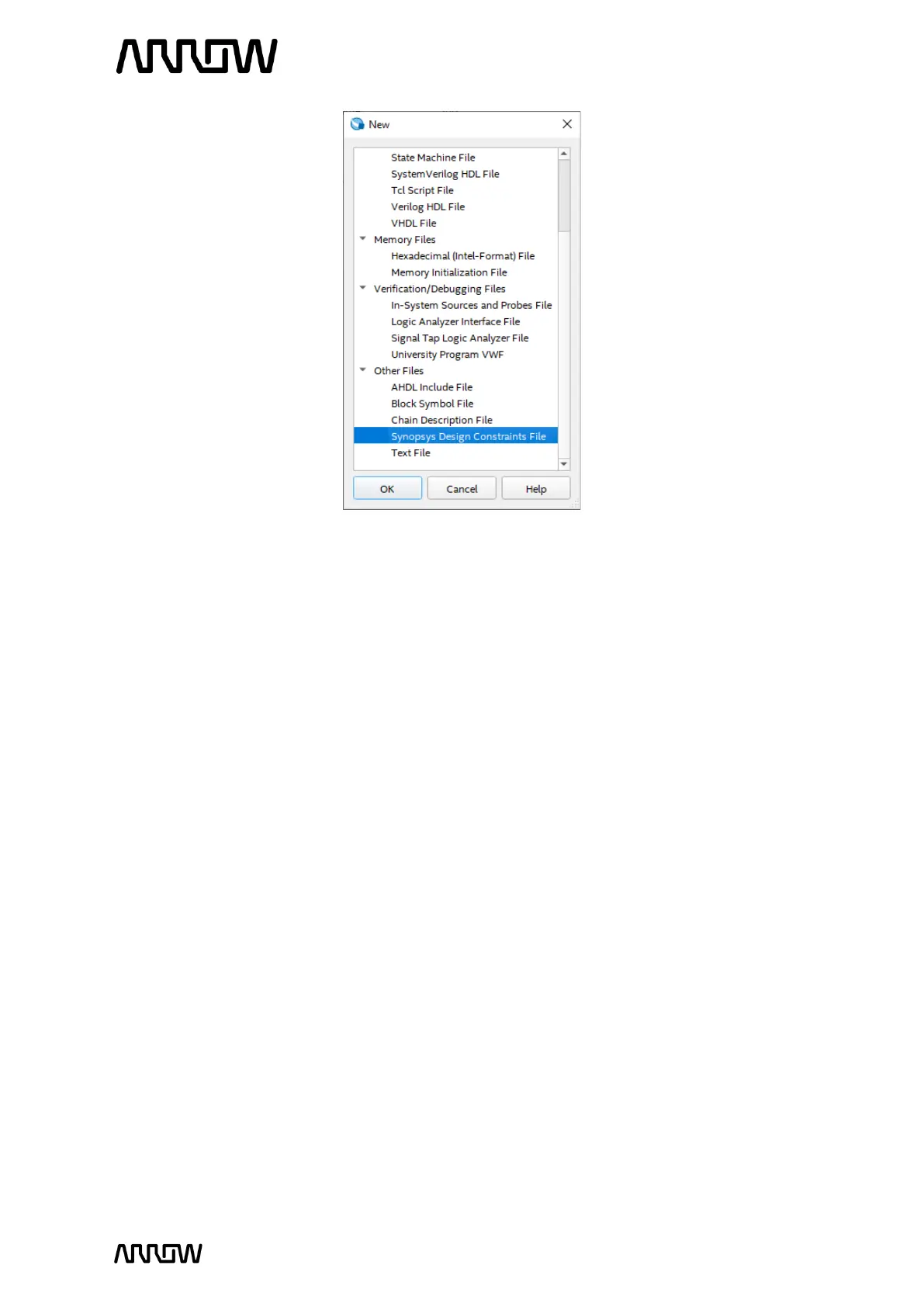
5.2.11.2 Type or copy the following lines into this new file:
#create input clock which is 12MHz
create_clock -name CLK12M -period 83.333 [get_ports {CLK12M}]
#derive PLL clocks
derive_pll_clocks
#derive clock uncertainty
derive_clock_uncertainty
#set false path
set_false_path -from [get_ports {USER_BTN}]
set_false_path -from * -to [get_ports {LED*}]
The first line “create_clock” tells Quartus Prime that the clock, CLK12M is 83.333 ns (12
MHz). It also assigns the CLK12M to a pin (port) in the .sdc format.
The second line “derive_pll_clocks” tells the software to look if there are any PLLs, and
if so, automatically derive the clock multiplication/division of the outputs of the PLL
even if they are used internally within the CPLD/FPGA.
The third line “derive_clock_uncertainty” tells the software to automatically determine
the internal clock uncertainty. No clock is ideal, and thus there will be some internal
jitter within the FPGA associated with it.
The fourth and fifth line “set_false_path” tells the software to not do any timing
optimization to the stated paths/pins. The I/Os of this design are trivial, so they can be
ignored in the Timing Analysis.
5.2.11.3 Use File → Save to save it as top.sdc.


 To Next Page